


From the Field to the Dashboard – Built by Experts, for Experts.
Discover What's Really Happening in the Steel Industry
Use the AI-powered search engine to analyze production activity, market trends, and news faster than ever before.
Try the Free AI Search EngineSteel Market Report: Neutral Sentiment Prevails in Asian Steel Industry Amidst US-EU Trade Tensions
Recent developments in the steel market across Asia indicate a Neutral sentiment driven largely by ongoing trade tensions evidenced in the article titled The EU has rejected the US plan to resolve the dispute over steel tariffs. This situation has led to noticeable shifts in activity levels at key steel plants, especially as geopolitical factors amplify market uncertainties.
The activity levels of tracked steel facilities display significant variation. Notably, data reveals that Tata Steel Kalinganagar in India demonstrated a consistent activity rate, peaking at 56% in April 2026. In contrast, JFE West Japan Works (Fukuyama) and Kurashiki faced declines to 36% and 32%, respectively, as of the same period. This downward movement coincides with market apprehension linked to stalled trade agreements and rising tariffs, especially highlighted by concerns from the EU regarding US tariffs, which could lead to heightened operational costs for exporters in the region.
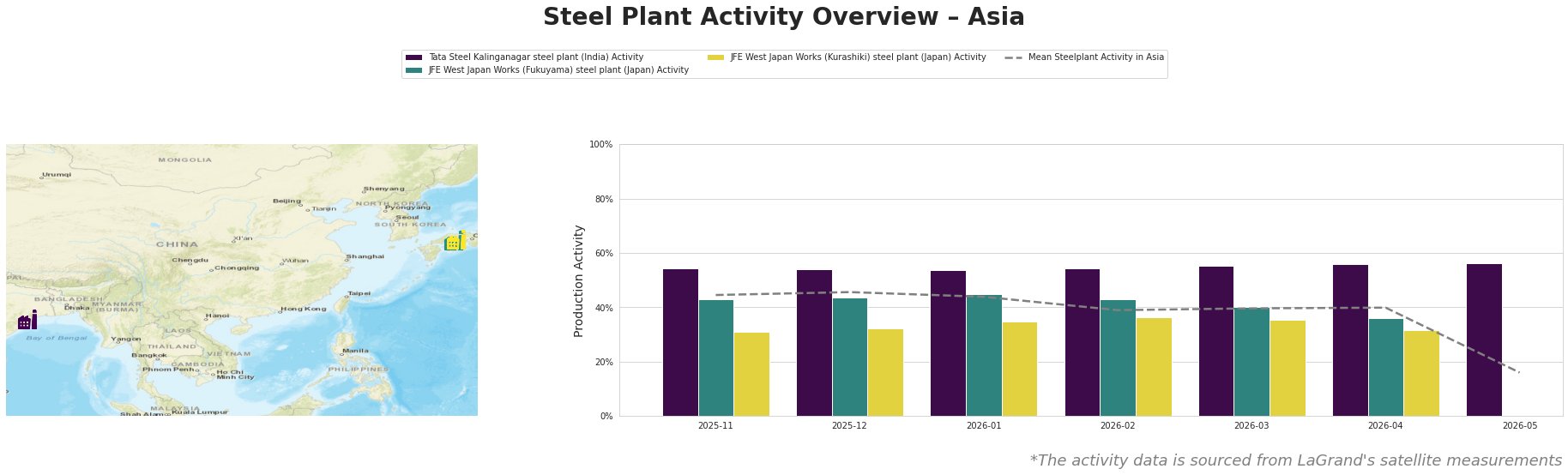
Tata Steel Kalinganagar, located in Odisha, has demonstrated remarkable stability, with activity consistently above the mean and a notable peak at 56% in April. The plant’s robust productivity profile—valuing finished rolled products primarily for the automotive sector—positions it favorably amidst trade uncertainties; however, it remains impacted indirectly by rising international tariffs.
In stark contrast, JFE’s facilities in Fukuyama and Kurashiki have seen a notable drop in activity levels, with the Fukuyama plant’s percentage cutting down to 36%. The declining trend at these facilities, amidst geopolitical tensions and tariff disputes such as those described in The EU has rejected the US plan to resolve the dispute over steel tariffs, emphasizes operational concerns directly related to global steel demand and shifts in supply chains due to these unresolved trade issues.
Given the observed trends, steel buyers should prioritize procurement from Tata Steel Kalinganagar due to its stable output and resilience against international tariff impacts. In contrast, potential supply disruptions should be anticipated from JFE’s facilities, particularly if tensions escalate, impacting their operational efficiency further. Steel buyers are advised to monitor updates on trade negotiations closely and consider diversifying sourcing strategies to mitigate risks linked to potentially escalating tariffs as reported in the related articles.