


From the Field to the Dashboard – Built by Experts, for Experts.
Discover What's Really Happening in the Steel Industry
Use the AI-powered search engine to analyze production activity, market trends, and news faster than ever before.
Try the Free AI Search EngineUncertainty in Ukraine’s Steel Market: EU Import Tariffs and Plant Activity Trends
Ukrainian steel producers face increasing challenges as the European Union imposes new steel quotas amid ongoing geopolitical instability. In particular, the articles “Ukraine should be exempted from steel quotas under the EU’s new trade measure – Luca Zanotti“ and “The euroquote on steel will hit hard the Ukrainian metallurgists affected by the war, – CEO ‘Interpipe’” highlight concerns over production declines up to 80% since the 2022 invasion by Russia, paralleling the significant reductions in observed plant activity.
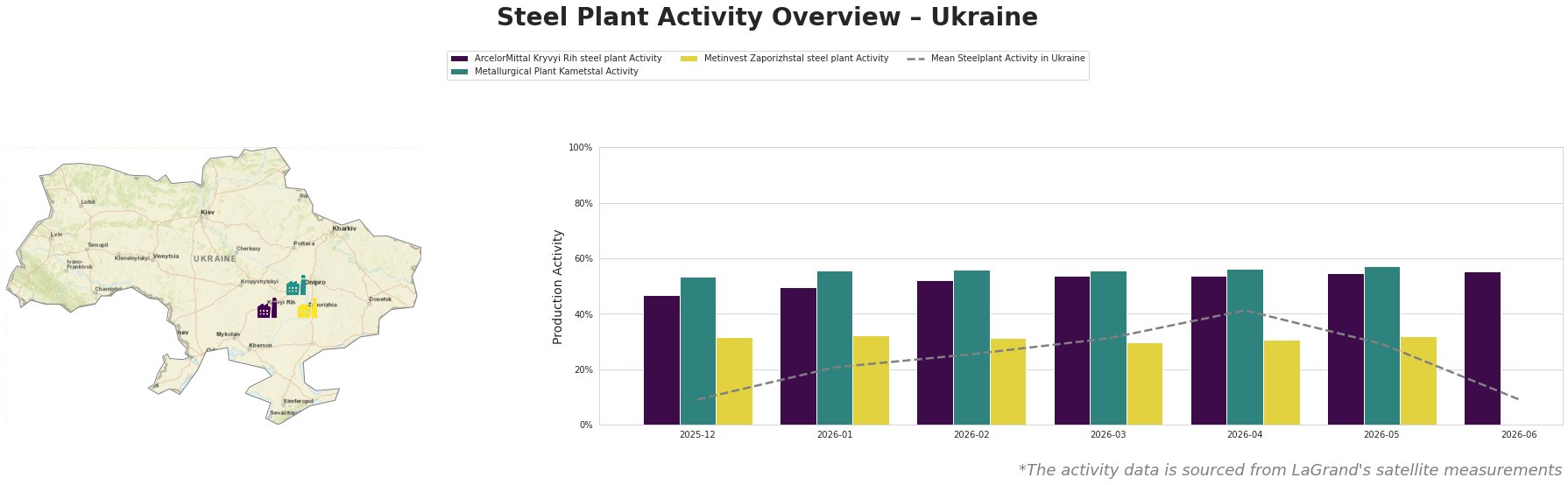
Activity levels at ArcelorMittal Kryvyi Rih have shown an overall growth from 47% in December to a peak of 55% in May, suggesting some volatility aligned with news of tariff implications such as in the article “The EU steel quota will hit Ukrainian steelmakers affected by the war hard – Interpipe CEO.” This peak was short-lived, as the June activity dropped back to 9%, echoing concerns about declining economic conditions.
Metallurgical Plant Kametstal maintained a steady activity level around 56% until a similar drop was observed in June, though a direct correlation to recent quota announcements was not established. Metinvest Zaporizhstal remained lower overall, aligning with its reported struggles with labor shortages and high energy costs, as highlighted in the article “Ukraine needs to be exempted from steel quotas as part of a new EU trade event, Luca Zanotti.”
The implications of these developments suggest potential supply disruptions, particularly for buyers planning to source Ukrainian steel given the anticipated reductions in production as major plants prepare for heightened tariffs.
Procurement professionals should consider:
– Focus on established suppliers like ArcelorMittal due to its recent activity dips, which may affect lead times.
– Monitor changes in EU policies and align sourcing strategies with exemptions or relief periods where available, such as those outlined in “The UK has announced new tariffs on steel imports for the transition period.”
– Engage with local suppliers to negotiate flexible procurement terms that account for impending tariffs and market fluctuations.
In summary, a close watch on policy developments and regional plant performance will be critical for informed procurement decisions in Ukraine’s steel market.