


From the Field to the Dashboard – Built by Experts, for Experts.
Discover What's Really Happening in the Steel Industry
Use the AI-powered search engine to analyze production activity, market trends, and news faster than ever before.
Try the Free AI Search EngineOptimistic Outlook for Asia’s Steel Market Amid EU Negotiations and Activity Surge
Recent negotiations concerning steel import restrictions and trade tariffs have contributed to a positive shift in activity across Asia’s steel plants. Notably, “China is negotiating with the EU regarding the bloc’s new restrictions on steel imports” highlights the delicate balance in trade relations that could impact supply levels. Concurrently, activity observed from satellite data has revealed fluctuations in output from key steel plants that manufacturers need to consider in their procurement strategies.
The observed plant activity levels indicate a mix of stability and decline. A recent satellite data review reflects the following monthly trends:
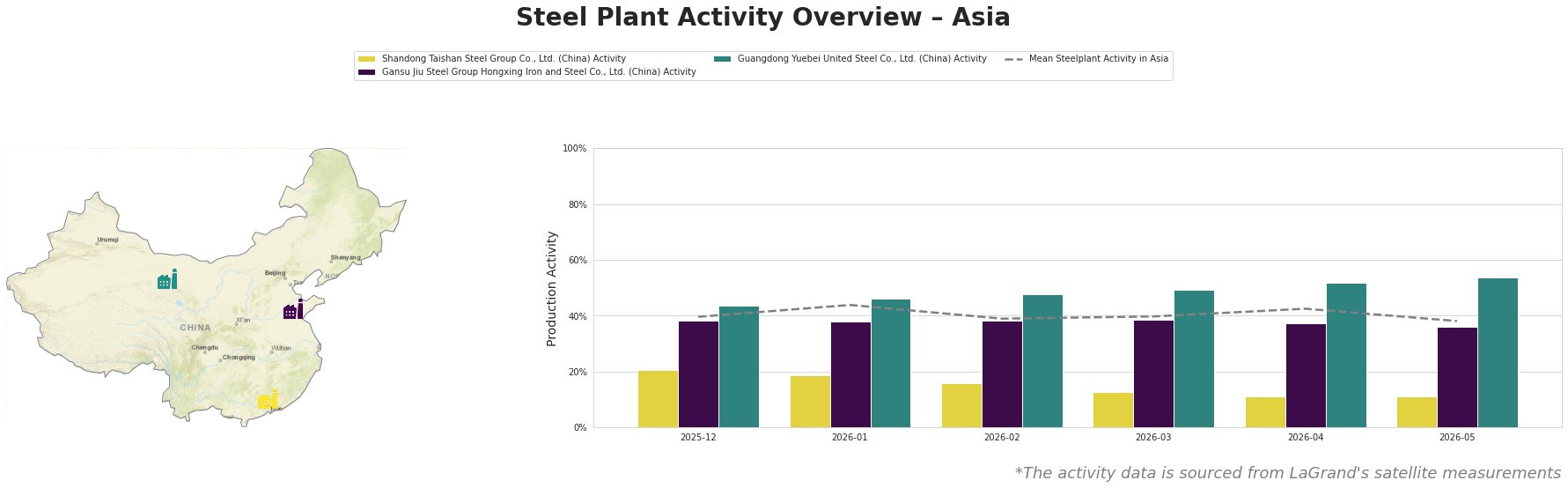
Shandong Taishan Steel Group Co., Ltd. experienced a notable decline in activity from 21.0% to 11.0% between December 2025 and May 2026. This dip may not have a direct connection to the cited “US tariffs still set the trade agenda after negotiations with China,” suggesting that external tariff pressures might be influencing operations. The Gansu Jiu Steel Group also faced a decrease, settling at 36.0%. This drop aligns with increasing scrutiny and tensions highlighted by the “Japan has taken up cheap steel imports: the investigation will last a year”—indicating a tightening competitive landscape may be affecting output.
In contrast, Guangdong Yuebei United Steel Co., Ltd. saw comparative resilience, ending at 54.0%, which suggests a stable demand for its products, especially relevant for construction sectors amid increased infrastructure projects.
The ongoing negotiations with the EU may lead to potential supply disruptions, particularly for steel imports as countries adjust to new tariffs and quotas. Notably, “China is negotiating with the EU regarding the bloc’s new restrictions on steel imports” could constrict access to European markets, heightening demand for domestic production.
For steel buyers, immediate procurement actions should focus on sourcing from Guangdong Yuebei United Steel, as it demonstrated stability and relatively high activity. Additionally, close monitoring of Shandong and Gansu’s outputs is advisable, as their declines may suggest vulnerabilities amidst ongoing tariff negotiations, making timely purchases imperative before potential bottlenecks arise.
In conclusion, the Asian steel market shows positive sentiment amidst structural challenges. Transcending these market dynamics can provide strategic acquisition opportunities for informed buyers looking to navigate upcoming fluctuations effectively.