


From the Field to the Dashboard – Built by Experts, for Experts.
Discover What's Really Happening in the Steel Industry
Use the AI-powered search engine to analyze production activity, market trends, and news faster than ever before.
Try the Free AI Search EngineDeclining Activity in Germany’s Steel Production Amidst Industry Growth Concerns
Germany’s steel industry is facing challenges despite recent reports of increased output. Articles titled “Germany increased its steel production by 7.3% y/y in May“ and “German crude steel output up 8.8 percent in Jan-May 2026“ highlight a year-on-year rise in production figures; however, monthly activity data reveals a troubling trend with reductions in activity levels at major steel plants.
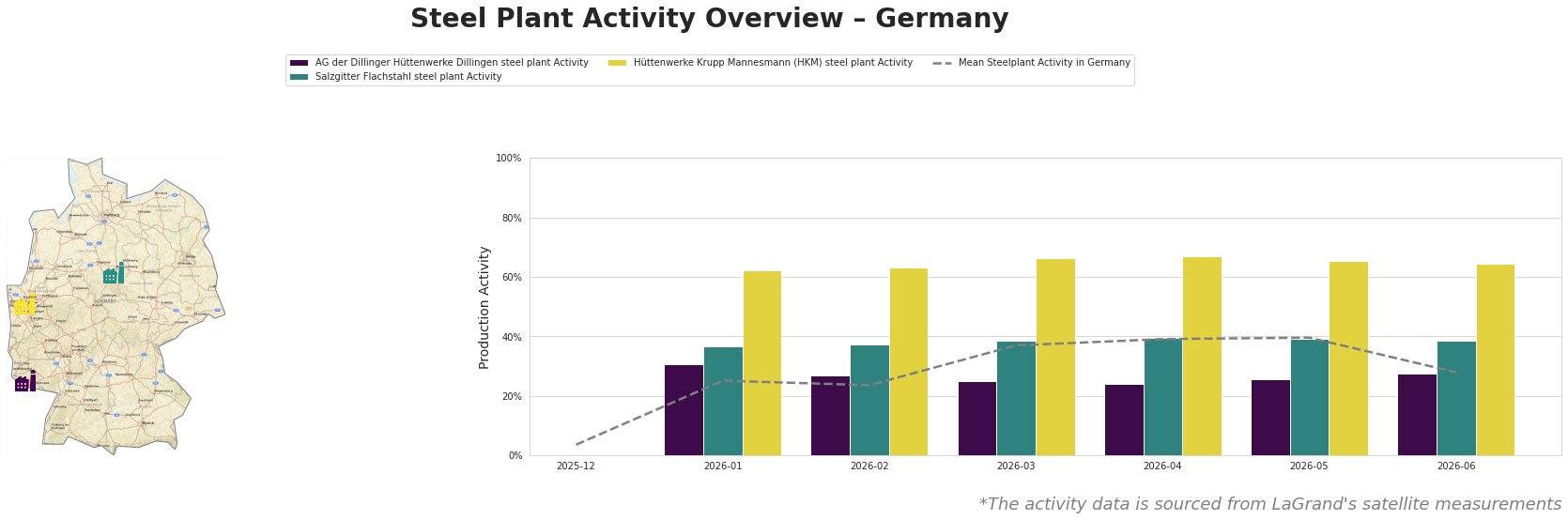
The activity levels have shown notable fluctuations, particularly in the AG der Dillinger Hüttenwerke Dillingen and HKM plants, which experienced significant drops in May (5% and 2%, respectively). Salzgitter Flachstahl maintained a steady activity level of 39% but did not show signs of growth corresponding to the overall production increase reported in the news articles. The decline in active output may indicate an underlying sluggishness in meeting demand, despite reported growth in crude production.
The AG der Dillinger Hüttenwerke Dillingen plant, producing semi-finished and finished rolled products predominantly for the automotive and energy sectors, faced a drop in activity from 31% in January to just 26% in May. This decline correlates with the cautious tone expressed in the article “Germany’s crude steel production maintained its growth in May,” which noted that current output remains below optimal levels.
Similarly, Salzgitter Flachstahl, while part of potential green initiatives towards lower CO2 steel production, has not seen activity commensurate with its nearly 7.3% year-on-year production increase, as backed by the reports. The HKM plant’s activity also decreased marginally, indicating a potential supply chain imbalance.
Given these observations, steel buyers should prepare for possible supply disruptions, particularly from AG der Dillinger Hüttenwerke and HKM, which may struggle to meet current demands amidst declining activity levels. This suggests a need for prudent inventory management, with a focus on securing contracts ahead of potential shortages. Additionally, steel procurement professionals may consider diversifying sourcing strategies to mitigate risks associated with the inconsistent production trends observed across these key German plants.