


From the Field to the Dashboard – Built by Experts, for Experts.
Discover What's Really Happening in the Steel Industry
Use the AI-powered search engine to analyze production activity, market trends, and news faster than ever before.
Try the Free AI Search EngineUkraine Steel Market Report: Activity Declines Amid UK Import Tariff Discussions
Recent developments in the steel market in Ukraine reflect a neutral sentiment, primarily influenced by international trade issues. Notably, British businesses are calling on the government to ease protective measures on steel and Tariff quota negotiations are politicizing European steel imports, which have raised concerns among local producers about competitive disadvantages due to new restrictions.
Satellite observations indicate a steady yet declining activity level in Ukraine’s steel plants. Monthly data shows that the mean steel plant activity has dropped from a high of 41% in April to 30% in June 2026. There are notable differences among individual plants:
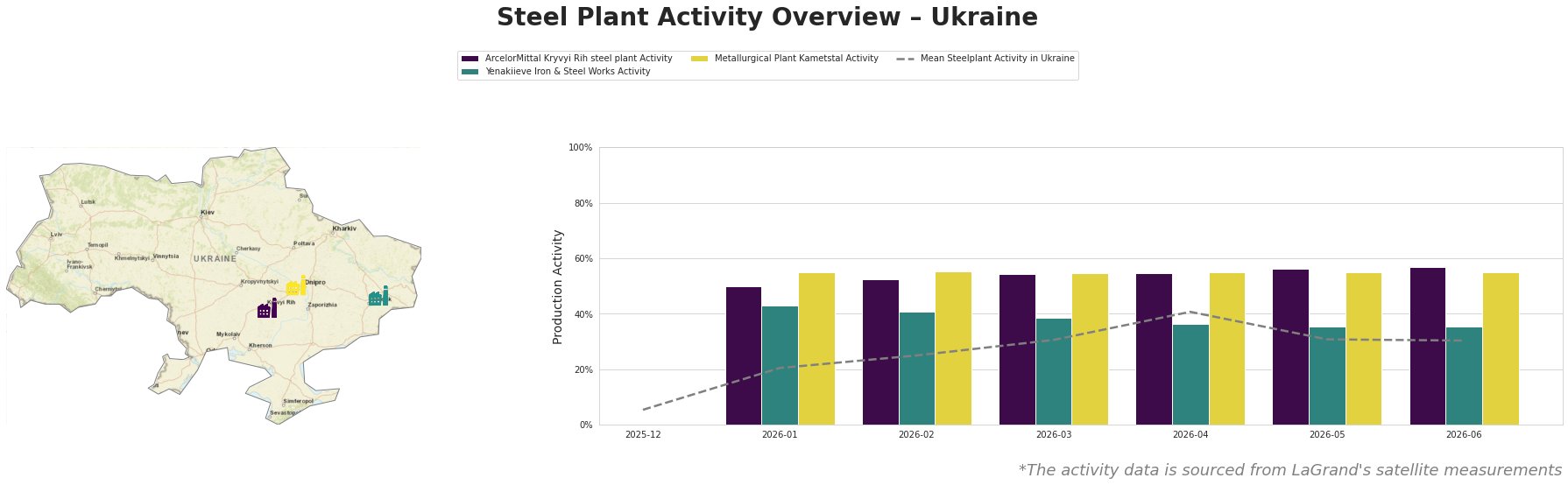
ArcelorMittal Kryvyi Rih, Ukraine’s largest steel producer with capacity for 8,000 tons of crude steel, has shown a significant increase in activity from 50% to 57% since January. This trend could indicate resilience amid domestic challenges, although it remains subject to external tariff developments as stressed in British Chambers of Commerce warns UK steel quota changes to disrupt SME costs, logistics. The plant mainly produces rebar and wire rods, crucial for construction and infrastructure.
Yenakiieve Iron & Steel Works has seen a decrease in activity from 43% in January to 35% in June. This drop aligns with pressures outlined in In Britain, warnings are being issued about the threat to business posed by new steel import quotas, which may further destabilize production and logistics for Ukrainian producers relying on exports.
Metallurgical Plant Kametstal’s activity has remained steadfast at 55% from January to June, suggesting stability amidst a fluctuating market. Positioned as a supplier of semi-finished products, its consistent output is crucial for energy and transport sectors, making it a strategic asset as discussed in ongoing trade considerations.
In light of observed activity trends and relevant news, steel buyers should consider the following actions:
– Diversify procurement sources: Due to potential disruptions from imported tariff changes in the UK, consider local suppliers, especially from ArcelorMittal Kryvyi Rih, which shows improved operational resilience.
– Monitor tariff negotiations closely: Keep abreast of developments outlined in Tariff quota negotiations are politicizing European steel imports, as any shifts could materially affect pricing and availability.
– Engage with industry associations: Collaborate with local trade groups that advocate for easing tariffs and importing conditions, as further restrictions could negatively impact local production and stability in supply chains.
Procurement decisions should prioritize flexibility and responsiveness to the evolving regulatory landscape influenced by international market dynamics.