


From the Field to the Dashboard – Built by Experts, for Experts.
Discover What's Really Happening in the Steel Industry
Use the AI-powered search engine to analyze production activity, market trends, and news faster than ever before.
Try the Free AI Search EngineSteel Market Insights for Asia: Rising Activity Amid US Export Declines
Recent market dynamics within Asia highlight strong activity levels despite fluctuations in US exports, impacting steel procurement strategies. Notably, the article titled US HRC imports down 58.5 percent in April 2026 from March indicates a sharp decrease in import levels, correlating with satellite-observed activity data showing Baosteel Zhanjiang Iron & Steel Co., Ltd. maintaining steady operations, while the Hyundai Steel Dangjin steel plant saw activity stabilize after a notable drop.
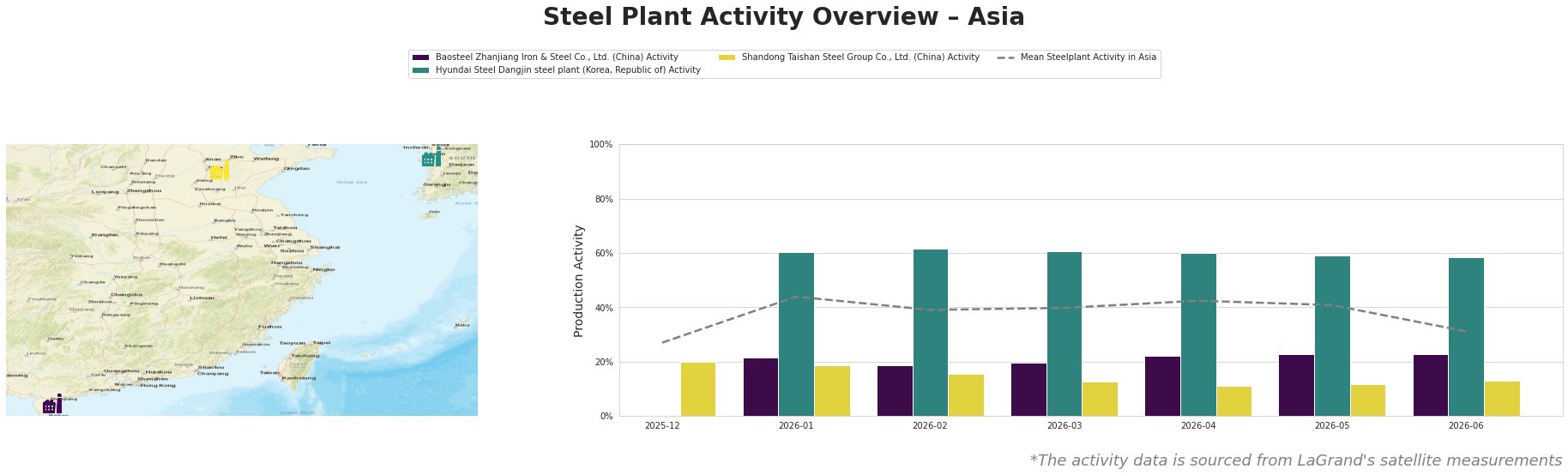
Baosteel Zhanjiang Iron & Steel Co., Ltd. in Guangdong showed maintained activity levels of 23%, up from 20% in March 2026, indicating resilience amidst the economic fluctuations noted in US HDG exports down 10.5 percent in April 2026 from March. This trend affirms Baosteel’s capacity to continue meeting regional demands, particularly for hot-dip galvanized products.
The Hyundai Steel Dangjin steel plant’s activity, while stabilizing at 58%, represents a commendable recovery after a low point in March. The plant’s strong performance (60% in January) highlights its robust processing capabilities which remain crucial in the automotive sector, especially as detailed in US CRC exports down 2.6 percent in April 2026 from March. In contrast, Shandong Taishan Steel Group’s activity remains lower (12%) but reflects common trends seen in the region, with similar plants showing fluctuations largely connected to US import declines.
These insights present vital considerations for procurement professionals. Steel buyers should anticipate potential supply disruptions from reduced imports affecting product availability in the US, particularly in HRC and CRC categories. Therefore, it is advisable for procurement teams to prioritize sourcing from high-activity plants like Baosteel and Hyundai Steel. Given the established stability and slightly optimistic production forecasts, long-term contractual negotiations could lead to more favorable rates, addressing both current demand and potential supply chain challenges exacerbated by US trends. This strategic approach ensures continued supply adequacy amidst shifting market conditions, emphasizing the importance of sourcing from resilient steel producers in Asia.