


From the Field to the Dashboard – Built by Experts, for Experts.
Discover What's Really Happening in the Steel Industry
Use the AI-powered search engine to analyze production activity, market trends, and news faster than ever before.
Try the Free AI Search EngineAsia’s Steel Market Faces Downturn: Tensions in the Middle East Impact Activity Levels
Steel production activity in Asia has experienced a notable decline amidst rising geopolitical tensions, specifically related to the US-Iran conflict. Reports titled “Iran-US deal draft contains Hormuz pledge: State TV“ and “Iran, US dispute status of Hormuz in draft deal: Update“ directly correlate to recent downward trends in several steel plants’ activity levels. Following the news, a significant reduction in regional steel plant operations aligns with observed volatility in global energy prices, affecting the broader steel market environment.
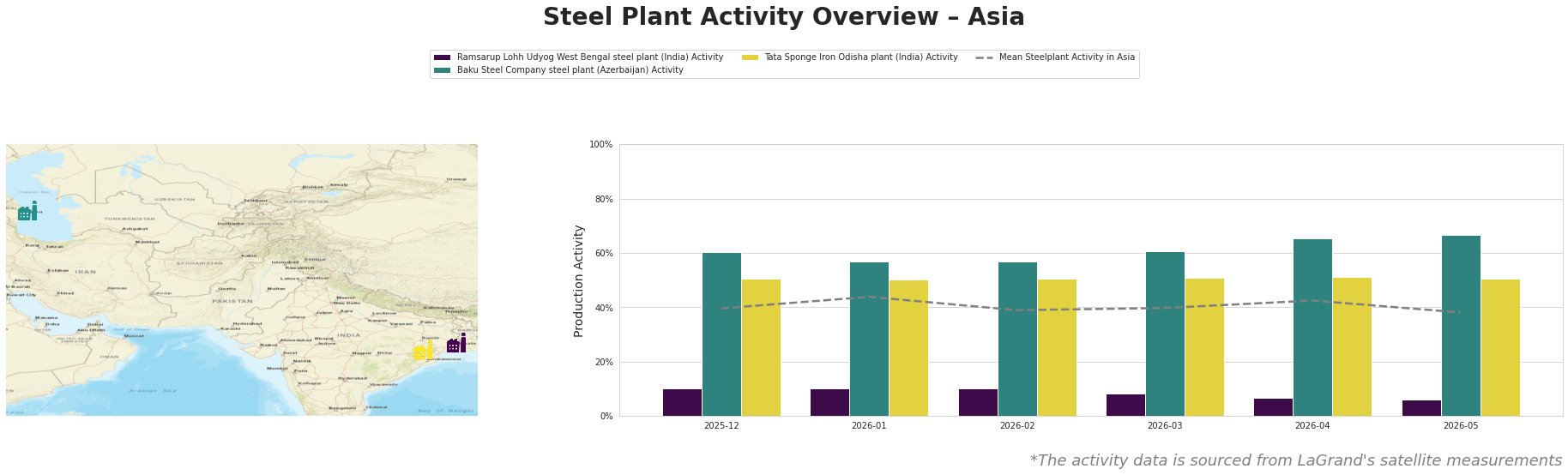
The trend reveals a sharp decline in activity at the Ramsarup Lohh Udyog plant, dropping from 10% to 6% over the reported period, indicating severe operational constraints possibly linked to the regional geopolitical uncertainty discussed in “Iran strikes airbase used in US attack.” The Baku Steel Company has maintained its activity relatively stable, peaking at 67% in May 2026, benefiting from its diversified product base but still susceptible to regional instability. Meanwhile, Tata Sponge Iron has shown minimal fluctuation, remaining around 50%, though the overall sentiment is negative.
At the Ramsarup Lohh Udyog steel plant, the operational decline from 10% to 6% may be tied to increased energy pricing volatility following the draft agreements concerning the Strait of Hormuz, impacting the plant’s competitiveness in energy-sensitive operations. The plant, which uses integrated processes with a captive power plant, faces risks in sourcing and pricing due to fluctuating energy costs heightened by Middle Eastern tensions. Conversely, Baku Steel could exploit its EAF technology and operational efficiency despite instability, maintaining a relatively robust output of 67% through careful management of local and geopolitical challenges.
Given the continued uncertainty and potential future disruptions in supply chains due to geopolitical tensions, particularly from the US and Iran, steel procurement professionals should prioritize contracts with Baku Steel to ensure stable supplies. It is advisable to closely monitor energy markets as fluctuations will directly impact production costs and availabilities across all observed plants, notably Ramsarup Lohh Udyog, where production is severely constrained. In light of the demonstrated activity declines and geopolitical threats, buyers should consider diversifying their supply chains to mitigate risks while focusing on partners capable of navigating the current energy landscape effectively.