


From the Field to the Dashboard – Built by Experts, for Experts.
Discover What's Really Happening in the Steel Industry
Use the AI-powered search engine to analyze production activity, market trends, and news faster than ever before.
Try the Free AI Search EngineRising Demand and Production Declines: A Market Alert from GFG Liberty Sydney Steel Mill
The GFG Liberty Sydney Steel Mill, situated in New South Wales, Australia, is a vital player in the steel production landscape, with an annual capacity of 750,000 tonnes of crude steel. Owned by GFG Alliance, this plant specializes in semi-finished and finished rolled steel products, servicing key sectors including construction, energy, and transport.
Recent thermal activity data indicates a significant shift in the mill’s operational capacity. Over the past few months, the production from the Electric Arc Furnace (EAF) has experienced a consistent decline, reflecting broader trends in the steel market amid fluctuating demand and supply chain dynamics.
Thermal Activity Observations
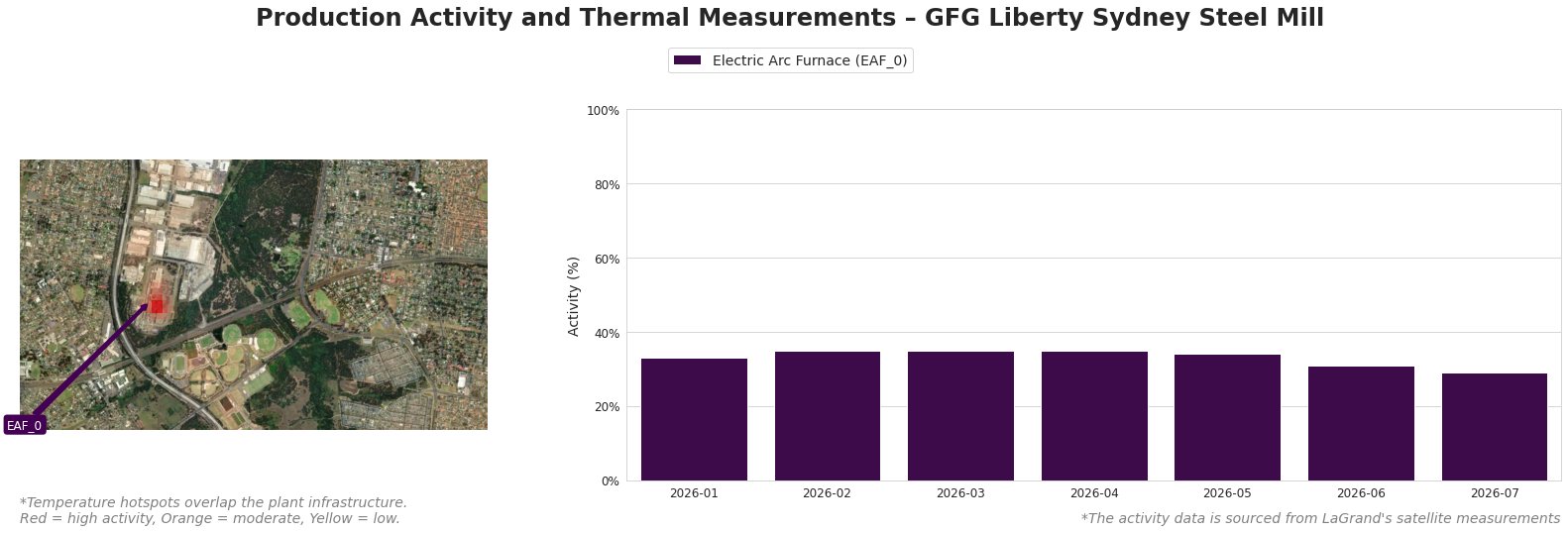
From January to July 2026, the thermal activity of the EAF has seen a steady decline from 35% to 29%. This reflects a broader market trend, as reported in several industry updates, including the CISA mills’ daily crude steel output down 4.3% in late May 2026, stocks also down, which indicates a decrease in steel production across the board. Additionally, the CISA mills’ daily crude steel output down 3.6% in late April 2026, stocks also down highlights similar declines and an overall tightening of supply.
These observed trends bear significant implications for steel buyers and market analysts. As thermal activity declines, there may be increased pressure on supply chains, potentially leading to shortages or pricing volatility. With rising iron ore prices—as noted in Iron ore prices have risen by 3.9% since the beginning of May—the cost structure of steel products may also be impacted, further complicating procurement strategies. Steel buyers will need to navigate this evolving landscape carefully, considering both current inventory levels and future demand forecasts in their planning.