


From the Field to the Dashboard – Built by Experts, for Experts.
Discover What's Really Happening in the Steel Industry
Use the AI-powered search engine to analyze production activity, market trends, and news faster than ever before.
Try the Free AI Search EngineBrazil’s Steel Market Faces Crisis Amid US and EU Trade Barriers
Brazil’s steel market is currently facing significant challenges due to newly imposed trade barriers by the US and EU. As highlighted in the articles titled “Brazil has criticised the new trade barriers imposed by the US and the EU“ and “Brazil calls higher US import tariffs unreasonable,” the US’s 25% tariff and potential increase to 37.5% on Brazilian pig iron—and similar restrictions from the EU—are expected to hamper Brazilian steel exports, particularly affecting plants in Brazil’s major steel-producing regions.
Recent satellite data indicates a troubling decline in activity levels among significant steel plants in Brazil, directly correlating with the current trade climate.
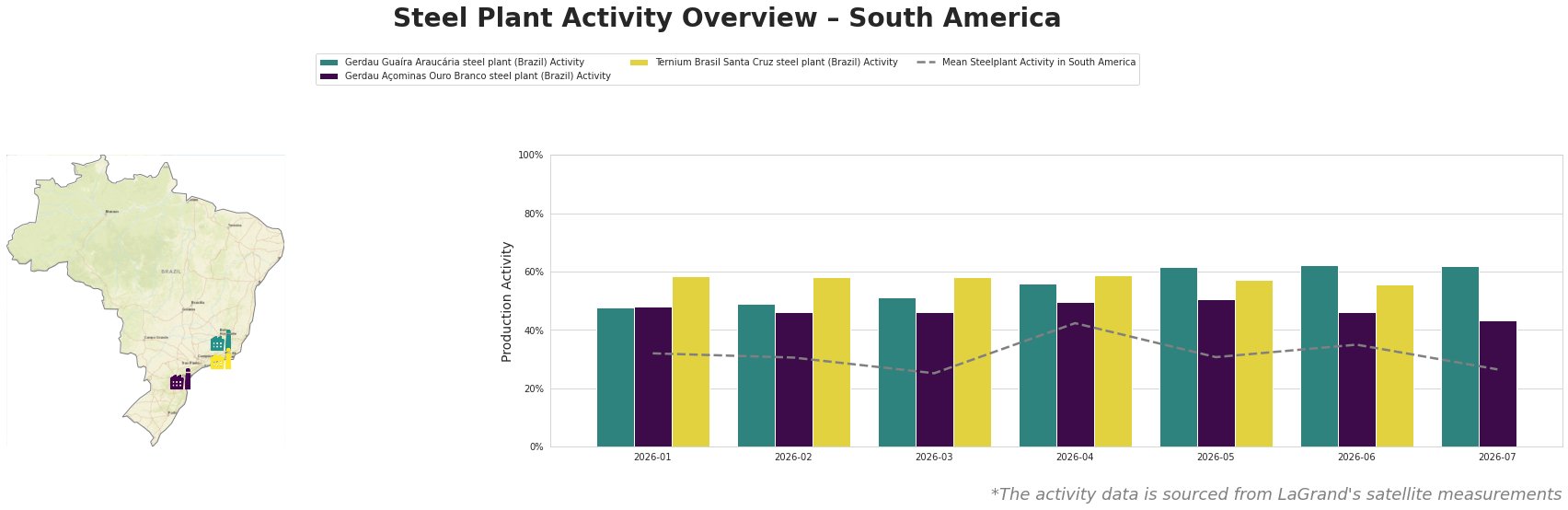
The Gerdau Guaíra Araucária steel plant has maintained a relatively high activity level, closing at 62% in June, yet this reflects a troubling decline in overall market performance alongside the drop to a 26% mean activity level in July, highlighting the impact of reduced exports due to trade barriers. The Gerdau Açominas plant has seen its activity fall to 43% in July, which may be influenced by market uncertainties as reported in “Brazil criticizes EU’s unilateral decision on Mercosur steel imports.” The Ternium Brasil Santa Cruz steel plant, while not fully operational mid-month, shows a downward trend with declining activity levels aligning with reduced demand for finished steel products in the context of increasing tariffs.
Given this landscape, steel buyers and market analysts should prepare for potential supply disruptions, especially from the Gerdau Açominas plant, which is critically affected by the EU’s measures. Immediate procurement actions, including securing long-term contracts with less affected suppliers while hedging against escalating tariffs, are essential. It is crucial to reassess stock levels and consider diversified sourcing options to mitigate risks associated with increasing international trade barriers.