


From the Field to the Dashboard – Built by Experts, for Experts.
Discover What's Really Happening in the Steel Industry
Use the AI-powered search engine to analyze production activity, market trends, and news faster than ever before.
Try the Free AI Search EnginePositive Trends in Ukraine’s Steel Market: Activity Levels Underscore Potential Opportunities for Buyers
Ukraine’s steel industry is exhibiting positive market dynamics, particularly with increased activity at key plants despite challenges. Reports such as “EU unveils tighter steel import quotas, new allocation structure“ and “EU introduces stricter steel import quotas and new distribution structure“ indicate regulatory changes aimed at bolstering local production, which is correlated with a slight uptick in operational activities, particularly within Ukrainian steel manufacturing.
Recent satellite-observed changes reveal that while the Metinvest Zaporizhstal plant maintains a stable activity level around 31%, both the Metallurgical Plant Kametstal (consistently at 55%) and ArcelorMittal Kryvyi Rih (hovering at 54%) reflect resilient operational robustness. No direct relationships between the observed changes at these plants and the specified news articles on import quota adjustments can be asserted, except for a general observation that the new EU Import Quota frameworks may indirectly support stable production levels.
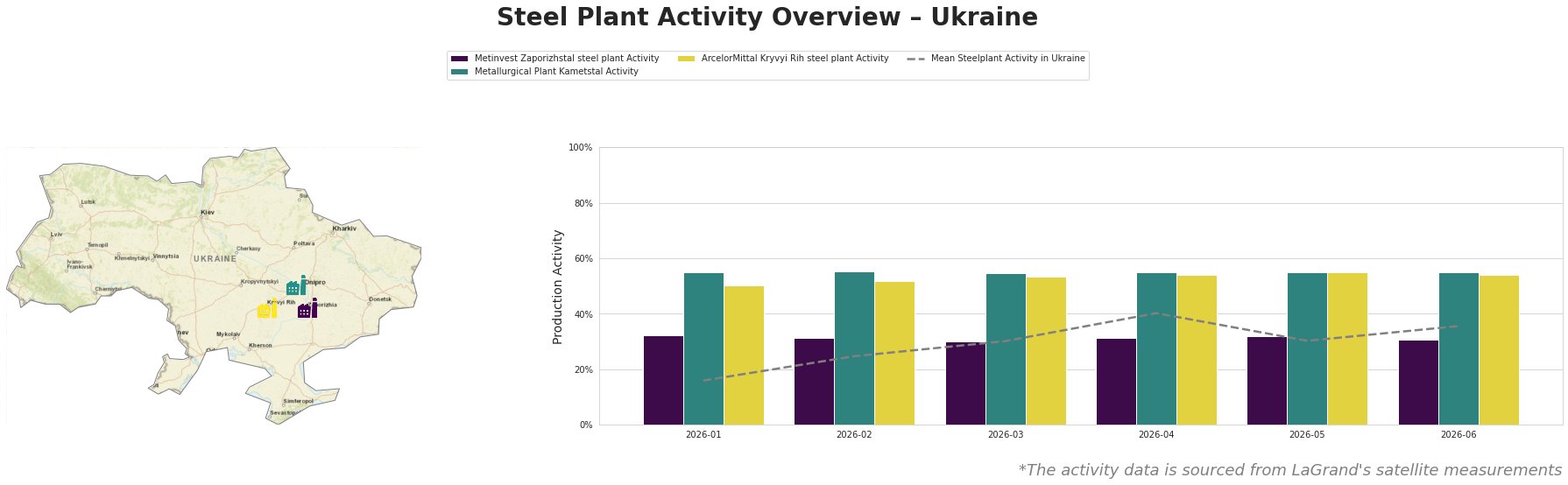
Metinvest Zaporizhstal maintains consistent output with a modest range around 31%, indicating resilience in a challenging environment. Its production focus on hot-rolled products could benefit from shifting import quotas encouraging local sourcing as per EU discussions in the articles mentioned above.
Metallurgical Plant Kametstal demonstrates a robust activity level at 55%, reinforced by consistent operational rates, likely positioning itself well against possible shortages stemming from changes in EU steel imports as specified in “EU unveils tighter steel import quotas, new allocation structure”. Its strong production of semi-finished and finished steel products aligns well with steady market demand.
ArcelorMittal Kryvyi Rih consistently operates at around 54%, reflecting a strong capacity to meet both domestic and European market demands for finished and semi-finished steel products. This capacity is critical as the EU implements tighter import quotas, as reiterated in “UK Steel and Tata seek improvements to EU quotas”, signaling the importance of reliable supply sources.
Given the stable production levels at these major plants and the anticipated effects of the new import regulations, steel buyers should consider:
– Increasing procurement from Metallurgical Plant Kametstal while prices are comparatively stable, as they have robust output.
– Evaluate suppliers’ flexibility amidst changing quotas, focusing on local sources to circumvent potential supply chain disruptions highlighted in recent quota discussions.
By acting on these insights, procurement professionals can strategically position themselves to leverage market opportunities in the emerging landscape of Ukraine’s steel industry.