


From the Field to the Dashboard – Built by Experts, for Experts.
Discover What's Really Happening in the Steel Industry
Use the AI-powered search engine to analyze production activity, market trends, and news faster than ever before.
Try the Free AI Search EnginePositive Outlook for the European Steel Market Amid Changing Import Quotas
Recent developments in the European steel market have yielded a positive sentiment, particularly influenced by the UK eases new steel import quota cuts to 51% instead of 60% and UK adjusts EU import quotas after agreement is reached articles. These changes reflect a strategic adjustment in trade measures that is beginning to stabilize export-import dynamics despite initial concerns from industry stakeholders.
The UK eases new steel import quota cuts to 51% instead of 60% indicates a reduction in tariff-free import quotas, which allows for better access to specialized steels. This reduction aligns well with an increase in overall activity at key steel plants in Europe. Generally, activity levels saw an upward trend across various steel plants, indicating heightened production responsiveness to these policy changes.
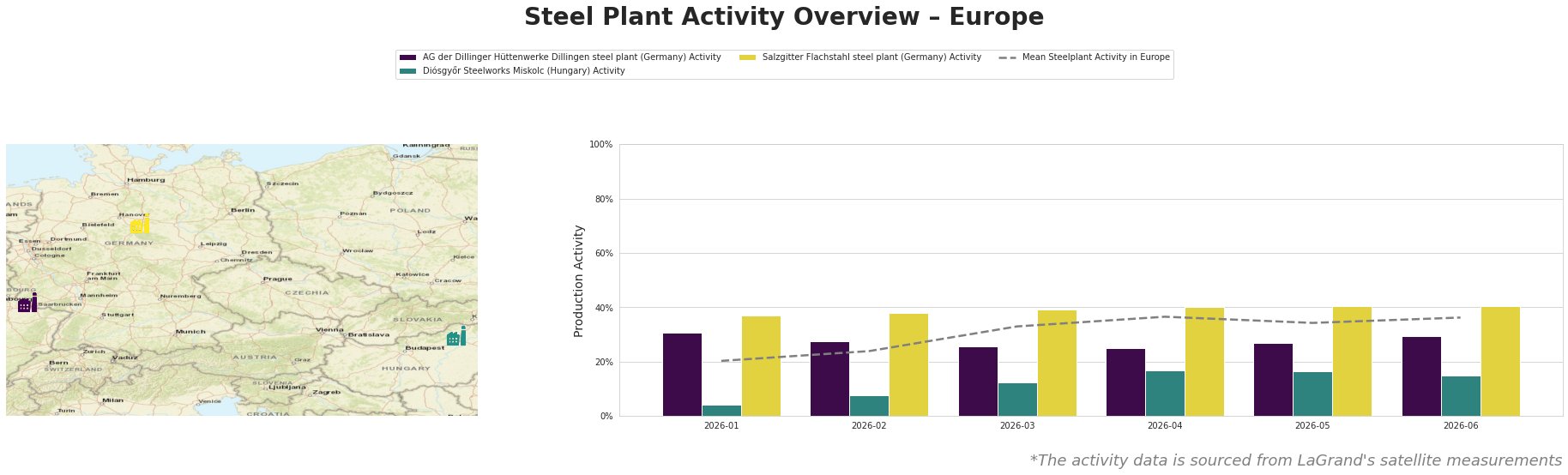
AG der Dillinger Hüttenwerke Dillingen’s activity rose steadily, reaching 29% in June after peaking at 31% in January. This increase positively correlates with the UK’s revised quotas that might enhance domestic operations with 75% of imports remaining unaffected, benefiting integrated producers like Dillinger.
Diósgyőr Steelworks Miskolc, however, exhibited lower activity, rarely exceeding 17%, reflecting an innovation gap and potential overreliance on certain segments. The concerns voiced in the article Measures to protect the UK steel industry continue to provoke a negative reaction from the industry, despite the updates highlight fears of rising costs due to protection measures, which could stall growth for less integrated plants such as Diósgyőr.
Conversely, Salzgitter Flachstahl’s activity reached 41% as of June, indicative of a robust surge largely attributed to their strategic alignment with green steel initiatives. The ongoing magazine UK steelmakers still have concerns over new steel trade regime reinforces that domestic producers are working to innovate despite market pressures, suggesting more progress towards sustainability may enhance their competitiveness.
Adapting procurement strategies in anticipation of potential supply shortages from specific regions or products is advisable. Steel buyers should consider diversifying contracts across these plants, especially leaning on Salzgitter Flachstahl and Dillinger as they exhibit stronger activity levels and market adaptability. Securing agreements prior to anticipated supply disruptions due to quotal limitations could provide a buffer against price increases or supply volatility, especially in light of ongoing negotiations reported in British steelmakers are calling for an improvement in the terms of trade in steel with the EU and the implications for trade dynamics moving forward.