


From the Field to the Dashboard – Built by Experts, for Experts.
Discover What's Really Happening in the Steel Industry
Use the AI-powered search engine to analyze production activity, market trends, and news faster than ever before.
Try the Free AI Search EngineNorth America’s Steel Market Update: Neutral Sentiment Amid Trade Tensions and Activity Variations
Recent developments in North America’s steel market highlight a neutral sentiment influenced by external trade tensions and varying activity levels among assessed steel plants. “Trump threatens to raise tariffs on European cars and trucks“ and “The EU will respond to Trump’s 25% auto tariffs“ have raised concerns about potential disruptions that could affect the steel supply chain, although no immediate relationship was observed between these articles and the activity shifts in the plants.
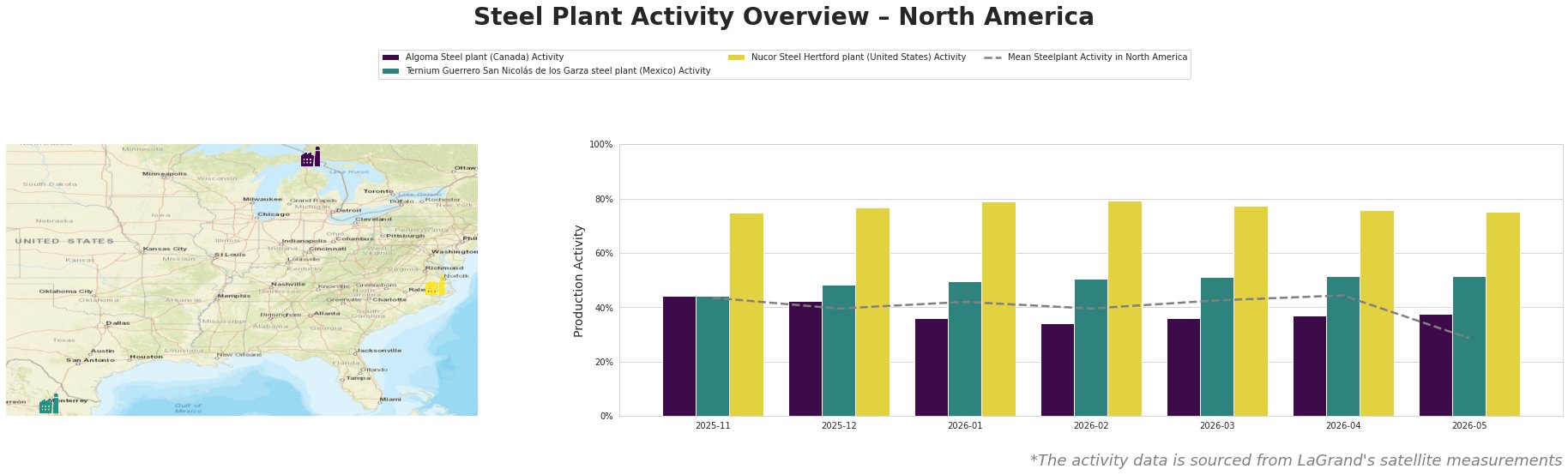
Algoma Steel’s activity dipped from 44.0% to 38.0% in May 2026, below the mean activity which reflects a broader downturn and can be linked indirectly to rising concerns over U.S.-EU trade relations exacerbated by “Trump threatens to raise tariffs on European cars and trucks.” The plant maintains a robust capacity and emphasizes integrated processing, which may insulate it from some volatility, yet requires close monitoring.
Ternium Guerrero’s activity remained stable at 51.0%, illustrating resilience, likely due to a strong market demand for its hot-rolled and cold-rolled coils amidst ongoing trade uncertainties. Conversely, Nucor Steel experienced a decline from 79.0% to 75.0% in May, indicating potential supply chain vulnerabilities as the market adjusts to anticipate fluctuations in raw material sourcing influenced by tariffs.
The trade disputes foreshadow stronger competition and potential shortages. Steel buyers should consider securing contracts with reliable suppliers like Ternium Guerrero, which has shown stable performance, to mitigate risks associated with future tariff-related supply disruptions. Additional procurement strategies might focus on diversifying sourcing from plants like Algoma, where variations may continue amid shifts in trade policy. Regularly reassessing supply chain dependencies and preparing for possible retaliatory tariffs by the EU could be essential in maintaining a steady supply stream.