


From the Field to the Dashboard – Built by Experts, for Experts.
Discover What's Really Happening in the Steel Industry
Use the AI-powered search engine to analyze production activity, market trends, and news faster than ever before.
Try the Free AI Search EngineNeutral Sentiment in Iran’s Steel Market as Export Restrictions Lifted and Activity Levels Stabilize
Iran’s steel market remains in a neutral state, shaped by recent developments affecting both local operations and export capabilities. Following the article “Iran has lifted temporary restrictions on steel exports“ published on June 14, 2026, activity at steel plants has shown varied trends, but no immediate correlation with increased exports was observed. Meanwhile, the article “Hormuz tanker traffic unchanged after US‑Iran deal“ published on the same date indicates ongoing shipping challenges that may affect material supply chains but do not point to direct impacts on local steel production.
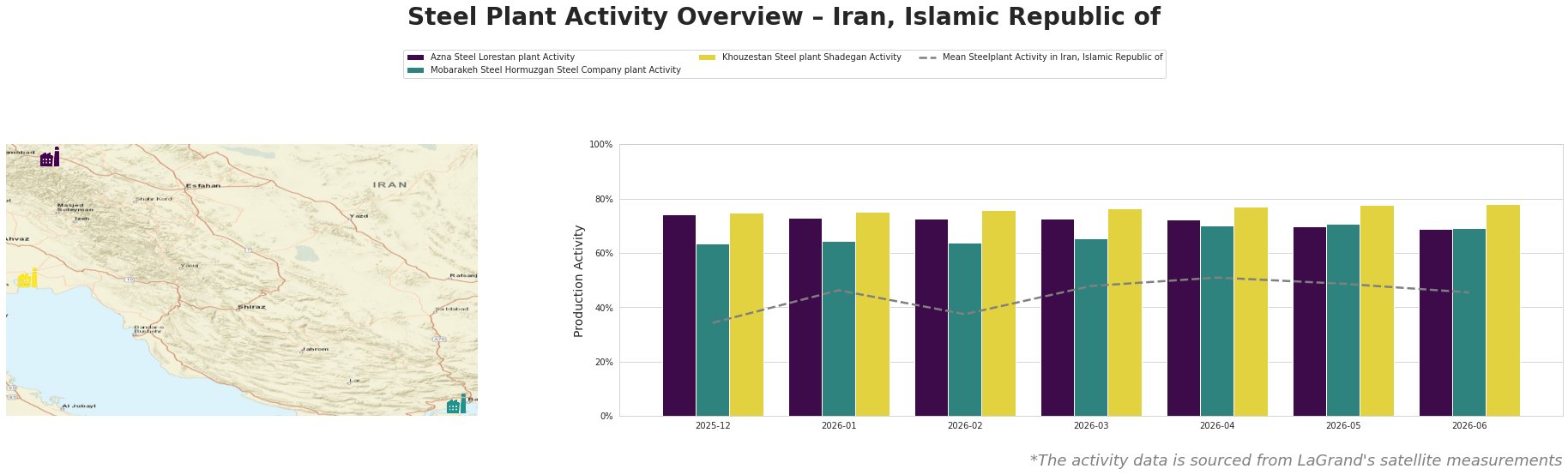
The Azna Steel Lorestan plant shows consistent activity levels, declining slightly from 70% in May to 69% in June. This stability reflects the plant’s ongoing operations but does not correlate with new export opportunities following lifted restrictions. Mobarakeh Steel plant experienced a minor decline from 71% to 69%, indicating overall steadiness but also a lack of immediate export demand. Meanwhile, Khouzestan Steel plant maintained the highest activity at 78%, remaining constant, possibly due to anticipated internal demand versus export expectations.
The absence of a significant spike in activity despite lifted export restrictions suggests cautious optimism in the market. This neutrality is further reflected in the steady vessel traffic noted in “Hormuz tanker traffic unchanged after US‑Iran deal”, where ongoing safety concerns inhibit shipping, indicating potential supply chain delays that could impact steel procurement.
Specifically, steel buyers should prepare for:
- Potential supply disruptions from higher international shipping costs owing to low tanker traffic through the Strait of Hormuz. It would be prudent to consider alternative logistical strategies.
- Continued monitoring of export levels from specific plants as lifting restrictions may not lead to immediate market fluidity. Azna Steel’s and Mobarakeh Steel’s recent activity levels suggest a need for strategic procurement, ideally focused on forward contracts if demand signals improve.
Ultimately, while the removal of export restrictions presents new opportunities, disruptions in the logistics of vital shipping lanes and uncertainty in market response necessitate a careful approach to procurement in the current climate.