


From the Field to the Dashboard – Built by Experts, for Experts.
Discover What's Really Happening in the Steel Industry
Use the AI-powered search engine to analyze production activity, market trends, and news faster than ever before.
Try the Free AI Search EngineEuropean Steel Market Thrives Amid New Trade Regulations and Satellites Reveal Surge in Plant Activity
The European steel market is showing a very positive sentiment driven by new protective measures and insights from satellite-observed plant activities. Notable regulations from the articles “European Council details trade regime amendments”, “Final EU steel trade framework draft keeps carry-over”, and “The European Council has issued a statement on new protective measures in the steel market” correlate with changes in activity observed through satellite imagery. The latest gathered data indicates a significant increase in operational output at key European facilities.
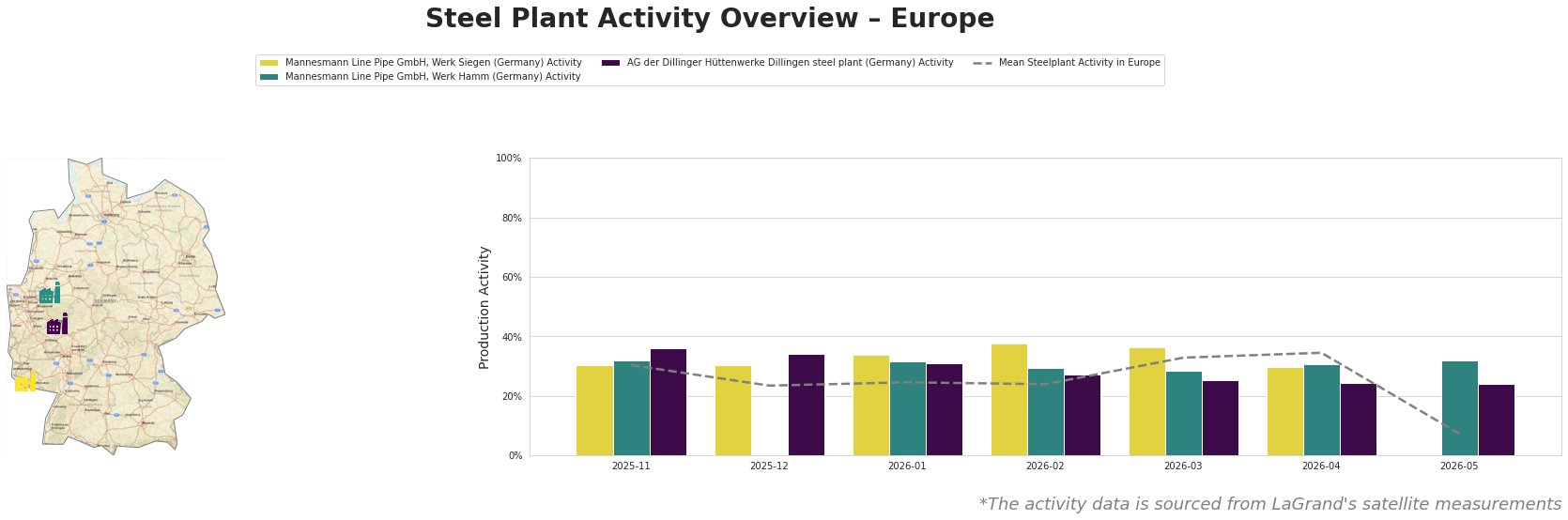
Activity levels at Mannesmann Line Pipe GmbH, Werk Siegen peaked at 38% in February 2026, aligning with the E.U.’s protection measures aimed at addressing overcapacity and ensuring market stability, as outlined in “WTO Committee reviews steel safeguards”. However, subsequent months have shown fluctuations, indicating a potential over-reliance on external imports during tight domestic capacities.
Similarly, the Mannesmann Line Pipe GmbH, Werk Hamm experienced a recent decline to NA in December 2025, before recovering to 32% in May 2026 just before the new regulations were set to take effect. This aligns with the anticipated adjustments in quotas that are likely to stabilize pricing and demand.
The AG der Dillinger Hüttenwerke Dillingen observed robust activity levels between 36% in November 2025 and 31% in January 2026, showcasing its resilience amidst evolving trade frameworks. The plant’s integrated production capability and comprehensive certifications bolster its role in meeting increased domestic demands spurred by protective measures.
A notable point of concern is the steep decline observed in May 2026, where mean activity plummeted to 7%, which may indicate preparation for the regulatory transitions outlined in “The European Council describes in detail the amendments to the trade regime.” This downturn could signal temporary supply disruptions as plants adapt to new import regulations and tariffs.
To mitigate potential supply disruptions, steel buyers should prioritize procurement from currently active plants like AG der Dillinger Hüttenwerke Dillingen, as stable operations align with new regulatory frameworks which are set to take effect soon. Additionally, firms should consider strategies to secure agreements early in the transitional phases outlined in the EU trade regime amendments to prevent shortages in the coming quarters.