


From the Field to the Dashboard – Built by Experts, for Experts.
Discover What's Really Happening in the Steel Industry
Use the AI-powered search engine to analyze production activity, market trends, and news faster than ever before.
Try the Free AI Search EngineEurope Steel Market Update: Activity Increases Amid Ongoing Capacity Challenges
Germany’s steel industry has witnessed a notable uptick, with Germany increased steel production by 9.5% y/y in April and German crude steel production increase in April both indicating a recovery trend. Despite these advancements, as highlighted in these articles, production levels remain below full capacity, showcasing a regional sentiment that is Neutral.
In April 2026, Germany’s crude steel production rose to 3.23 million tons, a 9.5% increase year-on-year. However, this reflects a 3.3% decrease from March, suggesting short-term fluctuations. The increase in activity is corroborated by satellite data that shows consistent production performance from steel plants, although overall utilization rates indicate that full recovery has not yet been achieved.
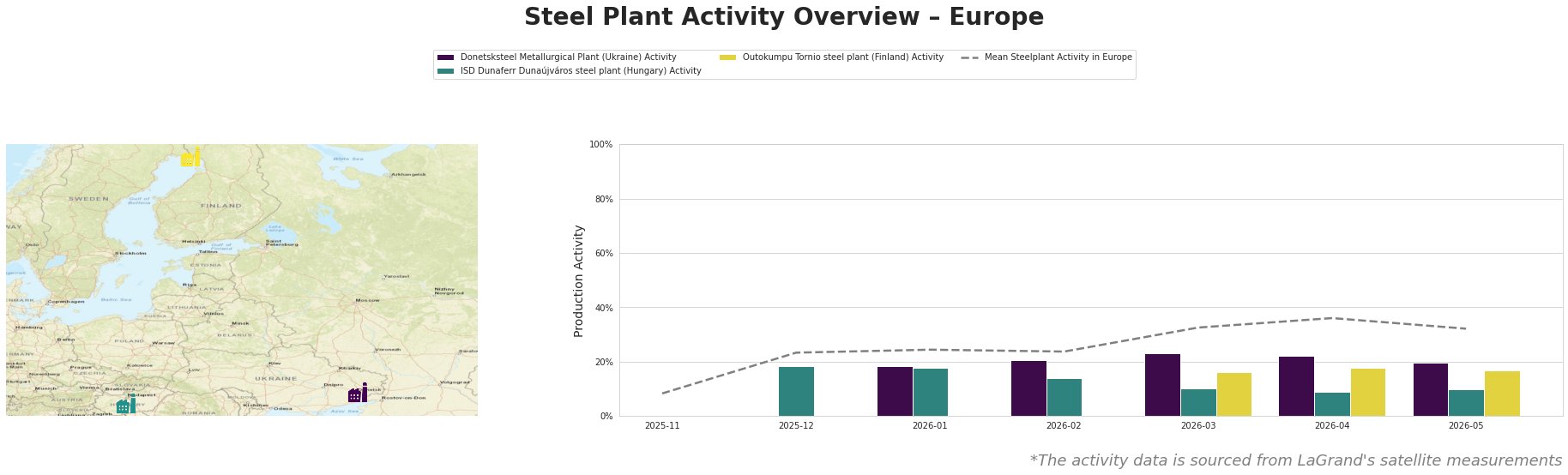
The Donetsksteel Metallurgical Plant in Ukraine has recorded a steady activity rate around 20% in May, suggesting sustained operations despite geopolitical uncertainties. However, its lower overall output remains disconnected from the rising German production levels, highlighting no direct link can be established.
The ISD Dunaferr plant’s activity decreased to 9% in April, indicating operational challenges, potentially necessitating closer monitoring of regional supply chains. Conversely, the Outokumpu Tornio plant has shown resilience with a modest activity of 17%, catering to sectors such as automotive and infrastructure.
As steel production pressures rise in Germany, procurement professionals should strategize on:
- Monitoring sourcing from Germany for increased supply potential, noting that the contrasting activity levels in Hungary suggest potential delays.
- Preparing for possible supply disruptions in Hungary given the lower plant utilization, particularly from ISD Dunaferr, where output challenges could impede timely deliveries.
- Considering diversification strategies by engaging with the Tornio plant due to its steady production and product offering—particularly for specialized sectors needing consistent supply.
By aligning procurement actions with the evolving activity levels and regional outputs, steel buyers can better navigate the uncertain landscape of the European steel market.