


From the Field to the Dashboard – Built by Experts, for Experts.
Discover What's Really Happening in the Steel Industry
Use the AI-powered search engine to analyze production activity, market trends, and news faster than ever before.
Try the Free AI Search EngineEurope Steel Market Report: Positive Trends Amid New EU Quotas
Recent developments in the European steel market indicate positive momentum despite significant regulatory challenges. The articles, The EU’s plan to reduce steel import quotas will significantly harm Ukraine – FT and EU parliament adopts steel safeguards, highlight the EU’s decision to cut steel import quotas and impose tariffs, raising concerns, especially for Ukrainian producers. Despite these challenges, activity data shows resilient performance from select plants, particularly in Germany, reflective of broader market strength.
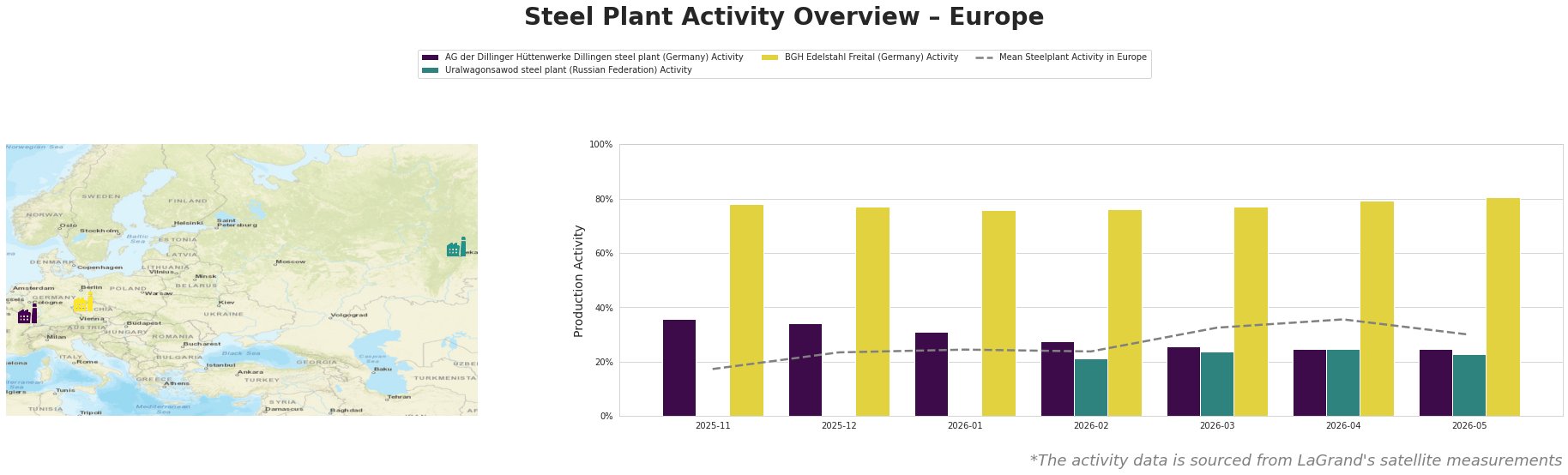
The AG der Dillinger Hüttenwerke Dillingen steel plant has shown a stable activity level, with a recorded peak of 36% in November 2025, aligning with the growing need for domestic steel production amid external quota pressures. However, by May 2026, the activity dipped to 25%, perhaps indicating adjustments in line with the EU’s new emissions and tariff regulations as noted in The EU’s plan to reduce steel import quotas will significantly harm Ukraine – FT.
In stark contrast, BGH Edelstahl Freital has maintained higher activity levels, achieving a peak of 81% in May 2026, which reflects robust demand for stainless and tool steels, essential for sectors like sustainable energy and automotive. The difference in performance can be tied back to the rising international pressures on markets and the strategic focus on high-demand product categories.
Uralwagonsawod remains less active with reported shifts of only up to 24% in March 2026, potentially reflecting the geopolitical instability affecting its operations, although direct correlations with current market narratives haven’t been firmly established.
The implications of the new quota regime may disrupt supplies from Ukraine, as highlighted in the news articles, particularly as demand rebounds in Europe. Steel buyers should prepare for potential procurement challenges linked to reduced volumes from Ukrainian producers, while leveraging stable supply from established EU plants. Immediate procurement from domestic sources like AG der Dillinger and BGH Edelstahl is recommended to safeguard against global supply chain uncertainties prompted by the new EU policies.
Purchasing strategies should thus prioritize engaging with higher-performing plants and securing contracts early, given the market’s positive outlook amidst regulatory hurdles.