


From the Field to the Dashboard – Built by Experts, for Experts.
Discover What's Really Happening in the Steel Industry
Use the AI-powered search engine to analyze production activity, market trends, and news faster than ever before.
Try the Free AI Search EngineAsia Steel Market: Neutral Sentiment Amidst Rising Overcapacity and Activity Fluctuations
Recent findings in the steel market across Asia reveal a Neutral sentiment as concerns about overcapacity deepen. The OECD’s report, titled “Global steel overcapacity deepens: OECD“, indicates that global steel overcapacity is projected to reach 745 million tonnes by 2028, driven in part by manipulated market conditions, especially concerning Chinese exports. This aligns with observed satellite data showing fluctuating activity at major Asian steel plants.
The Baowu Group Echeng Iron and Steel Co., Ltd. has shown a notable drop in activity from 44% in January to 16% in June, with a stable yet low engagement around 34% in previous months. Lower utilization rates correlate with the OECD’s alert regarding diminished competitiveness among market-oriented producers due to surplus capacity. In contrast, JSW Steel’s Salem plant remains robust, maintaining high activity levels around 79%, possibly benefiting from regional demand growth noted in the “OECD: Global steel demand recovery to remain weak as excess capacity crisis deepens“ report. Meanwhile, ArcelorMittal Nippon Steel India exhibits a similar trend in decreased activity, moving from 36% to 31%, indicative of pressures from excess capacity not entirely alleviated by local demand.
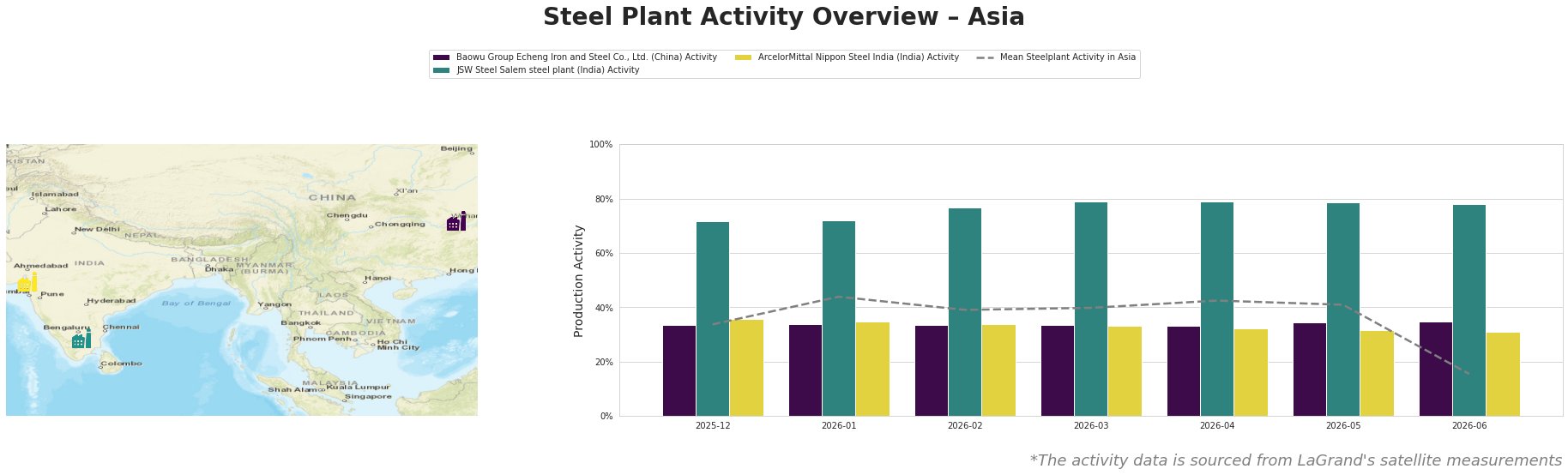
Baowu Group, based in Hubei, operates primarily using a blast furnace (BF) process, maintaining a crude steel capacity of 4.4 million tonnes. The substantial drop to 16% activity in June is concerning as it aligns with the warning from the OECD about diminishing production output and potential supply chain disruptions caused by global overcapacity. This drop shows no connection to any specific shifts in market demand, emphasizing an industry-wide trend resulting from excess capacity and underutilization.
In Tamil Nadu, the JSW Steel Salem plant showcases resilience with consistent activity levels around 79%, attributed to strong demand in sectors like energy and construction. This level remains significantly above the mean in Asia, suggesting effective management amidst the larger context of market disruptions due to the OECD’s forecasted growing overcapacity.
ArcelorMittal Nippon Steel India, located in Gujarat, has observed a decline from 36% to 31% in the first half of 2026, possibly reflecting the impacts of the “OECD: Global steel trade shifts as China’s exports hit record high despite weak world trade“, indicating the challenges faced with rising quantities of cheaper imports, particularly from China.
Given these findings, steel buyers should prioritize procurement from robust suppliers like JSW Steel, which appear more insulated from the effects of overcapacity pressures. Moreover, vigilance is recommended when dealing with suppliers facing significant activity reductions, such as Baowu, as they may face potential supply disruptions. Analyzing supplier activity in conjunction with global market dynamics is critical to ensuring strategic procurement decisions.