


From the Field to the Dashboard – Built by Experts, for Experts.
Discover What's Really Happening in the Steel Industry
Use the AI-powered search engine to analyze production activity, market trends, and news faster than ever before.
Try the Free AI Search EnginePositive Steel Market Sentiment in Asia Amidst U.S. Tariff Impact on Trade Relations
Recent analyses indicate a positive outlook for the steel market in Asia, despite geopolitical tensions affecting international trade. Reports from EU steel exports to US down 34% one year after Trump’s 50% tariffs detail considerable declines in European steel exports due to increased U.S. tariffs, which have resulted in pronounced shifts in supply chains. Coupled with insights from Trump’s tariffs have significantly reduced steel exports from the EU to the US – EUROFER, these developments correlate with observed satellite data showing fluctuating activity levels among major steel plants in Asia.
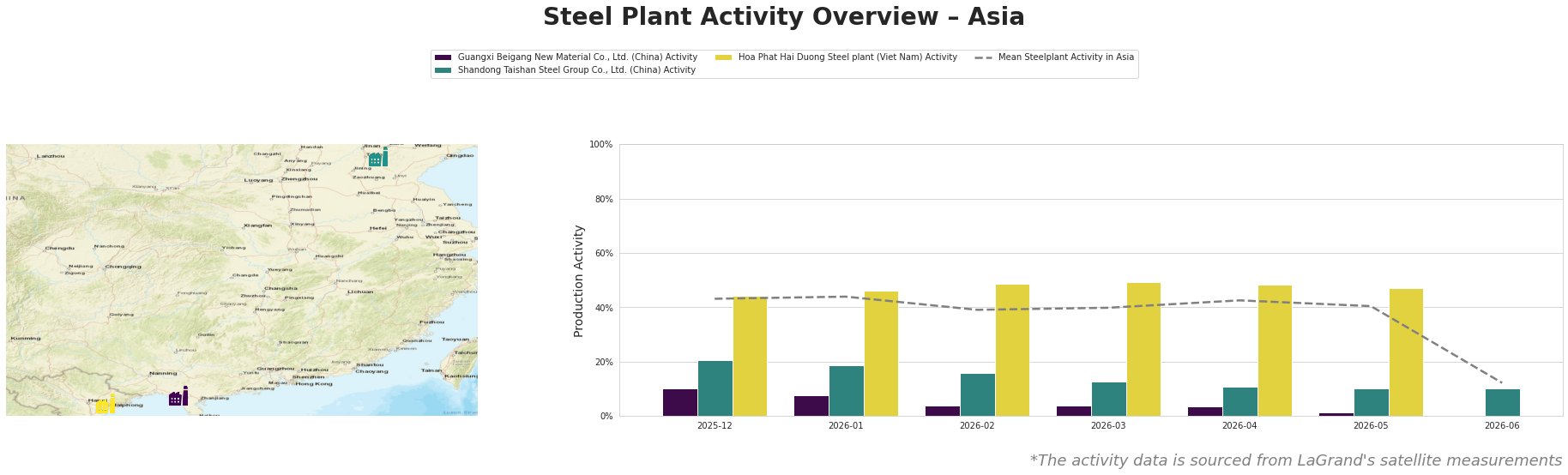
The activity levels for Guangxi Beigang New Material Co., Ltd. show a sharp decline, dropping from 10% in December 2025 to 1% by May 2026. This 90% decrease does not have a clear connection to the cited news articles regarding U.S. tariffs on EU steel. Conversely, Shandong Taishan Steel Group Co., Ltd. also faced a drop, from 21% to only 10% in the same timeframe; this significant activity decline reflects global overcapacity challenges indirectly highlighted in Canadian steelmakers have called for an end to the tariff war between the US and Canada as neighboring sectors adjust to shifts in steel demand caused by tariffs.
In contrast, Hoa Phat Hai Duong Steel Plant maintained relatively stable activity levels, hovering near 49%, suggesting resilience in production amid these trade dynamics. Such performance could be advantageous for procurement professionals looking for reliable suppliers, particularly as Asian steel producers adapt to the evolving market landscape.
Given these insights, procurement recommendations include focusing on Vietnamese suppliers like Hoa Phat Hai Duong Steel Plant, which demonstrates consistent activity and could mitigate risks linked to European trade difficulties stemming from tariffs. Monitoring emerging land-based supply routes and logistics strategies within Asia is crucial, as Steel tariff boosts US industry, raises costs for end-users underscores potential bottlenecks for downstream markets that may require alternative sourcing solutions. Additionally, analyzing production adjustments in response to tariff news can guide strategic procurement decisions, ensuring that steel sourcing remains agile and responsive to ongoing geopolitical developments.