


From the Field to the Dashboard – Built by Experts, for Experts.
Discover What's Really Happening in the Steel Industry
Use the AI-powered search engine to analyze production activity, market trends, and news faster than ever before.
Try the Free AI Search EngineEuropean Steel Market Faces Unprecedented Challenges Amid Weak Demand and Uncertain Quotas
In Europe, the steel market sentiment has turned notably negative due to subdued demand and rising uncertainties. The article European flat steel imports market subdued, eyes on safeguard outcome highlights traders’ caution as they await the impact of new safeguard measures starting July 1, leading to reduced trading activity. This sentiment correlates with diminished activity levels observed at key steel plants, particularly noted in the EU HRC buyers focus on local trade report, where concerns about import activity further pressured market dynamics.
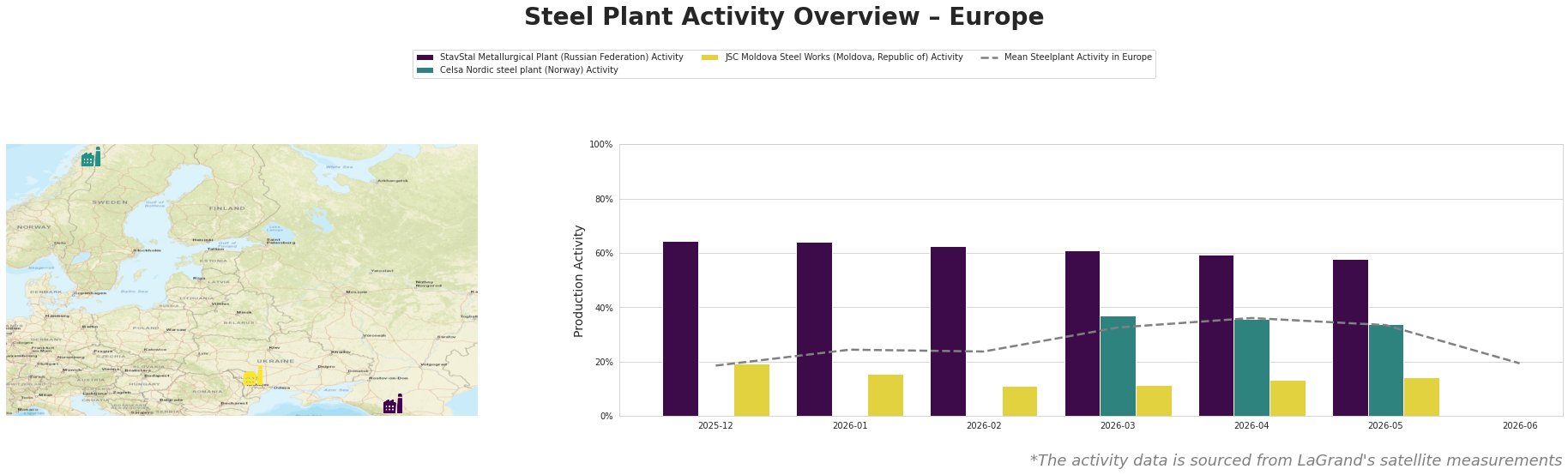
The overall mean activity level of 19% for June signifies a clear downturn, dropping sharply from 33% in May. Notably, the StavStal Metallurgical Plant’s activity fell from 58% in May to a non-recorded status in June, indicating potential operational stoppages likely tied to broader market conditions and reduced demand, as indicated in the article European longs markets mostly stable amid first signs of weakness.
The Celsa Nordic steel plant exhibited a healthy activity level of 37% in March, but like other plants, showed a decline towards the end of June, which can be interpreted in the context of reduced local demand and the impending safeguard measures mentioned earlier. JSC Moldova Steel Works also demonstrated similar downward trends, dropping from an activity level of 14% in May, which echoes the sentiments expressed in northern Europe about weak demand for steel products, as outlined in European steel heavy plate prices dip in Italy; Northern Europe stable on slow demand.
Given the current dynamics, potential supply disruptions are imminent, primarily affecting countries like Bulgaria, which are already facing weakened domestic demand for rebar, as noted in Bulgarian rebar prices soften amid financial uncertainty. Cautious procurement strategies are recommended, with a focus on immediate stock needs rather than extensive restocking.
For steel buyers, it is prudent to prioritize localized sourcing strategies while closely monitoring the impact of safeguard measures on import prices. As the market stabilizes in Italy and Northern Europe according to European sheet metal prices in Italy are declining; Northern Europe is stable due to low demand, buyers should engage in flexible negotiations, aligning with lowered price pitches across regions while remaining aware of logistical challenges from importing longer lead-time products.