


From the Field to the Dashboard – Built by Experts, for Experts.
Discover What's Really Happening in the Steel Industry
Use the AI-powered search engine to analyze production activity, market trends, and news faster than ever before.
Try the Free AI Search EngineNeutral Market Outlook for the Iranian Steel Industry Amid Rising Global Energy Prices
Iran’s steel industry faces challenges due to external geopolitical tensions, particularly as highlighted in the news article “The World Bank forecasts a 24% increase in global energy prices in 2026.” This rise in energy costs is closely tied to recent observed activity at key steel plants, revealing fluctuations in production levels.
April satellite data indicates a noteworthy decrease in overall steel plant activity, correlating with the geopolitical climate. The World Bank forecast foresees increased commodity prices stemming from disruptions related to Iran, while “Crude futures surge 7pc to new four-year high“ signals a prolonged period of heightened crude prices affecting operational costs. However, “Japanese VLCC exits Mideast Gulf after talks with Iran“ offers a glimmer of hope for reduced pressure on shipping routes, potentially stabilizing supplies.
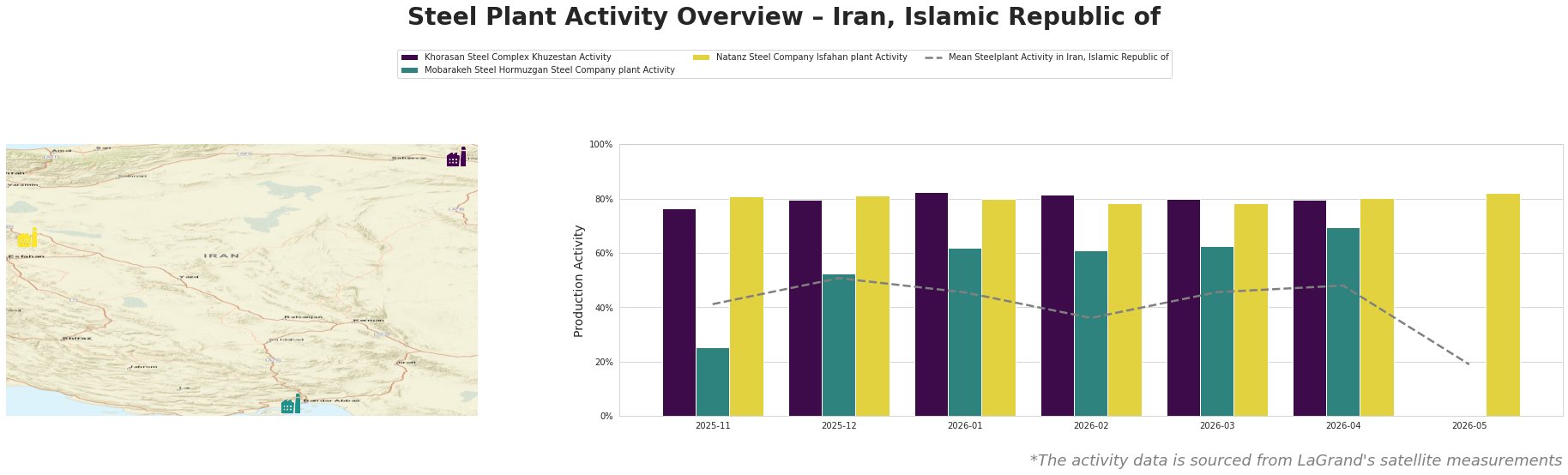
The Khorasan Steel Complex sustained activity levels with a peak of 82% in January, but faced a declining trend showing 80% in April before dropping to – in May. The Mobarakeh Steel plant reported increased activity peaks in December (52%) and January (62%), followed by a minor decline in April to 70%. The Natanz Steel plant held relatively stable activity with an 82% peak in May, emphasizing its resiliency amidst the fluctuations.
Despite notable production levels at Khorasan and Natanz, the overall mean activity indicates a decline from 51% in December to only 19% in May, emphasizing rising operational challenges. Speculation around military action impacting shipping’s stability is suggested by the “Crude futures surge 7pc to new four-year high”, which points to potential supply disruptions that buyers must hedge against.
Given these developments, steel buyers should anticipate increased procurement costs and potential supply constraints. It’s prudent to secure contracts and explore alternate suppliers outside of Iran to buffer against the forecasted energy price escalation. Consider placing orders strategically in anticipation of further volatility, particularly influenced by geopolitical tensions and fluctuating crude prices.