


From the Field to the Dashboard – Built by Experts, for Experts.
Discover What's Really Happening in the Steel Industry
Use the AI-powered search engine to analyze production activity, market trends, and news faster than ever before.
Try the Free AI Search EngineSteel Market Report: Severe Activity Declines in Europe Amid Legislative Challenges
The European steel market is currently facing a Very Negative sentiment as observed activity levels in notable steel plants reflect significant declines. Recent issues identified in the news articles titled “German heating proposals ‘jeopardise climate targets’“ and “Gebäudemodernisierungsgesetz Guter Ansatz oder zu kurz gedacht?“ directly correlate with the downturn in plant activity, notably around increasing operational costs and legislative uncertainties affecting the industry.
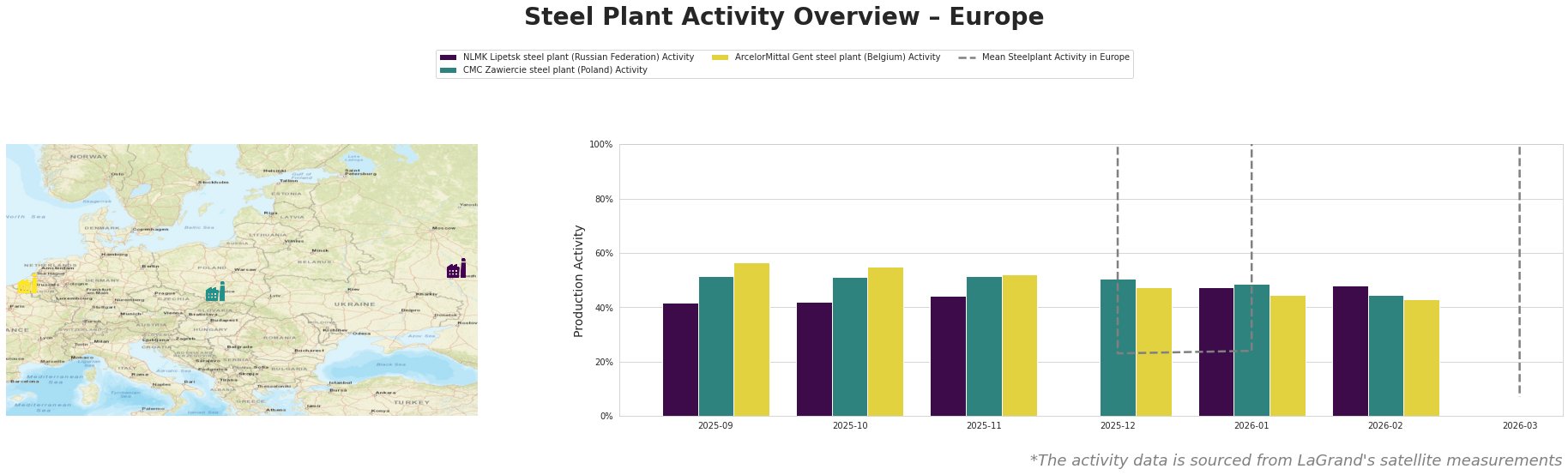
The NLMK Lipetsk steel plant has experienced a dramatic activity drop, plunging to 7% by March 2026, from 23% in December 2025. This downward trend is likely exacerbated by the criticized legislative changes mentioned in “German heating proposals ‘jeopardise climate targets’,” where increasing heating costs and concerns about CO2 emissions could weaken steel demand due to the associated costs impacting its end-user sectors.
The CMC Zawiercie and ArcelorMittal Gent plants also display a concerning decline in activity, dropping to 45% and 43%, respectively, in February 2026. The ongoing debates around the efficacy and cost implications of Germany’s heating laws, discussed in articles like “Was tun im Heizungskeller?“, may contribute to a stagnation in demand across the region as construction and manufacturing sectors reassess their needs due to rising operational costs.
In terms of procurement actions, it is advisable for steel buyers to consider the following:
-
Diversify Sourcing: Given the potential supply disruptions implied by the significant activity declines, buyers should explore alternative suppliers to mitigate risks associated with plant instability, particularly in regions significantly impacted by legislative changes.
-
Engage in Long-term Contracts: Securing long-term contracts with stable suppliers may hedge against uncertain future price increases driven by legislative effects on supply chains.
-
Monitor Legislative Developments: Ongoing and upcoming regulatory changes should be closely monitored as their impact on manufacturing costs and demand could create further volatility, emphasizing the need for agile procurement strategies.
The correlation between legislative challenges and observed decline in activity levels strictly reinforces the necessity for strategic foresight among steel procurement professionals operating in the turbulent European market.