


From the Field to the Dashboard – Built by Experts, for Experts.
Discover What's Really Happening in the Steel Industry
Use the AI-powered search engine to analyze production activity, market trends, and news faster than ever before.
Try the Free AI Search EngineUkraine’s Steel Market Faces Severe Disruption Amid Negative Sentiment and Activity Declines
Ukraine’s steel industry is currently experiencing turbulent conditions, with severe drops in activity levels as highlighted in recent reports. The news articles titled “UK steel safeguard plans face industry backlash as July looms” and “Changes to quota system for UK steel imports expected amid industry backlash” detail the ongoing resistance by the UK steel sector against new quotas and tariffs that aim to support domestic production. These protective measures threaten to exacerbate supply constraints and elevate costs, thereby impacting Ukrainian steel producers’ ability to compete effectively.
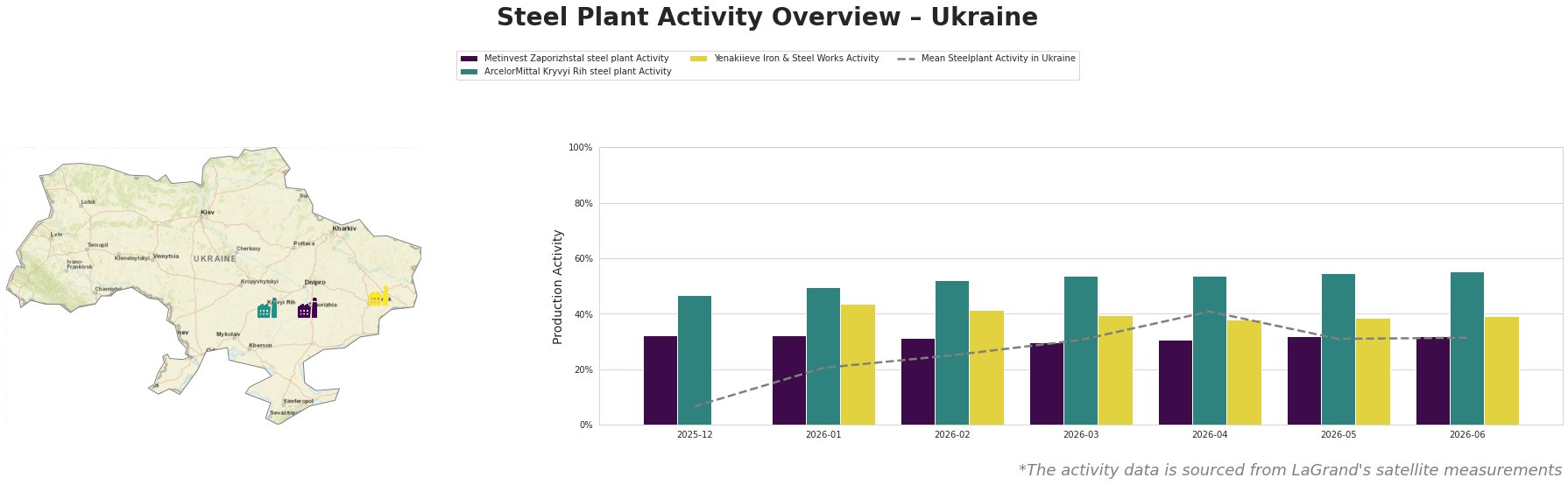
Activity levels across all major steel plants in Ukraine have shown noticeable stagnation, with the mean activity persisting at around 31% in June 2026. Both ArcelorMittal Kryvyi Rih and Yenakiieve Iron & Steel Works reported their activity levels peaking at 55% in May, but have since normalized to 39% and 38% respectively, indicating potential operational challenges linked to lower demand and rising costs of input materials.
Metinvest Zaporizhstal steel plant has remained relatively stable, but its activity has only modestly fluctuated between 30% and 32% over the past six months. Notably, this stagnant performance can be directly tied to the prevailing negative market sentiment and uncertainty stemming from the UK’s proposed protective measures, as reflected in insights from “UK’s plans to protect the steel industry will face a backlash from the industry in the run-up to July”.
The ArcelorMittal Kryvyi Rih plant, with a robust capacity of 8 million tonnes, may further face challenges as the rising domestic pressure drives consumers towards more specialized import needs, a point underscored in the article “Changes to quota system for UK steel imports expected amid industry backlash” which warns against shortages precipitated by industry quotas.
In terms of market implications, the potential for supply disruptions remains significant, particularly for specialized steel grades that Ukrainian producers struggle to supply. Steel buyers should take proactive measures to secure contracts ahead of the July quota changes in the UK and explore diversifying their sourcing options, emphasizing procurement from local producers while maintaining awareness of the international regulatory landscape.
Given the downward trend in plant activities and heightened competition due to UK tariff measures, it is crucial for market analysts and procurement professionals to remain vigilant in tracking further developments and adjust their sourcing strategies accordingly to mitigate possible supply chain risks.