


From the Field to the Dashboard – Built by Experts, for Experts.
Discover What's Really Happening in the Steel Industry
Use the AI-powered search engine to analyze production activity, market trends, and news faster than ever before.
Try the Free AI Search EngineUkraine Steel Market Faces Severe Challenges Amid EU Trade Restrictions
The Ukrainian steel sector experiences critical setbacks primarily linked to The EU’s plan to reduce steel import quotas will significantly harm Ukraine – FT. The decision to cut quotas by 70% threatens up to €1 billion in export revenue, mirroring concerning satellite-observed activity spikes and declines in major steel plants across Ukraine.
Recent data indicates a troubling trend in plant activity levels. Following are the monthly observed activities:
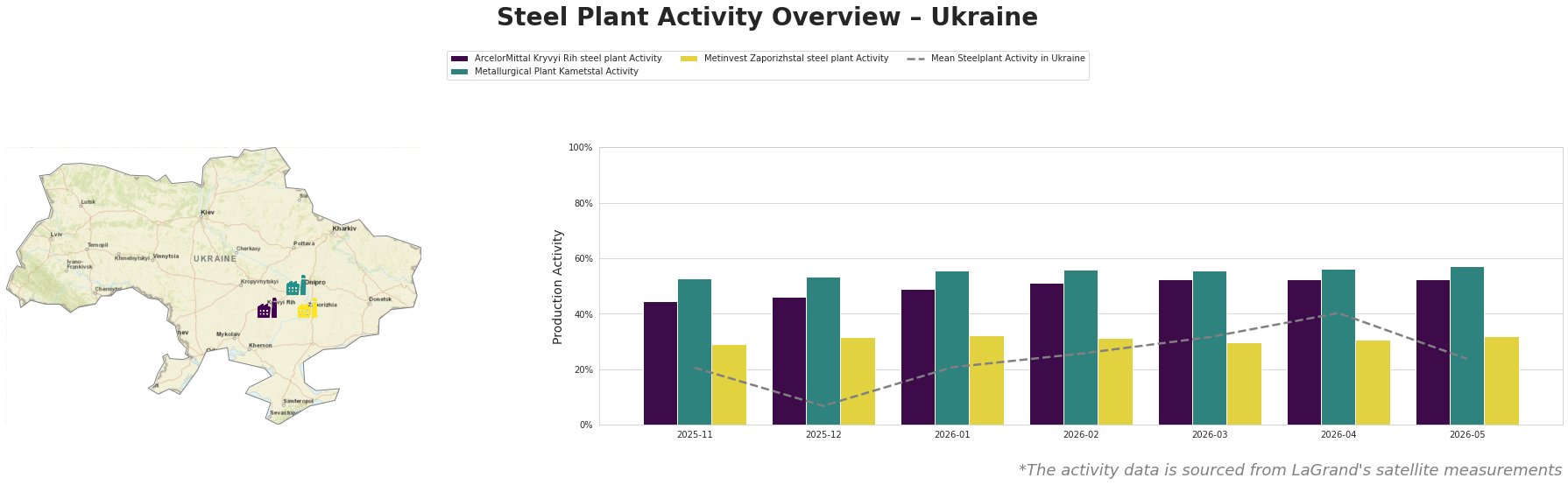
ArcelorMittal Kryvyi Rih, crucial for Ukraine’s steel output with a crude steel capacity of 8,000 tons, revealed a significant drop in mean activity from 40% in April to 24% in May. This aligns with the overall activity downtrend and indicates heightened struggles amidst the EU’s impending quota cuts as reported in EU parliament adopts steel safeguards.
Similarly, Metallurgical Plant Kametstal maintained relatively stable activity at 56% but is at risk of future setbacks due to regulatory restrictions. The plant, boasting a crude steel capacity of 4,200 tons and focusing on energy and transport sectors, might see desperation if new tariffs impact its operational viability.
Meanwhile, Metinvest Zaporizhstal, with an all-time high capture of finished rolled products, experienced fluctuations yet remained steady at approximately 30% activity, indicating resilience amid threats. The EU trade policy should become a tool to support the Ukrainian economy – when Ukrainians protect us – MEP emphasizes that continual trade support is critical for such plants enabling them to play their role in bolstering Ukraine’s defense lines.
Immediate Actions:
– Procurers should focus on ArcelorMittal Kryvyi Rih and Kametstal as primary suppliers, capitalizing on their operational capacity before potential regulatory fallout.
– Stakeholders are advised to explore alternative sources, maintaining flexibility to adapt to the volatile regulatory environment, particularly if EU tariffs are fully realized post-July 1.
– Conduct thorough risk assessments of supply chains given that new EU measures may impose tariff quotas on Ukraine, which could severely disrupt stability in procurement logistics and prices moving forward.