


From the Field to the Dashboard – Built by Experts, for Experts.
Discover What's Really Happening in the Steel Industry
Use the AI-powered search engine to analyze production activity, market trends, and news faster than ever before.
Try the Free AI Search EngineTensions Rise in Iran’s Steel Market Amidst Deteriorating Plant Activity and Diplomatic Stalemate
Iran’s steel market is facing a significant downturn characterized by declining activity levels across major steel plants, primarily driven by geopolitical tensions. Recent developments such as Trump claims deal with Iran to reopen Hormuz: Update and Iran war counter-proposal ‘totally unacceptable’: Trump highlight the precarious situation affecting trade and industrial operations. Following these announcements, satellite observations indicate a notable decline in activity levels across the steel sector, particularly at Khouzestan Steel plant Shadegan and Miyaneh Steel East Azerbaijan.
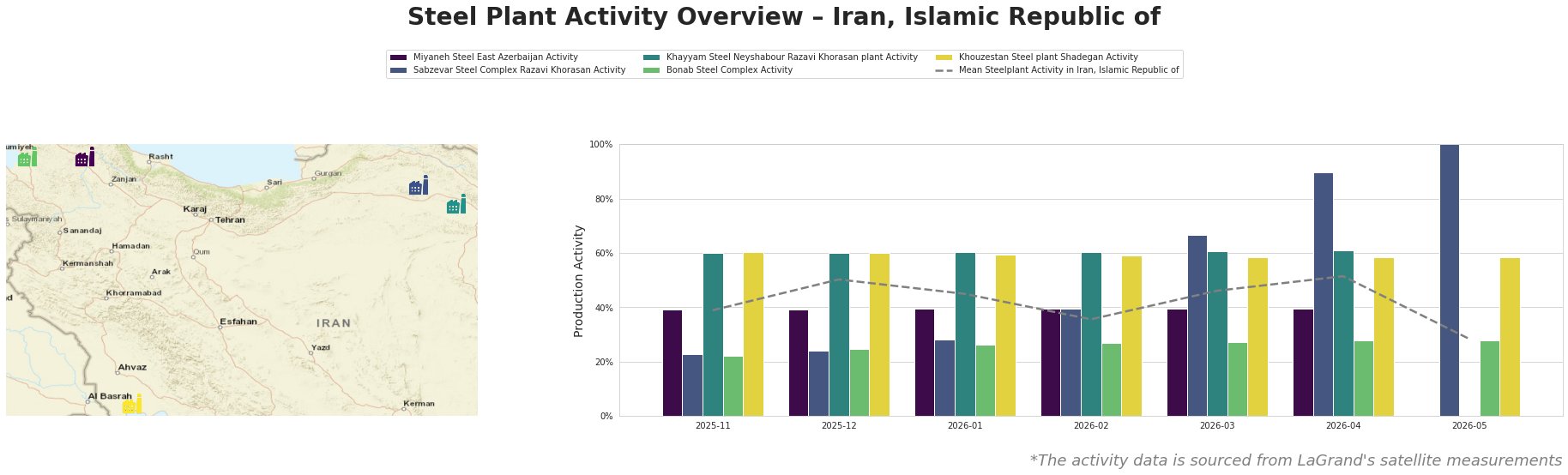
Miyaneh Steel East Azerbaijan has maintained a stable activity level until May 2026; however, significant drops have occurred in May 2026, falling to a 28% average, aligning with rising geopolitical tensions, as noted in the articles referenced. In contrast, Sabzevar Steel Complex has seen a sharp rise reaching 100%, though this may indicate a temporary spike rather than a sustained recovery.
In the context of Khouzestan Steel plant Shadegan, while the activity has remained predictable at 60%, challenges associated with import restrictions due to escalating tensions have been consistently highlighted in the news, particularly with Trump’s recent rejections concerning Iran’s proposals outlined in Iran war counter-proposal ‘totally unacceptable’: Trump.
For procurement professionals, the clear implications of these findings suggest potential supply disruptions, particularly from Miyaneh and Khouzestan plants. With ongoing negotiations between the US and Iran proving ineffective, as discussed in the articles, buyers should consider securing steel supplies from plants showing stability, such as the Bonab Steel Complex, which has demonstrated resilience.
In summary:
– Immediate Actions: Steel buyers should prioritize sourcing from plants with stable outputs despite recent geopolitical tensions.
– Risk Management: Continuous monitoring of negotiations and their ramifications is crucial for timely procurement decisions.
Proactive strategies are paramount to navigate the escalating uncertainty in Iran’s steel market.