


From the Field to the Dashboard – Built by Experts, for Experts.
Discover What's Really Happening in the Steel Industry
Use the AI-powered search engine to analyze production activity, market trends, and news faster than ever before.
Try the Free AI Search EngineSteel Market in Asia Faces Downturn Amid Geopolitical Tensions
Steel production in Asia is experiencing significant downturns, primarily influenced by geopolitical tensions, notably the ongoing U.S.-Iran conflict affecting global trade and energy supplies. Reports like “Factories face soaring costs as Iran war causes supply shocks” and “US and Iran near deal to reopen Strait of Hormuz during proposed ceasefire extension” strongly correlate with reduced activity observed across several key steel plants in the region.
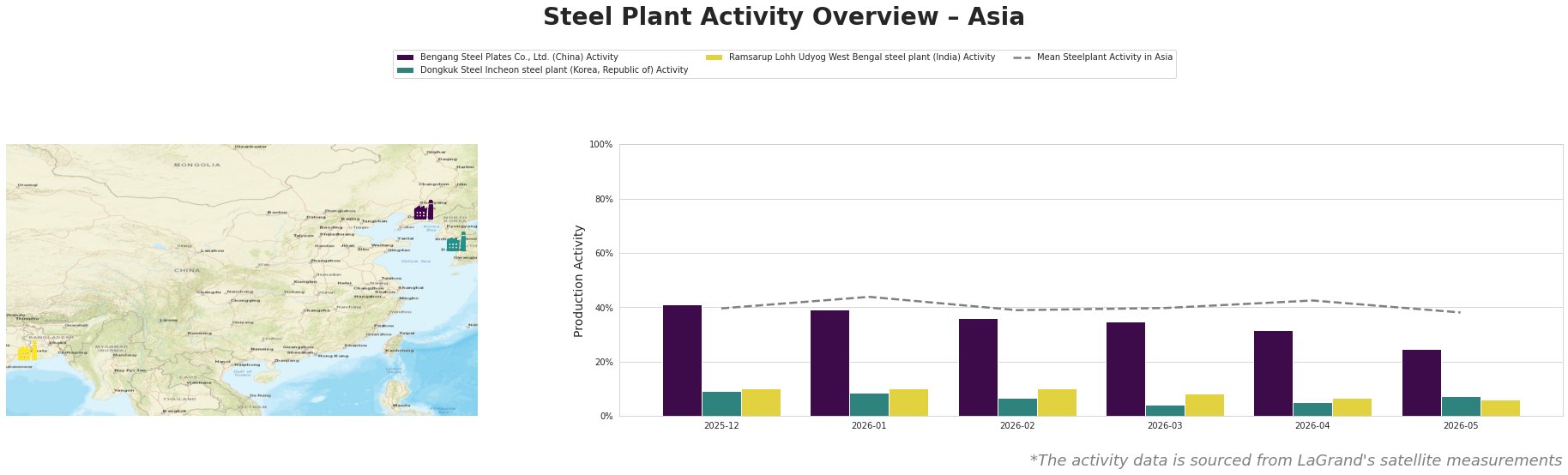
Bengang Steel Plates Co. Ltd. (China) notably decreased its activity from 41% in December to 25% in May, aligning with the escalating costs and supply chain disruptions reported in “Factories face soaring costs as Iran war causes supply shocks.” Meanwhile, the Dongkuk Steel Incheon plant in South Korea experienced minimal fluctuations, dropping from 9% to 7%. However, Ramsarup Lohh Udyog in India also showed diminished activity, from 10% to 6%, possibly reflecting broader regional tensions as indicated in the articles.
Geopolitical events, particularly the tensions surrounding the Strait of Hormuz, directly influence market conditions. The announcements of potential resolutions may reduce immediate supply chain disruptions. However, the expectations set out in “US majors warn oil prices rise as stocks fall” indicate that crude inventory drawdowns may eventually drive prices up, affecting energy costs for steel production and market stability.
Steel buyers should be cautious in their procurement strategies, focusing on securing contracts while prices remain stable. With Bengang Steel’s significant activity drop and overall negative sentiment in the region, diversifying supply sources or negotiating staggered purchases may mitigate risk. Monitoring developments from the U.S.-Iran negotiations could offer critical timelines for potential market improvements but necessitates awareness of ongoing price pressures highlighted in recent articles.