


From the Field to the Dashboard – Built by Experts, for Experts.
Discover What's Really Happening in the Steel Industry
Use the AI-powered search engine to analyze production activity, market trends, and news faster than ever before.
Try the Free AI Search EngineSharp Decline in Germany’s Steel Market Amidst Controversial Policy Changes
Germany’s steel sector is facing a significant downturn, marked by a troubling decline in activity levels across key plants. Recent legislative actions, specifically “German heating proposals ‘jeopardise climate targets’“ and “Was tun im Heizungskeller?“, have raised concerns regarding increased emissions and high heating costs, which could indirectly impact steel demand and production costs. The satellite data reflects these issues, as activity levels have plummeted sharply.
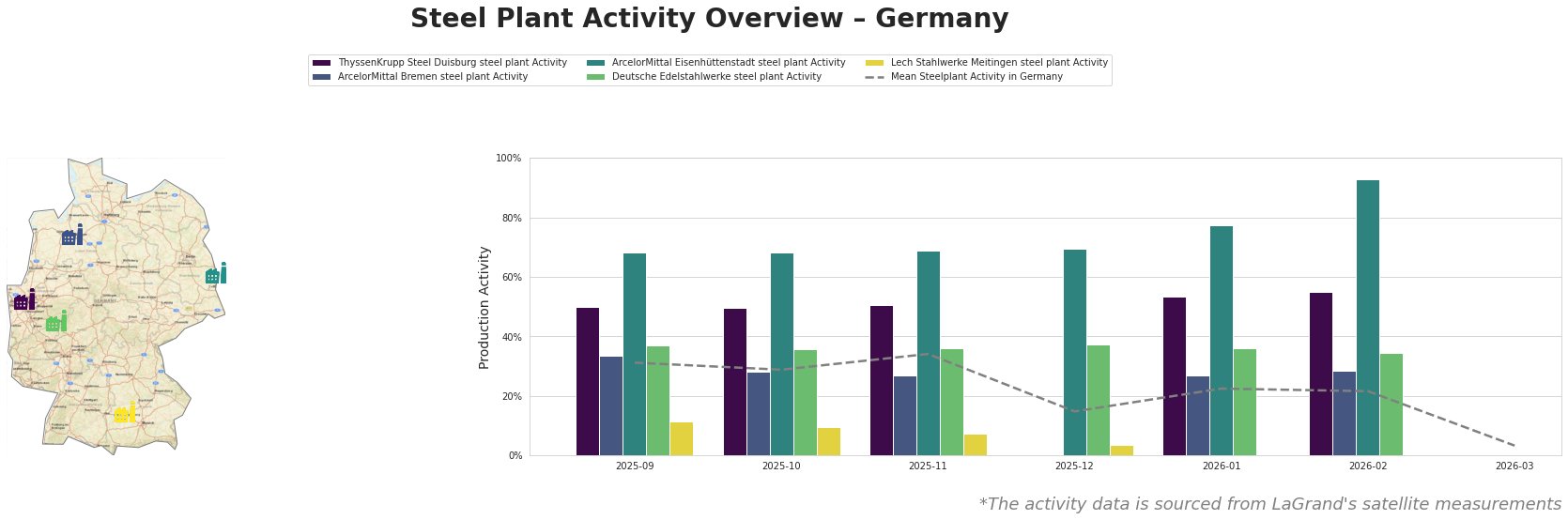
The ThyssenKrupp Steel Duisburg plant exhibited a notable decline, reaching 15.0% activity in December 2025, preceding a recovery to 55.0% by February 2026. This fluctuating pattern suggests supply chain disruptions or demand uncertainties tied to the proposed heating law, although no direct linkage was established.
ArcelorMittal Bremen’s activity decreased drastically to 27.0% in November before stabilizing at 28.0% in February 2026. The implications of the heating proposals could reflect in potential cost spikes affecting this plant’s operational viability.
ArcelorMittal Eisenhüttenstadt peaked at 93.0% activity in February 2026. However, the surrounding regulatory environment introduces uncertainties about its future outputs, as seen in the discussions surrounding the “Gebäudemodernisierungsgesetz Guter Ansatz oder zu kurz gedacht?“ article.
Deutsche Edelstahlwerke saw a drastic drop to 0.0% activity in January 2026, raising concerns over potential closures or major shifts in production strategy, possibly influenced by rising operational costs stemming from the new heating law.
Lech Stahlwerke Meitingen faced an activity level of 0.0% in January 2026, which indicates serious operational challenges, potentially compounded by the legislative changes that may require an adjustment in production strategies.
The overall sentiment in Germany’s steel market is deteriorating. Steel buyers should prepare for potential supply disruptions in specific regions, especially from plants like Deutsche Edelstahlwerke and Lech Stahlwerke Meitingen. It is recommended that buyers consider strategic stockpiling and seeking alternative suppliers for critical contracts, as the uncertainty surrounding climate-related regulations is likely to impact supply chains significantly in the near term.