


From the Field to the Dashboard – Built by Experts, for Experts.
Discover What's Really Happening in the Steel Industry
Use the AI-powered search engine to analyze production activity, market trends, and news faster than ever before.
Try the Free AI Search EngineSevere Disruptions Forecasted for Iranian Steel Market Amid Rising Geopolitical Tensions
Iran’s steel market faces significant challenges as heightened geopolitical tensions and supply chain disruptions are observed. Recent news articles such as “Crude futures surge 7pc to new four-year high“ and “Iran launches attacks after Trump Hormuz order“ correlate closely with observed drops in activity levels within various steel plants. Specifically, the Khorasan Steel Complex Khuzestan and Natanz Steel Company Isfahan plant show notable declines, with the mean steelplant activity dropping from 51% in December 2025 to just 34% by May 2026.
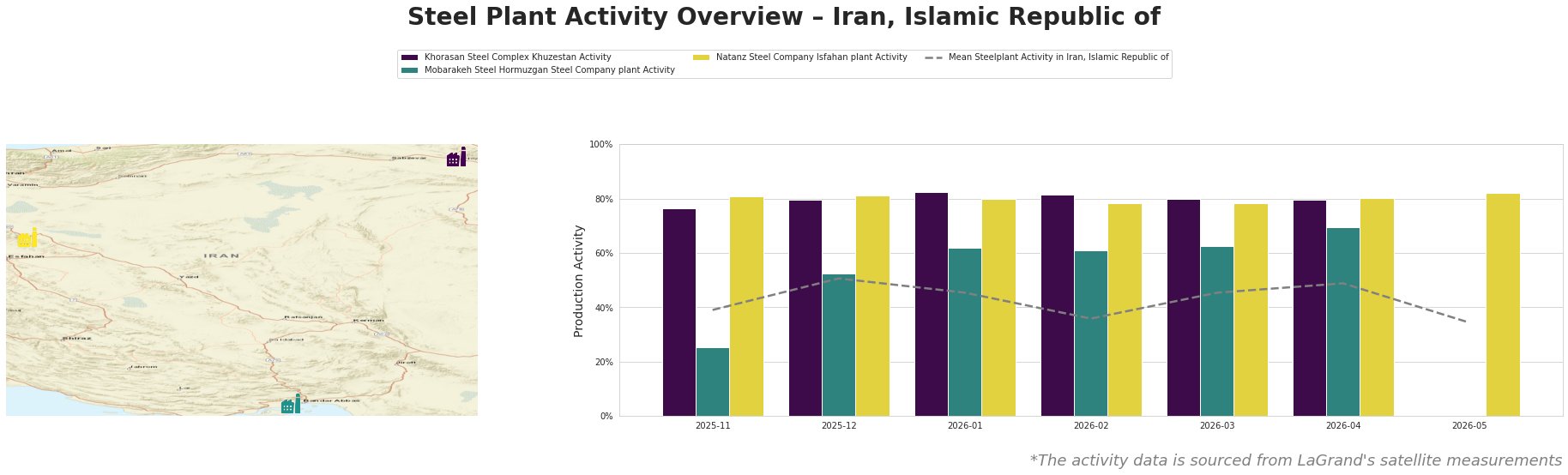
Khorasan Steel Complex has shown resilience with a peak activity of 82% in May 2026, influenced potentially by broader geopolitical uncertainties affecting incentivized production rates. The plant specializes in a range of semi-finished and crude products through integrated DRI processes. Notably, the continued risks to maritime supply routes resulting from incidents outlined in the article “Vessel attacks continue in the Mideast Gulf“ raise concerns about future operations and logistic support for Khorasan.
Mobarakeh Steel Hormuzgan has maintained stable outputs but reported fluctuations that parallel the region’s escalating tensions noted in the “Crude futures surge 7pc to new four-year high” article. The plant’s capabilities in hot- and cold-rolled products risk being hampered by changing shipping conditions, evident in the reduced tanker market flexibility, which impacts procurement and pricing.
The Natanz Steel Company, while also recording a 34% activity decline, remains a critical player in semi-finished and rolling sectors. The article “Iran launches attacks after Trump Hormuz order” emphasizes the increased risk to operations and supply lines, suggesting potential future output constraints.
Given these insights, steel buyers are urged to adopt a proactive procurement strategy by securing necessary materials now. The ongoing volatility in crude prices and maritime security threats indicates possible delays and heightened costs in the forthcoming months. Furthermore, buyers should closely monitor plant activity data and the geopolitical climate to align purchasing decisions effectively.