


From the Field to the Dashboard – Built by Experts, for Experts.
Discover What's Really Happening in the Steel Industry
Use the AI-powered search engine to analyze production activity, market trends, and news faster than ever before.
Try the Free AI Search EnginePositive Trends in Europe’s Steel Market Amid UK Import Tariff Changes
Recent developments in the European steel market show a positive sentiment, particularly influenced by new UK import tariffs. The articles titled “The UK has announced new tariffs on steel imports for the transition period“, “UK to cut steel import quotas by 60% to protect domestic steel industry“, and “The UK has announced the details of the transition period for steel safeguard measures“ directly highlight the UK government’s strategies aiming to bolster local production due to the anticipated global steel overcapacity. These measures coincide with recent satellite-observed reductions in activity at select steel plants.
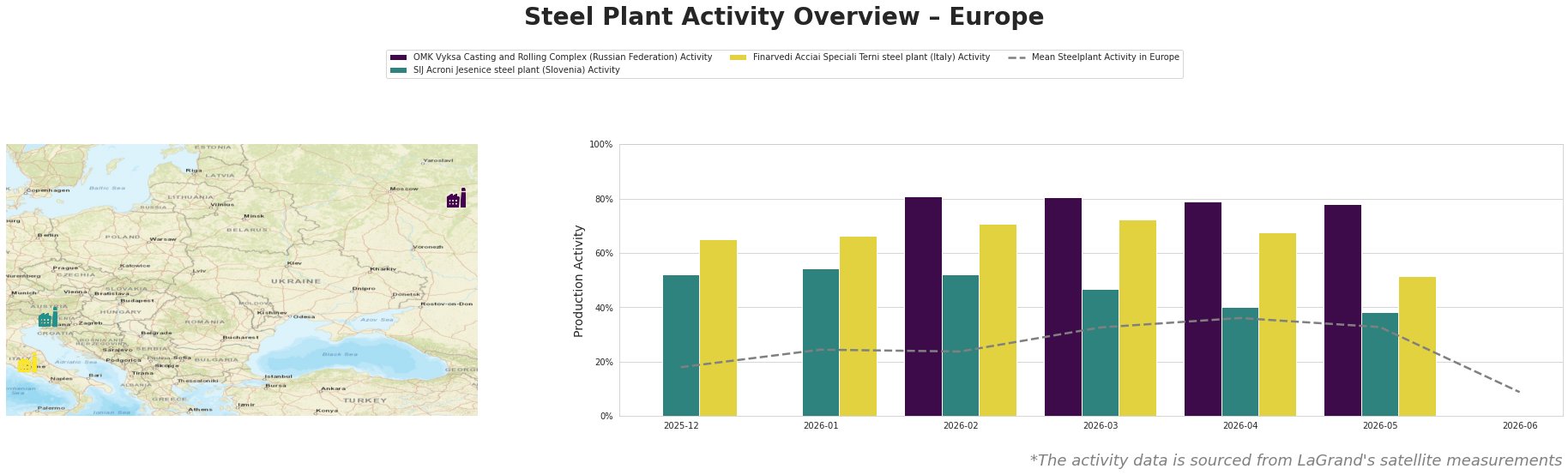
OMK Vyksa’s activity peaked at 81% in February 2026, showcasing its robust production capabilities, leveraging Electric Arc Furnace (EAF) technology. The decline to 9% by June 2026, however, aligns with the uncertainties surrounding import quotas, highlighted in the articles regarding the UK’s new tariff policies.
Conversely, SIJ Acroni Jesenice has experienced a stable reduction in activity from 54% in January to 38% in May 2026, with no direct links to the news articles. Its EAF operations may be affected by regional competition and pricing pressures stated in the UK tariffs.
Finarvedi Acciai Speciali Terni exhibited resilience with activity remaining between 51% and 72% over the recent months. This plant’s focus on diverse end-user sectors like automotive and building aligns positively with the demand-side cushioning anticipated from UK’s tariff protections, potentially enhancing local sourcing strategies.
Market implications indicate potential supply disruptions primarily for the UK, given the impending 60% cut in steel import quotas affecting all forms of imported steel. As plants adjust operations, steel buyers should consider prioritizing procurement from EU sources like Finarvedi and SIJ Acroni to ensure stabilization against potential shortages tied to the UK’s domestic ramp-up.
In summary, leveraging insights from these changes and trends in activity provides actionable guidance for steel analysts and procurement professionals to navigate a shifting market landscape while ensuring alignment with evolving regional trade policies.