


From the Field to the Dashboard – Built by Experts, for Experts.
Discover What's Really Happening in the Steel Industry
Use the AI-powered search engine to analyze production activity, market trends, and news faster than ever before.
Try the Free AI Search EnginePositive Momentum in Europe’s Steel Market: Navigating Changes Ahead
Recent developments in Europe’s steel market signal a positive trajectory, particularly influenced by recent news articles such as MEPs presented maps of the complex stainless steel market at the BSSA event and British businesses are calling on the government to ease protective measures on steel, highlighting increased complexity due to legislative changes and trade agreements. Activity levels at key steel plants, including the AG der Dillinger Hüttenwerke in Germany and Acerinox Europa in Spain, display notable fluctuations that correlate with these developments.
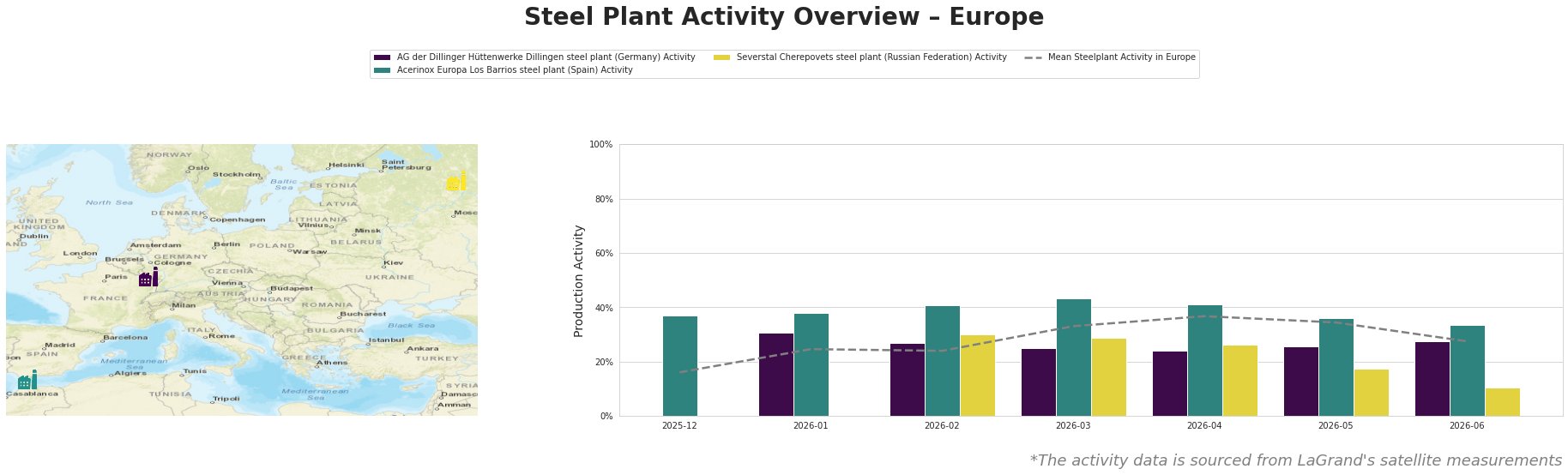
The AG der Dillinger Hüttenwerke steel plant showed activity stabilize around 28% in June, reflecting a modest recovery after fluctuations from 31% in January to a peak of 37% in April. These trends align with market shifting concerns towards supply stability, largely attributed to the upcoming 60% reduction in tariff quotas highlighted in the MEPs presented maps of the complex stainless steel market at the BSSA event.
Meanwhile, Acerinox Europa’s production reached 41% in February, peaking at 43% in March, before settling at 33% in June. The plant’s variability can be linked with increasing discussions around tariffs as noted in British businesses are calling on the government to ease protective measures on steel, signaling potential disruptions in supply that may affect procurement strategies.
In contrast, Severstal’s activity plummeted to 10% in June from an earlier 30%, indicating significant challenges. This decline suggests that external pressures, including new tariffs and trade discussions outlined in the news articles, are impacting production capabilities. No specific events were identified directly correlating with these changes.
Given these insights, steel buyers should implement the following actions:
- Prioritize sourcing from AG der Dillinger Hüttenwerke: The plant’s stabilized activity and recovery position make it a reliable supplier, amidst rising trade restrictions.
- Monitor Acerinox’s production closely: With a substantial component of stainless steel products, adaptability to market changes is vital. Engage in early ordering to mitigate impacts from tariff adjustments expected from July.
- Evaluate Severstal’s viability: The plant’s declining output may lead to instability in sourcing. Investigating alternative suppliers or negotiating flexible commitments could be prudent.
In summary, as protective measures loom and tariff impacts become evident, maintaining a keen eye on production trends and adapting procurement strategies accordingly will be essential for navigating the complexities of the European steel market.