


From the Field to the Dashboard – Built by Experts, for Experts.
Discover What's Really Happening in the Steel Industry
Use the AI-powered search engine to analyze production activity, market trends, and news faster than ever before.
Try the Free AI Search EngineNegative Market Sentiment in Asia’s Steel Sector: Overcapacity and Activity Decline
Steel activity levels in Asia are declining amid a backdrop of significant overcapacity and stagnating demand. Key observations are reflected in OECD: Global steel excess capacity set to reach 745 million mt by 2028, which highlights imminent challenges in the steel market fueled by a projected 745 million tonnes of global excess capacity by 2028. Observed changes in activity at notable steel plants corroborate this gloomy outlook. In particular, satellite activity data indicates a stark plunge at major facilities as demand declines.
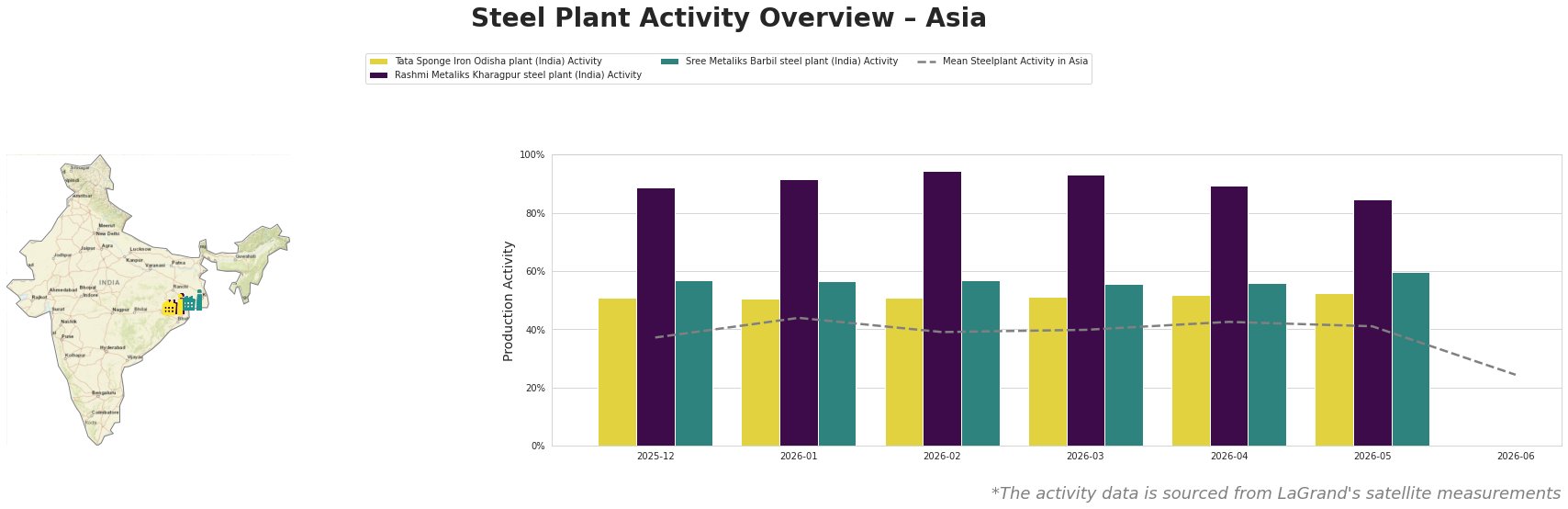
The mean steelplant activity showed a noteworthy drop to 24.0% as of June 2026, signaling serious disruptions. Particularly, the Tata Sponge Iron Odisha plant has maintained relatively stable activity levels around 50% over recent months. However, Rashmi Metaliks demonstrated stronger productivity, peaking at 95% in February, but still reflecting concerns over declining demand as highlighted in OECD: Global steel demand recovery to remain weak as excess capacity crisis deepens. The Sree Metaliks Barbil plant similarly presented a decline, showing a drop in activity, aligning with a broader trend across the sector.
The data points indicate that the overall decline correlates with the alarming overcapacity forecast and reduced investor confidence owing to the persistent excess supply exacerbated by subsidies and government policies affecting market dynamics, particularly from China (cited in Global steel overcapacity deepens: OECD).
For procurement specialists, the recent activity declines suggest an urgent need to reassess sourcing strategies. Given the reduced activity levels, buyers should consider securing materials from suppliers with stable output, such as Tata Sponge Iron or Rashmi Metaliks, where activity levels surpass 80% during earlier months. However, delays and reduced operations at these facilities raise concerns for the reliability of future deliveries in an increasingly turbulent environment. It’s recommended to diversify procurement approaches and mitigate risks associated with potential supply chain disruptions driven by these overcapacity dynamics.