


From the Field to the Dashboard – Built by Experts, for Experts.
Discover What's Really Happening in the Steel Industry
Use the AI-powered search engine to analyze production activity, market trends, and news faster than ever before.
Try the Free AI Search EngineGermany’s Steel Sector Faces Severe Decline Amidst Climate Policy Critique
Germany’s steel market is displaying a Very Negative sentiment influenced by recent news on climate policy failures and declining production activity levels. Notably, the articles titled “Expertenrat: Deutschland wird Klimaschutzziele wohl verfehlen”, “Klimaziele verfehlt – na und?”, and “Klimaziele in Gefahr: „Netto-Null“ erst 2050 – warum nicht?” highlight an impending failure to meet climate targets, causing uncertainty and instability in industrial operations, which is further supported by a reduction in activity across key steel plants.
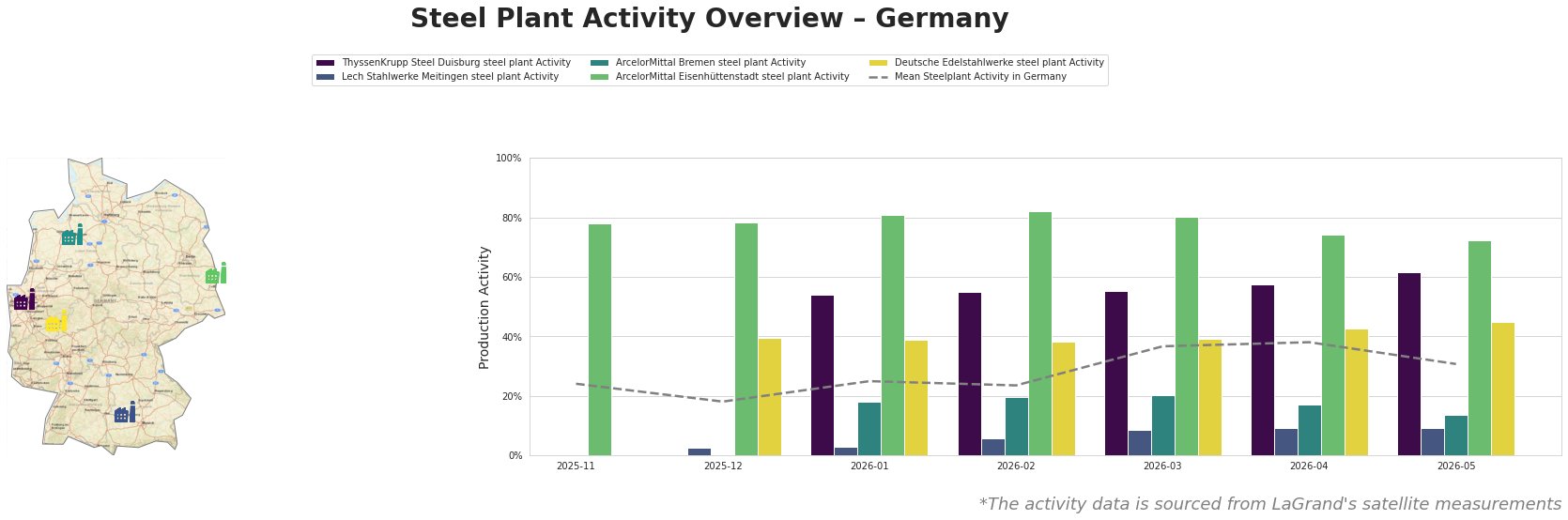
ThyssenKrupp Steel Duisburg, with a notable production capacity, shows fluctuating activity that peaked at 62% in May 2026 but has experienced corresponding declines since. This aligns with “Expertenrat: Deutschland wird Klimaschutzziele wohl verfehlen”, linking the current operational uncertainties and delays in climate policy to substantial drops in productivity.
Lech Stahlwerke Meitingen’s activity remains critically low, registering just 9% in May 2026 after a marginal improvement. The challenges faced by this plant could relate to the overarching decline in investor confidence as expressed in “Klimaziele verfehlt – na und?”, where the realization of ambitions for sustainable practices directly affects procurement decisions.
The ArcelorMittal plants in Bremen and Eisenhüttenstadt reflect a mixed activity landscape; Bremen noted a severe drop to 14% activity in May from 20% in March, while Eisenhüttenstadt has shown resilient activity levels at 72%. The decline in Bremen parallels concerns over infrastructure inadequacies expressed in “Mobilität: Der fremdgesteuerte Verkehrsminister.”, indicating potential supply chain disruptions, especially with winter approaching.
Deutsche Edelstahlwerke reported a steady activity at 45% in May; however, limited capacity compared to larger plants may restrict overall market influence. No direct connections to current news can be established here.
For procurement professionals, it is advisable to secure steel supplies in advance, particularly focusing on the ArcelorMittal Eisenhüttenstadt plant, which maintains relatively higher operational levels. Given the landscape, monitoring regulatory developments against climate policy shifts is crucial to preemptively address supply risks. Collaboration with suppliers to ensure transparent communication around production capabilities may also mitigate disruptions arising from policy-related uncertainties.