


From the Field to the Dashboard – Built by Experts, for Experts.
Discover What's Really Happening in the Steel Industry
Use the AI-powered search engine to analyze production activity, market trends, and news faster than ever before.
Try the Free AI Search EngineGermany’s Steel Market Faces Severe Challenges Amid Geopolitical Tensions
Germany’s steel industry is grappling with significant stagnation, as underlined by the news from German manufacturers temper expectations at Hannover Messe and German industry faces stagnation in 2026 amid high energy costs and structural challenges. Industry leaders predict ongoing decline in production levels due to persistent bureaucratic hurdles, rising energy costs driven by geopolitical tensions, particularly from the conflict in Iran, and an alarming 11 consecutive quarters of underperformance in plant utilization.
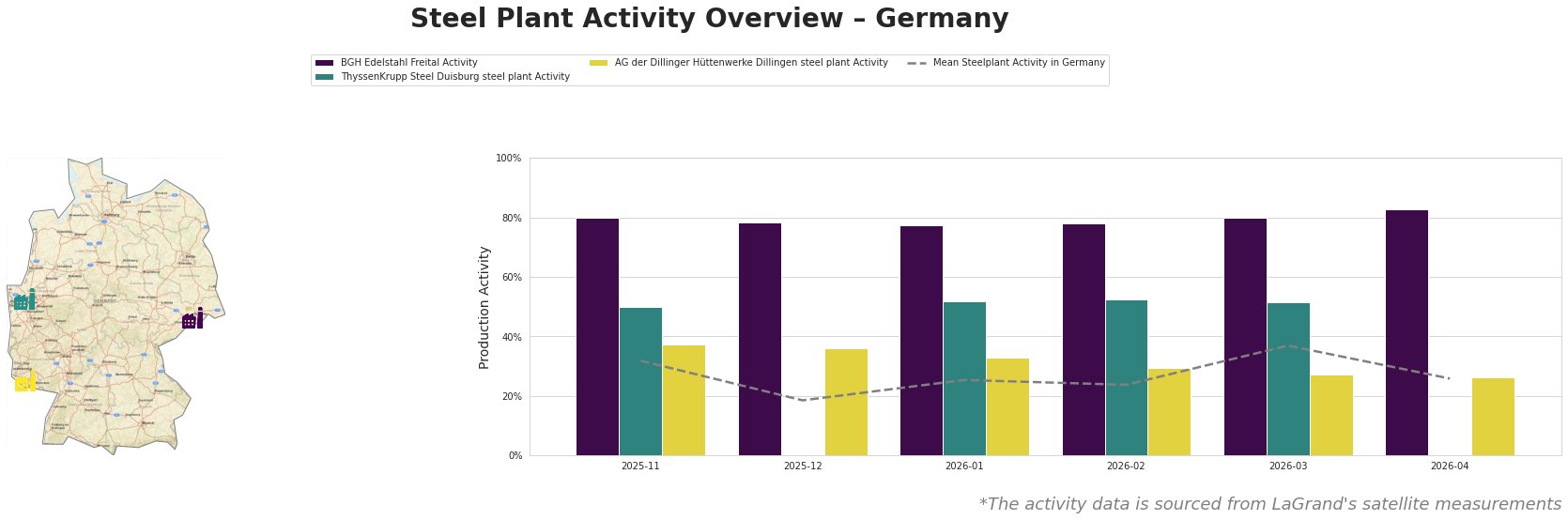
Activity levels at steel plants exhibit stark variation. BGH Edelstahl Freital experienced stable activity, peaking at 83% in April 2026, which shows resilience amidst industry declines but with no direct link to the discussed news articles. ThyssenKrupp’s activity fluctuated around the mid-50% mark, indicating some operational steadiness but unable to match historical utilization. The AG der Dillinger Hüttenwerke’s activity dropped to 26% in April 2026, a notable decline reflecting the broader market malaise.
ThyssenKrupp’s plant in particular faces challenges aligning with German manufacturers temper expectations at Hannover Messe, where high energy costs and structural economic issues were outlined, indicating its struggles may continue. The AG der Dillinger Hüttenwerke’s substantial decline could stem from these same issues but lacks a direct connection established from the articles.
In light of these findings, steel buyers are advised to closely monitor the fluctuating activity levels, especially at the high-capacity BGH Edelstahl Freital and ThyssenKrupp plants. Procuring from BGH, which shows higher activity and resilience, may mitigate some supply chain risks. Conversely, caution is urged regarding orders from AG der Dillinger Hüttenwerke as forecasted capacity issues may arise due to ongoing underperformance attributed to bureaucratic and geopolitical influences. The declining landscape highlights the need for strategic sourcing and potential backup contingency strategies, especially in the face of potential disruptions that could arise due to these structural challenges.