


From the Field to the Dashboard – Built by Experts, for Experts.
Discover What's Really Happening in the Steel Industry
Use the AI-powered search engine to analyze production activity, market trends, and news faster than ever before.
Try the Free AI Search EngineEuropean Steel Market Trends: Navigating Stability Amid New EU Quotas
The European steel market demonstrates a positive sentiment despite ongoing challenges, particularly regarding the impact of new EU quota regulations. Recent articles titled “Bulgarian longs market holds steady as new EU quota regime deepens cautious mood” and “European longs market still weak, new EU CSQs discussed by market players” highlight the cautious stances held by market participants as they adapt to regulatory changes. These articles correspond with observed activity levels at several key steel plants, indicating varied responses to market conditions.
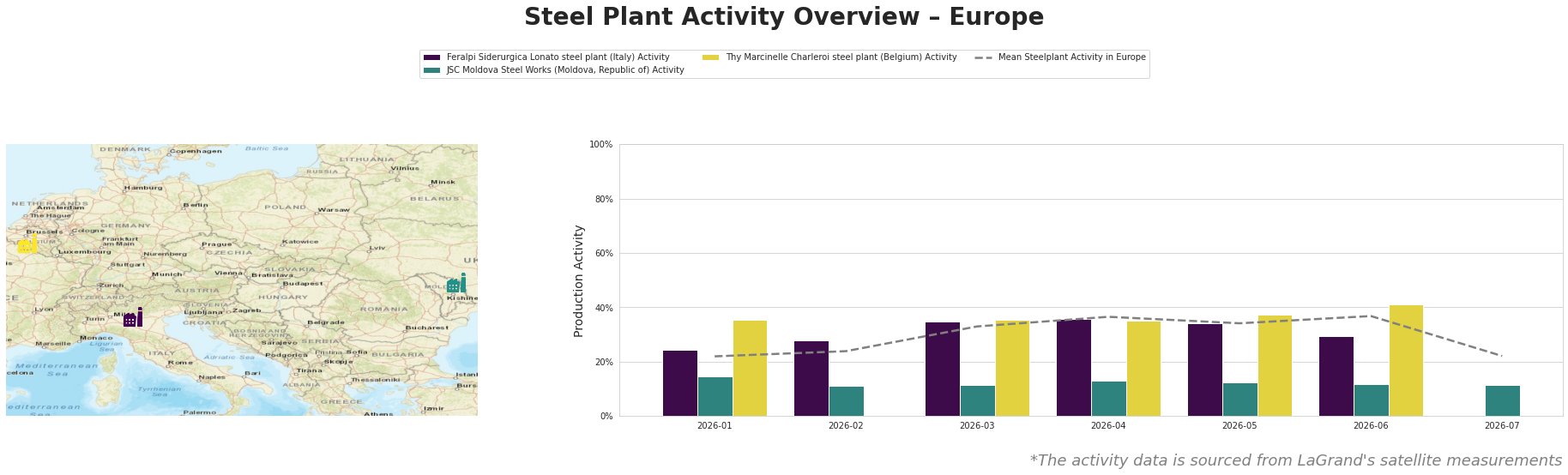
The Feralpi Siderurgica Lonato steel plant saw a decrease in activity from 34% in May to 29% in June, reflecting the cautious market mood attributable to the new quota regime. This aligns with the discussions noted in “European longs market still weak, new EU CSQs discussed by market players”, where producers anticipated adjusting capacity due to reduced import levels.
At the JSC Moldova Steel Works, activity remained significantly lower at 11% in both June and July, indicating a sustained weakness that does not directly correlate with any recent news events but could suggest broader regional issues. In contrast, Thy Marcinelle Charleroi steel plant increased its activity to 41% in June, supporting the notion that demand for high-quality products persists despite overarching quota concerns.
Given the cautious stance marked by the articles, steel buyers should be alert to potential supply disruptions stemming from regulatory shifts, particularly in relation to Turkish imports discussed in “European longs market still weak, new EU CSQs discussed by market players.” This could necessitate adjustments in sourcing strategies if reliance on imported materials becomes constrained.
Steel procurement professionals are advised to ensure robust inventory management while monitoring market signals closely. Engage with suppliers to ascertain the impacts of the new quotas on pricing, and consider diversifying sourcing options to mitigate risks associated with potential disruptions, especially from plants demonstrating instability like JSC Moldova Steel Works. Building strong supplier relationships will be crucial in navigating this evolving landscape.