


From the Field to the Dashboard – Built by Experts, for Experts.
Discover What's Really Happening in the Steel Industry
Use the AI-powered search engine to analyze production activity, market trends, and news faster than ever before.
Try the Free AI Search EngineEuropean Steel Market Surge: Robust Activity Amid Protective Measures
Recent developments in the European steel market, particularly in the UK, suggest a very positive sentiment driven by new protective regulations. The articles “The UK has published details of new protective measures concerning steel“, “UK confirms reduction of import quotas by 51%“, and “UK adjusts EU import quotas after agreement is reached“ highlight significant policy changes, including a 51% reduction in duty-free steel import quotas effective July 1, 2026. These measures, aimed at bolstering domestic production and protecting local manufacturers, can be correlated with increased activity levels observed in several key steel plants across Europe, though a direct link is not always evident.
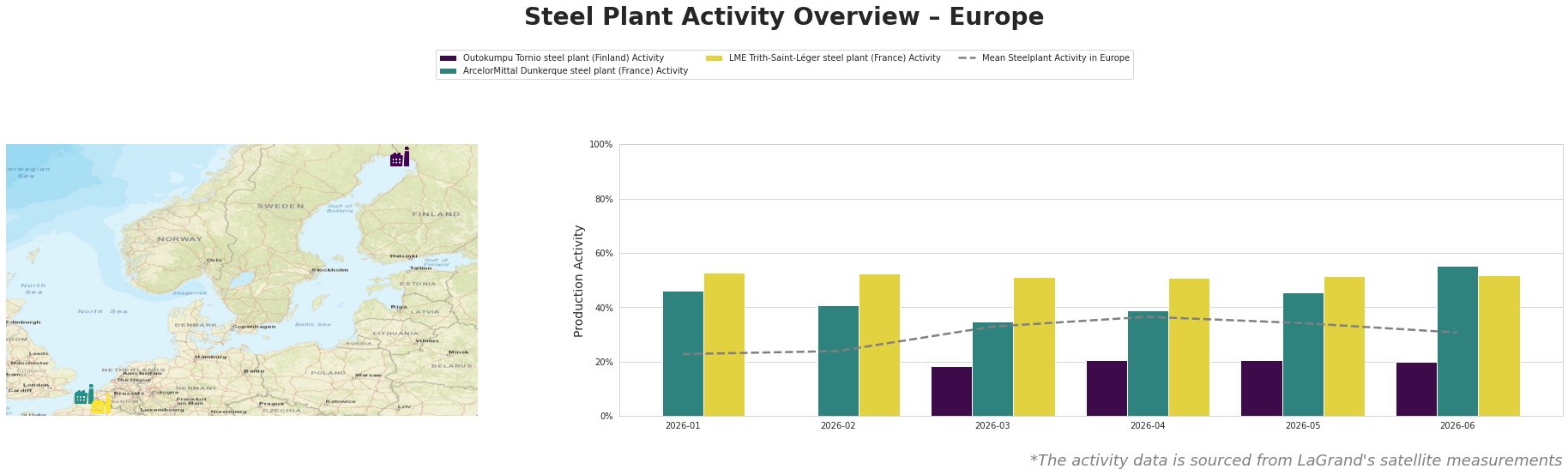
Outokumpu Tornio steel plant experienced modest fluctuations, ending at 20% activity in June 2026, showing a consistent decline from 21% in May. However, there is no direct correlation with recent news about UK quotas. ArcelorMittal Dunkerque showcased positive momentum, peaking at 55%—a notable increase in demand, potentially reflected in recent regulatory changes aimed at safeguarding local production. LME Trith-Saint-Léger’s activity remained stable at 52%, indicating robust operational capacity, yet again lacking a clear connection to the announced quotas.
The Outokumpu Tornio steel plant, utilizing electric arc furnace technology, primarily manufactures cold and hot rolled coils, crucial for automotive and infrastructure sectors. The recent activity drop from 21% in May to 20% in June suggests a response to the evolving market dynamics outlined in the news but does not directly correlate with specific tariff adjustments.
In contrast, ArcelorMittal Dunkerque, with a capacity of 6,750 tons using integrated blast furnace technology, demonstrates resilience with a rise to 55% in June. This increase coincides with local producers advocating regulatory changes to shield their market share, as discussed in the aforementioned articles. Lastly, operational stability at the LME Trith-Saint-Léger plant remains consistently influential given its electric arc processes, but again, does not indicate a response to the new regulatory framework.
In light of the evolving landscape:
– Steel buyers should closely monitor the fluctuating activity levels of ArcelorMittal Dunkerque, likely to benefit from domestic safeguards that could encourage enhanced supply and stable pricing.
– Strategic procurement efforts should consider diversifying sources to mitigate risks associated with potential supply disruptions linked to import quotas.
– Continuous engagement with suppliers regarding their operational capacity and adjustments to meet domestic regulations will be crucial in maintaining consistent supply chains in this positive market climate.