


From the Field to the Dashboard – Built by Experts, for Experts.
Discover What's Really Happening in the Steel Industry
Use the AI-powered search engine to analyze production activity, market trends, and news faster than ever before.
Try the Free AI Search EngineEurope Steel Market Outlook: Neutral Sentiment Amidst Disruption and Recovery
Recent activity in the European steel market has seen both positive and negative shifts due to recent incidents and operational changes. A fire broke out at Tata Steel’s Port Talbot plant, as reported in A fire broke out at a Tata plant in the UK, which temporarily halted hot rolling production. Conversely, thyssenkrupp Steel resumes production at hot rolling plant No. 4 in Duisburg highlights a recovery phase in the region, providing a counterbalance to the disruption caused by the fire.
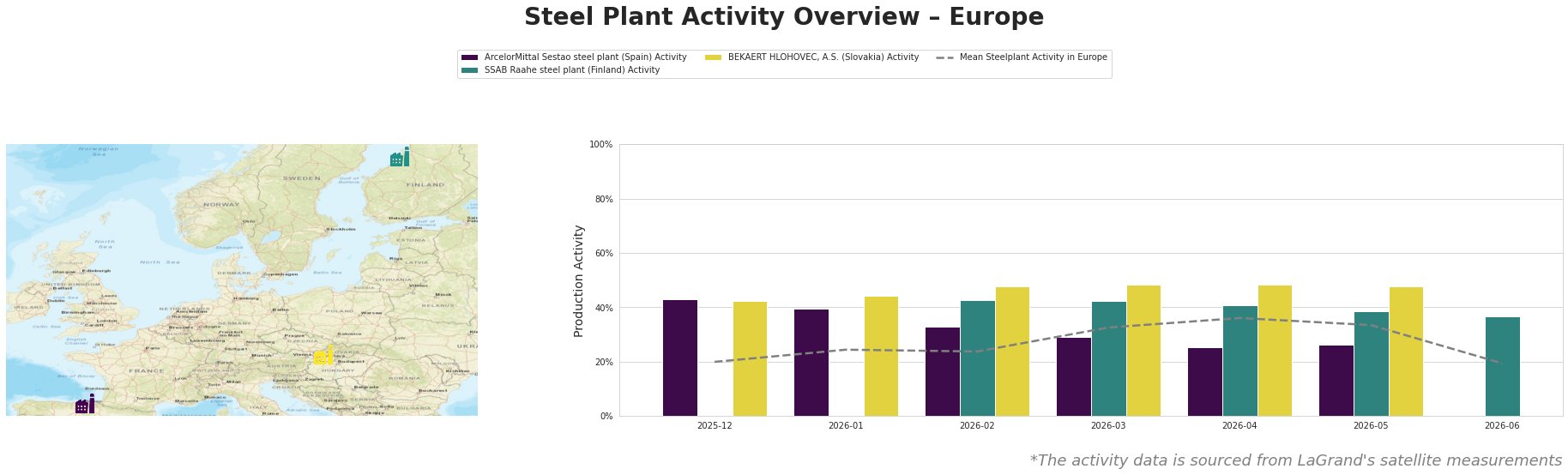
The ArcelorMittal Sestao plant in Spain experienced a downturn, with activity falling from 43% in December 2025 to 26% by May 2026. This decline can be partially attributed to ongoing regional disruptions, although no direct link to the recent news was established. Conversely, the SSAB Raahe plant maintains nearly stable operations with fluctuations between 39% and 42% activity in the same timeframe, while BEKAERT HLOHOVEC remains steady around 48%. The notable decrease in mean activity down to 19% in June suggests a significant downturn influenced by the Tata facility incident.
The Tata Steel’s Port Talbot processing line fire incident is critical, temporarily halting operations and echoing concerns over supply stability in the UK sector. While it is expected that production will resume soon, uncertainty remains about the extent of disruptions and the timeline for recovery. Meanwhile, thyssenkrupp’s return to operational status at its Duisburg hot rolling facility strengthens the supply flow for critical hot-rolled products, crucial for sectors like automotive and construction.
Recommendations for steel procurement professionals:
1. Monitor Tata Steel outputs closely in light of the fire incident, as it could affect supply timelines for hot-rolled coils in the UK market.
2. Assess Thyssenkrupp’s product offerings post-restart; their improved efficiencies may provide advantageous purchasing opportunities.
3. Consider regional supply dynamics due to the fire at Tata, particularly focusing on ensuring a diversified supply chain to mitigate potential shortages.
4. Maintain awareness of fluctuating market prices for hot-rolled products, currently at 705 pounds per metric ton, which has seen a rise reflecting recent challenges.
In summary, while the European steel market sentiment remains neutral, emerging dynamics from local incidents necessitate vigilant planning and strategic procurement adjustments.