


From the Field to the Dashboard – Built by Experts, for Experts.
Discover What's Really Happening in the Steel Industry
Use the AI-powered search engine to analyze production activity, market trends, and news faster than ever before.
Try the Free AI Search EngineChina’s Steel Market Faces Decline: Production and Activity Drop Amid Weak Demand
China’s steel industry is enduring a significant downturn, with production decreasing by 3.9% year-on-year in early 2026, as reported in China reduced steel output by 3.9% y/y in January–May. This decline is corroborated by the satellite observations of selected steel plants, reflecting an ongoing lack of demand attributed to challenges in the domestic property market. Additionally, CISA mills’ daily crude steel output up 3.8% in early June 2026, stocks also up illustrates a concerning trend of increasing inventories despite slight production rebounds in May.
Recent activity data from major steel plants further underscores this negative sentiment. The observed table below shows the deteriorating monthly activity levels:
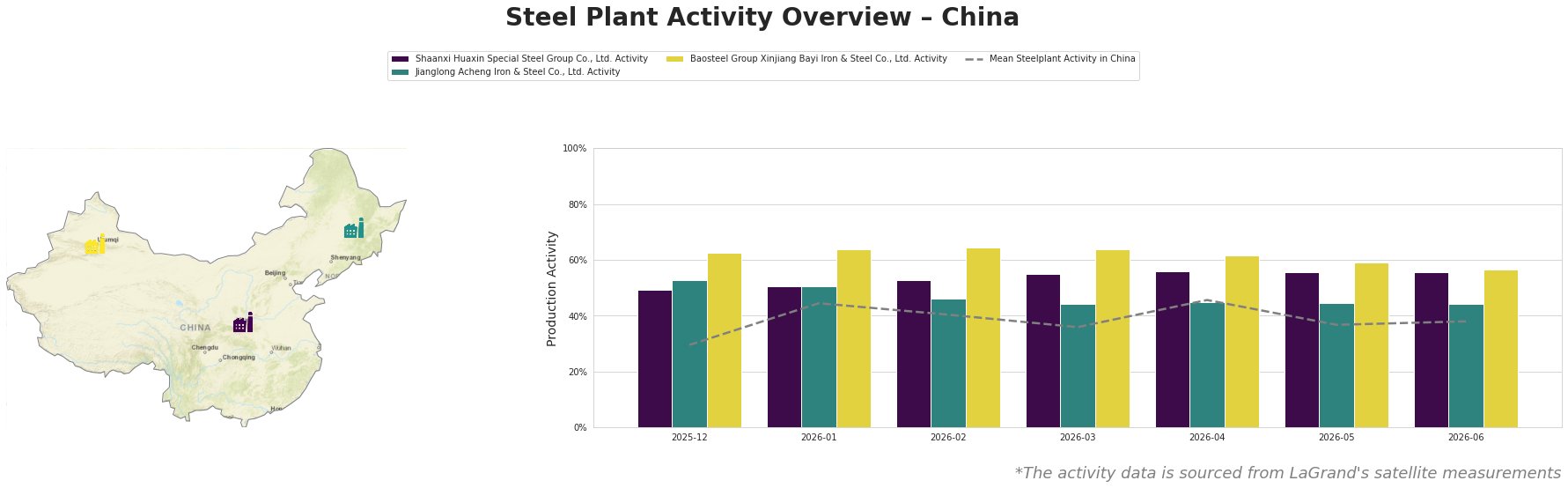
Shaanxi Huaxin Special Steel Group has seen activity stabilize at 56% since May, but overall production remains under threat amid generalized market weaknesses. This stagnation aligns with the news mentioning a declining steel output trend. Jianglong Acheng Iron & Steel’s activities have dropped to 44% by June, following a steady decline from earlier highs of 53% in December 2025. Such dips correlate with the 3.1% decline in pig iron production noted in China’s crude steel output down 3.9 percent in January-May 2026, slight rebound in May. The Baosteel Group, despite its capacity, also reflects reduced activation levels, reaching 57% but continuing high stock levels, as indicated by increased inventories and dwindling demand.
Given these observations, steel buyers should be prepared for potential supply disruptions, particularly from Jianglong Acheng, where the integrated production process could lead to greater impacts due to decreased staffing and inventory constraints. To address these challenges, securing short-term contracts while maintaining flexibility to adjust orders is advisable. Negotiating prices that reflect the current downward trend may also yield favorable terms, characterized by rising inventories and decreasing production capacity reflected in both the news articles and satellite data. As the situation evolves, proactive adjustment strategies will be key for procurement professionals navigating this complex market landscape.