


From the Field to the Dashboard – Built by Experts, for Experts.
Discover What's Really Happening in the Steel Industry
Use the AI-powered search engine to analyze production activity, market trends, and news faster than ever before.
Try the Free AI Search EngineNegative Momentum in Asia’s Steel Market: Satellite Data Reveals Declining Plant Activity Amidst Geopolitical Tensions
Recent developments in Asia’s steel market reflect a negative sentiment driven by geopolitical tensions and their implications for steel production. Notably, the articles “US resumes strikes on Iran after Hormuz attacks“ and “Iran revives shipping attacks in Hormuz“ highlight escalating threats in the Strait of Hormuz, likely contributing to reduced trading activity and heightened uncertainty within the steel sector.
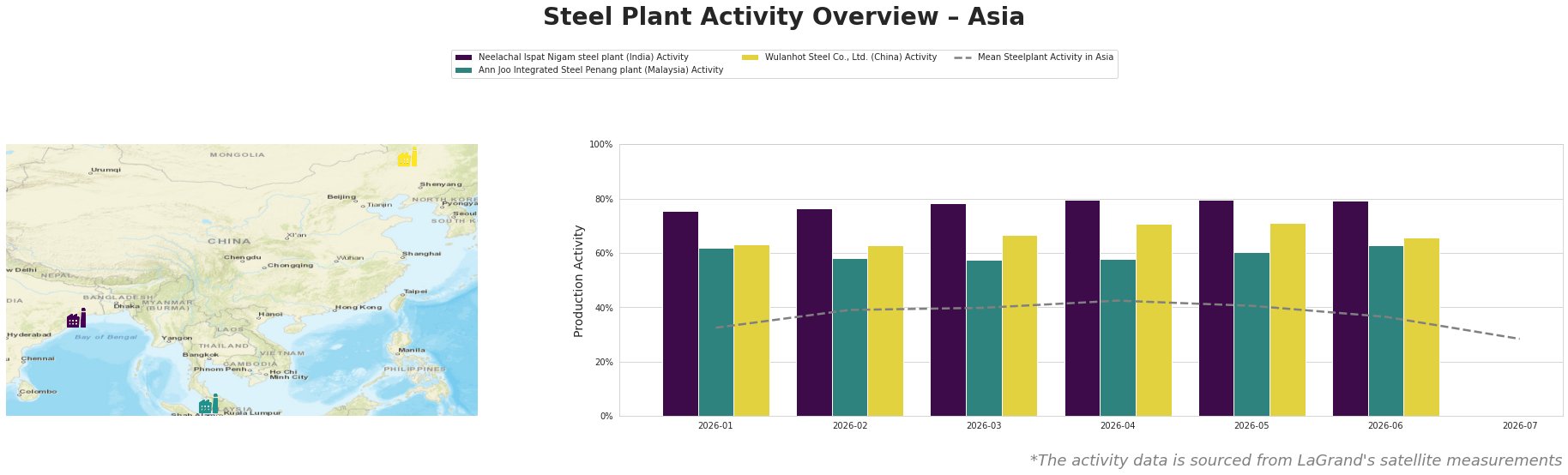
The recent activity data shows a significant downturn, with the mean steel plant activity in Asia dropping to 28.0% by July 2026, which represents a notable decrease from 37.0% in June 2026. This decline indicates a challenging environment for production, potentially exacerbated by the geopolitical tensions mentioned.
Neelachal Ispat Nigam steel plant
Located in Odisha, India, the Neelachal Ispat Nigam steel plant shows a slight decrease in activity from 79.0% in June to — in July. This plant primarily uses the BOF method for integrated steelmaking with a production capacity of 1.1 million tonnes of crude steel. While a direct link to recent geopolitical issues has not been established, the overall drop in regional sentiment and market activity may affect future production prospects.
Ann Joo Integrated Steel Penang plant
The Ann Joo Integrated Steel Penang plant, operating with an EAF process in Malaysia, reportedly has experienced stable activity levels previously, but data for July shows —. The plant’s activity in recent months was observed at 63.0%, contributing significantly to the local market. Current geopolitical tensions, as discussed in “US resumes strikes on Iran after Hormuz attacks,” could indirectly impact operations by increasing costs from logistic uncertainties.
Wulanhot Steel Co., Ltd.
The Wulanhot Steel Co., Ltd. in Inner Mongolia has shown a stable performance in previous months, but July’s data indicates a cessation of activity recording, with —. Operating primarily through the BOF process, the plant’s previous activity was at 66.0%. The ongoing geopolitical tensions, particularly those outlined in the article “Iran revives shipping attacks in Hormuz,” could pose risks to the supply chain, leading to unpredictable operational capacities in the near term.
Evaluating these trends, potential supply disruptions are evident, particularly for plants reliant on imported raw materials or those facing logistical challenges due to heightened conflict in the region. Steel buyers should consider proactive procurement strategies, potentially increasing stockpiles to mitigate supply chain risks before anticipated price surges or long-term supply constraints arise due to these geopolitical issues.