


From the Field to the Dashboard – Built by Experts, for Experts.
Discover What's Really Happening in the Steel Industry
Use the AI-powered search engine to analyze production activity, market trends, and news faster than ever before.
Try the Free AI Search EnginePositive Steel Market Dynamics in Asia: Key Plant Insights from Satellite Observations
Recent developments in the Asian steel market highlight a positive shift in activity levels, reflecting robust demand. Notably, satellite data from various steel plants indicates significant activity trends, coinciding with insights from the article “US plates in coil imports decrease 50.3 percent in April 2026 from March.” While no direct correlation to local plant activities can be established from US import trends, the overarching decrease could influence regional suppliers.
Measured Activity Overview
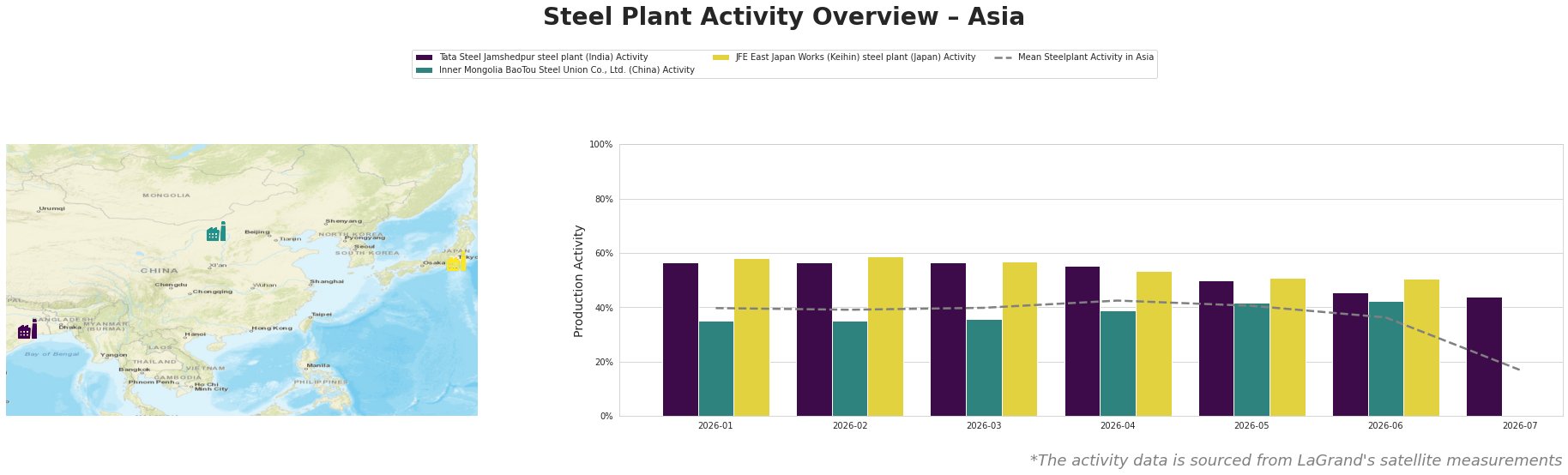
Tata Steel Jamshedpur has maintained relatively high activity levels, peaking at 57.0% in March, while observing a gradual decrease to 46.0% by June. This decline, despite robust prior performance, suggests potential market fluctuations. Conversely, Inner Mongolia BaoTou Steel’s activity also rose to 42.0% in May but experienced stabilization in June. Like Tata Steel, it exhibits resilience, signaling a favorable outlook amidst the slower demand from the U.S. market. JFE East Japan Works demonstrated shifts in activity closely resembling the mean, peaking at 59.0% in February before witnessing a drop.
Evaluated Market Implications
Given the observed trends, potential supply disruptions could arise from Tata Steel Jamshedpur’s activity decline, suggesting a need for careful monitoring. Steel buyers should consider proactive procurement from Inner Mongolia BaoTou Steel, which maintains stable production levels, especially in finished rolled products, to mitigate risks stemming from broader market fluctuations indicated by U.S. import data. Engaging suppliers from regions showing resilience, such as this plant, might provide cost-effective solutions to ensure availability amidst possible demand shifts following the reported decreases in U.S. imports.