


From the Field to the Dashboard – Built by Experts, for Experts.
Discover What's Really Happening in the Steel Industry
Use the AI-powered search engine to analyze production activity, market trends, and news faster than ever before.
Try the Free AI Search EngineIndia’s Steel Market Update: Navigating a Neutral Terrain Amidst Changing Trade Regulations
India’s steel sector faces a complex landscape as authorities assess potential restrictions on imports from China. The articles “India will monitor imports of Chinese steel before introducing new restrictions“ and “India starts AD probe into hot-rolled steel imports“ highlight the increasing scrutiny by the government, driven by a significant rise in rolled steel imports and local production pressures. The correlations between regulatory actions and observed satellite data suggest industry-wide implications.
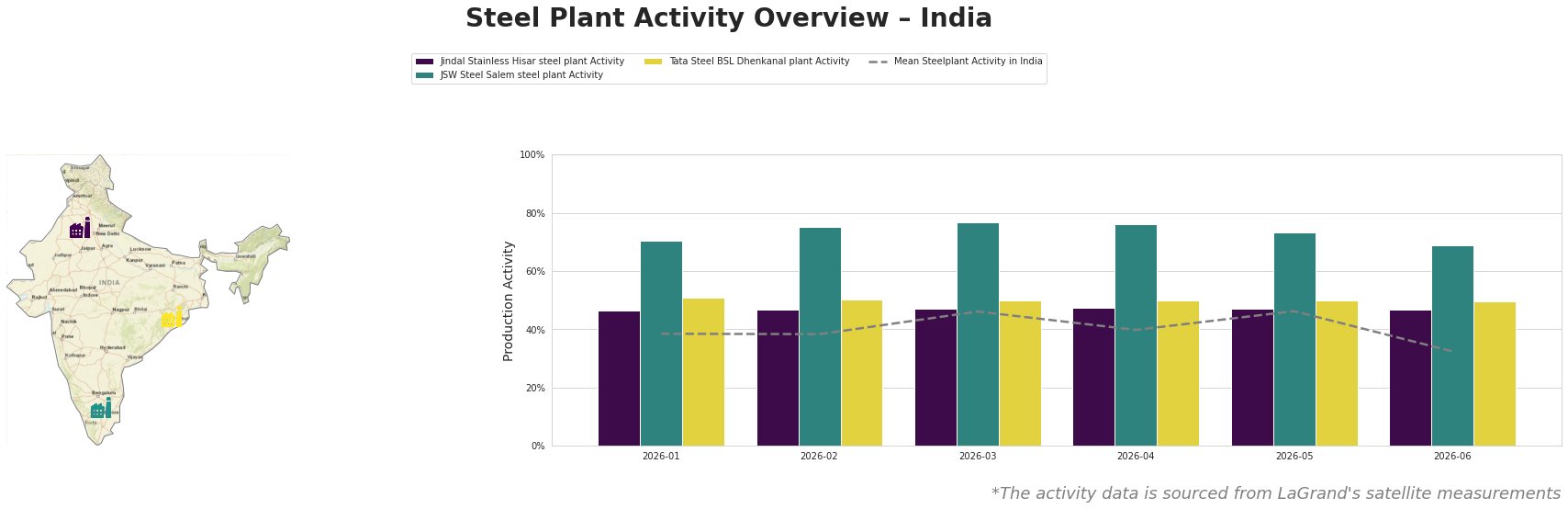
Activity at the JSW Steel Salem plant peaked in March 2026 at 77.0%, preceding a decline to 69.0% by June, coinciding with the announcement of trade investigations and monitoring of imports, potentially reflecting a cautious market response. Comparatively, Jindal Stainless Hisar maintained steady activity at around 47.0%, unaffected by recent regulatory changes. Tata Steel BSL Dhenkanal showcased stable activity levels at 50.0%, indicating resilience despite market fluctuations.
The JSW Steel Salem plant’s activities could be directly influenced by the AD probe into hot-rolled steel imports, creating a protective environment for local producers against dumping practices. Conversely, without a pronounced connection to activity shifts, Jindal Stainless Hisar’s consistent performance reflects a different operational strategy or market niche.
There are potential supply disruptions for buyers targeting hot-rolled steel products, especially if the AD investigation results in restrictive measures. Steel procurement professionals should focus on contracts that cover potential shortages or price hikes due to anticipated policy changes. Buyers are advised to explore alternative supply chains or local sourcing strategies to mitigate impending risks, especially given recent trends in imports and the government’s robust monitoring regime.
In summary, India’s steel market presents a neutral sentiment influenced by regulatory adjustments; proactive engagement and thorough market analysis will be crucial for buyers navigating this evolving landscape.