


From the Field to the Dashboard – Built by Experts, for Experts.
Discover What's Really Happening in the Steel Industry
Use the AI-powered search engine to analyze production activity, market trends, and news faster than ever before.
Try the Free AI Search EngineUkraine Steel Market Analysis: Impacts of UK Import Quotas and Plant Activity Trends
Steel activity levels in Ukraine remain neutral as geopolitical trade dynamics evolve. Recent articles, specifically “The UK has published details of new protective measures concerning steel“ and “UK eases new steel import quota cuts to 51% instead of 60%“, outline significant reductions in UK steel import quotas, with the latter indicating a mere 51% cut. As a result of these quotas, satellite data reveals slight declines in activity levels for major steel plants in Ukraine, showing some resilience amid external pressures.
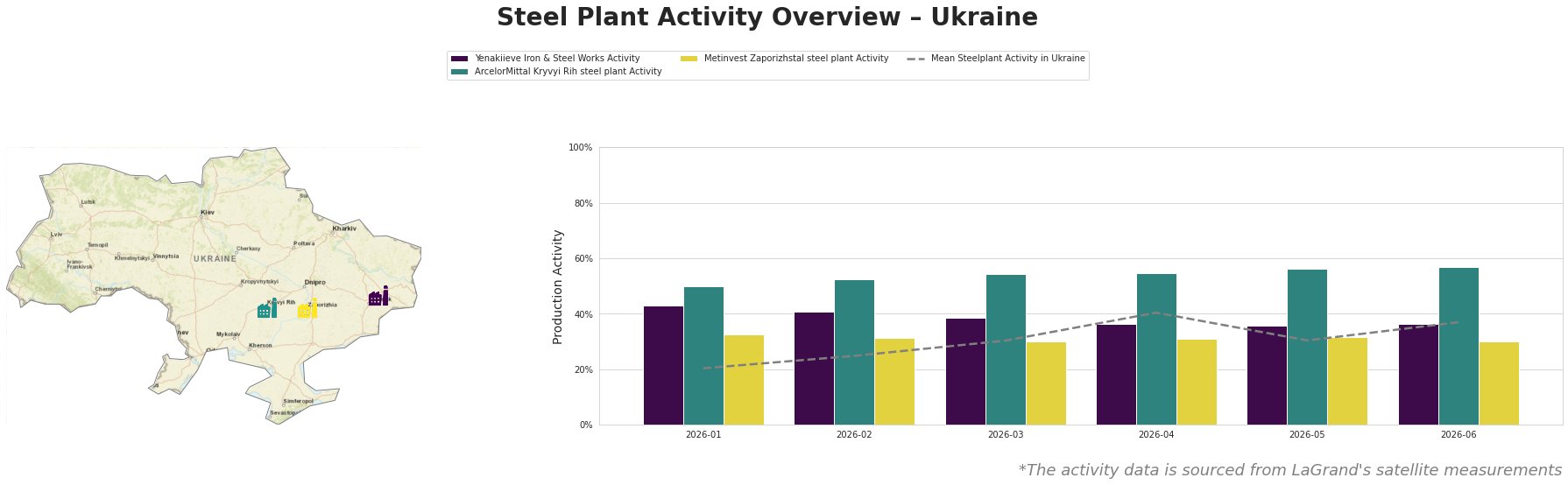
Yenakiieve Iron & Steel Works has shown consistency, maintaining its activity level at 36%, while ArcelorMittal Kryvyi Rih recorded a peak activity of 57% in June. Metinvest Zaporizhstal has seen a decline to 30%, aligning with stagnation concerns in the British market as highlighted in “Tariff quota negotiations are politicizing European steel imports.” These developments underline the uncertainties affecting procurement amid shifting trade landscapes.
Production at the Yenakiieve Iron & Steel Works is primarily driven by integrated blast furnace technology with a capacity of 3.3 million tons of crude steel. Its steady activity level contrasts with fluctuating market conditions, evidencing potential resilience. However, with no direct linkage to recent news articles on trade dynamics, this stability might be vulnerable to broader economic impacts.
The ArcelorMittal Kryvyi Rih plant, known for its extensive capacity of 8 million tons of crude steel, has seen increased activity, peaking at 57%. The news on UK quotas hints at broader economic instability that may indirectly affect supply, yet the precise connection remains unclear.
Metinvest Zaporizhstal, specializing in finishing products, observed a stark drop to a low of 30%, possibly influenced by supply chain insecurities mentioned in various articles. The plant’s production sits at a critical nexus for downstream users in automotive and industrial sectors, necessitating keen observation by procurement professionals.
Given these insights, steel buyers should prepare for potential supply chain disruptions, especially considering the British restrictions impacting steel sourcing strategies. The immediate recommendation includes securing contracts with local distributors to buffer against unforeseen supply shortages driven by evolving trade policies. Monitoring the fluctuating activity levels across prominent Ukrainian plants is vital to make informed procurement decisions in a responsive market environment.