


From the Field to the Dashboard – Built by Experts, for Experts.
Discover What's Really Happening in the Steel Industry
Use the AI-powered search engine to analyze production activity, market trends, and news faster than ever before.
Try the Free AI Search EnginePositive European Steel Market Outlook Amid UK-India Trade Developments
Recent shifts in Europe’s steel market reflect an optimistic sentiment, particularly influenced by trade dynamics following “The trade agreement between the UK and India will come into force in July.” As observed from satellite activity data, notable increases in operations across various steel plants correlate with expected changes in international steel trade regulations.
The British businesses are calling on the government to ease protective measures on steel has stirred discussions about the competitive landscape for UK manufacturers, which may affect sourcing strategies in Europe. While the UK prepares to implement restrictions on imports beginning July 1, these developments coinciding with the UK-India agreement may open new avenues for used steel sourcing.
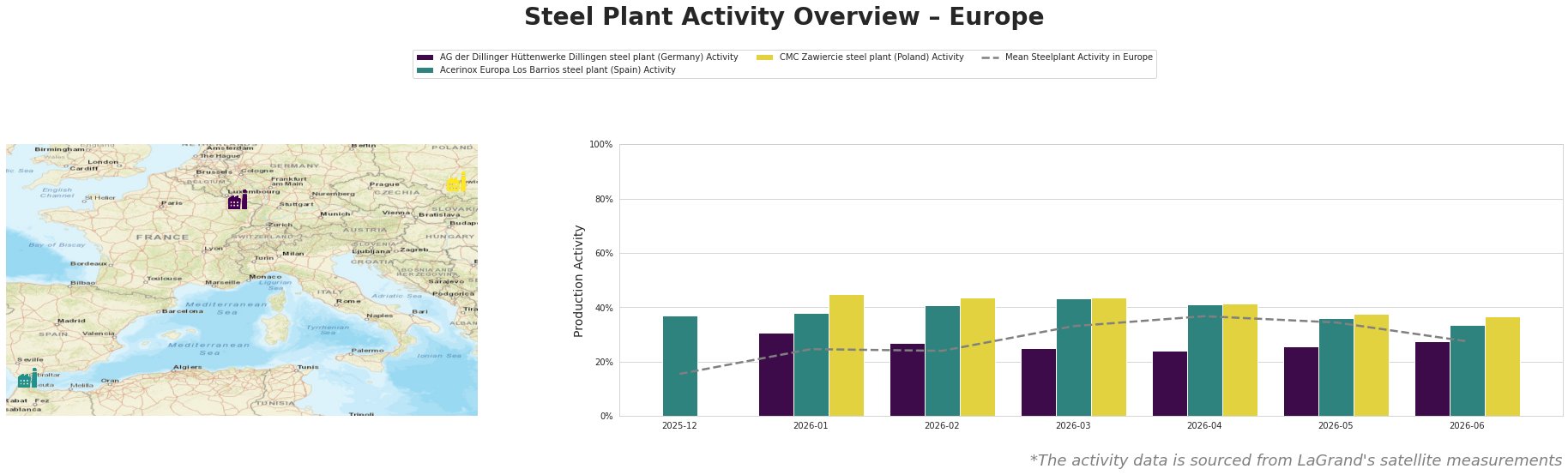
AG der Dillinger Hüttenwerke Dillingen displayed a steady decline in activity from 31.0% in January to 28.0% in June, potentially reflecting UK regulations impacting domestic demand, although no direct link was identified with the news articles.
Acerinox Europa Los Barrios and CMC Zawiercie showed resilience, maintaining activity levels around the mid-30% range, with CMC peaking at 45.0% in January. The Indian steel quota discussions may assist in stabilizing this segment, as Indian suppliers look to boost exports under beneficial trade terms.
With the UK’s impending protective measures, steel procurement professionals should closely monitor Acerinox and CMC Zawiercie for potential pricing shifts and availability. Given the positive momentum from new trade agreements, sourcing from these plants may mitigate risks associated with UK tariffs and strengthen competitive advantages against cheaper imports.
Active monitoring of plant activity and engagement with suppliers should be prioritized as these dynamics evolve. Specific procurement strategies should focus on securing iron and raw materials from regions less impacted by the upcoming UK regulations, particularly leveraging the benefits outlined in the recent UK-India trade agreement.