


From the Field to the Dashboard – Built by Experts, for Experts.
Discover What's Really Happening in the Steel Industry
Use the AI-powered search engine to analyze production activity, market trends, and news faster than ever before.
Try the Free AI Search EnginePositive Trends in Asia’s Steel Market: Insights on Plant Activities and Decarbonization Efforts
Recent developments in Asia’s steel market indicate a steady recovery and renewed focus on sustainability. A report titled “Report: China, India Control the Fate of Steel Decarbonization“ underscores that China and India are pivotal in adopting lower-emissions technologies, reflected in recent activity levels at various steel plants. This aligns with a noticeable increase in operational metrics from specific facilities as they adapt to rising demand and shifting regulations.
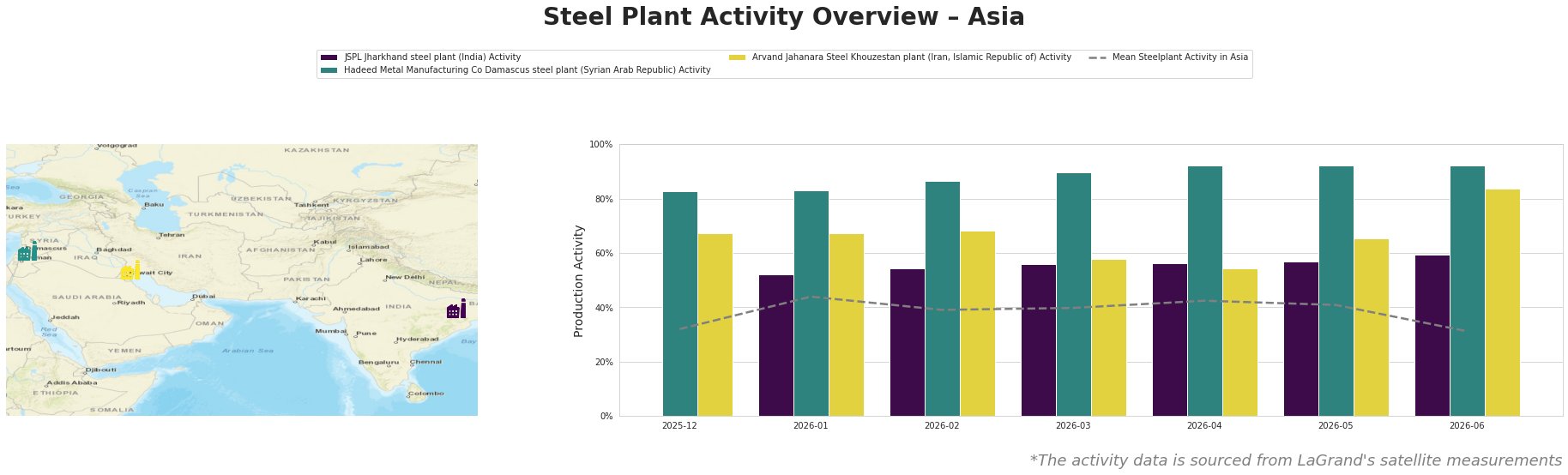
Over the past month, notable patterns emerged. The Hadeed Metal Manufacturing Co has consistently maintained high activity, peaking at 92.0% in April. This reflects the plant’s effective operations in supporting infrastructure needs while navigating challenges posed by emissions regulations. Meanwhile, the Arvand Jahanara plant displayed significant fluctuations, marking a rise back to 84.0% in June, representing a recovery in the Iranian steel market amidst decarbonization concerns highlighted in the aforementioned report.
The JSPL Jharkhand steel plant witnessed a gradual increase in activity, reaching 60.0% in June, suggesting a positive response to demand, which, when aligned with advancements in low-emission technologies mentioned in the “Report: China, India Control the Fate of Steel Decarbonization,” exemplifies a strategic pivot towards greener production methods.
Decarbonization efforts face hurdles, as noted in “The steel industry is concerned about the slow progress of green steel projects,” with only half of the planned initiatives making progress. This emphasizes the critical need for investment and innovation in sustainable practices to ensure competitiveness in global markets.
Evaluating the supply chain risks, the anticipated costs associated with the EU’s Carbon Border Adjustment Mechanism (CBAM), as highlighted in “The annual cost of the CBAM for exports of steel products from Kazakhstan could exceed €100 million,” could disrupt trade flows for producers, particularly impacting regions like Kazakhstan and Ukraine, potentially causing spikes in prices due to limited supply.
Recommendations for Steel Buyers:
- Monitor Activity Levels: Keep a close watch on the operational metrics of key steel plants, especially Hadeed and Arvand Jahanara, to anticipate shifts in supply capabilities that could affect procurement strategies.
- Explore Sustainable Sourcing: Engage with suppliers who are actively implementing green technologies to mitigate risks posed by CBAM and align with decarbonization initiatives, leveraging the insights from the trends observed.
- Prepare for Regulatory Changes: Enhance understanding of emissions regulations and potential impacts on product pricing to make informed procurement decisions.
By synthesizing plant activities with reported market changes, stakeholders can strategically address procurement and operational decisions amidst an evolving steel landscape.