


From the Field to the Dashboard – Built by Experts, for Experts.
Discover What's Really Happening in the Steel Industry
Use the AI-powered search engine to analyze production activity, market trends, and news faster than ever before.
Try the Free AI Search EngineOceania Steel Market Report: Neutral Sentiment Amid Activity Fluctuations
Recent developments in the Oceania steel market indicate a neutral sentiment, particularly influenced by trading dynamics in Europe. The articles “Trading activity in the European HRC steel market remains low due to high inventories and uncertainty” and “European steel HRC market falls silent ahead of safeguard decision details“ signal stagnant demand due to high inventories and uncertainty surrounding new protective measures.
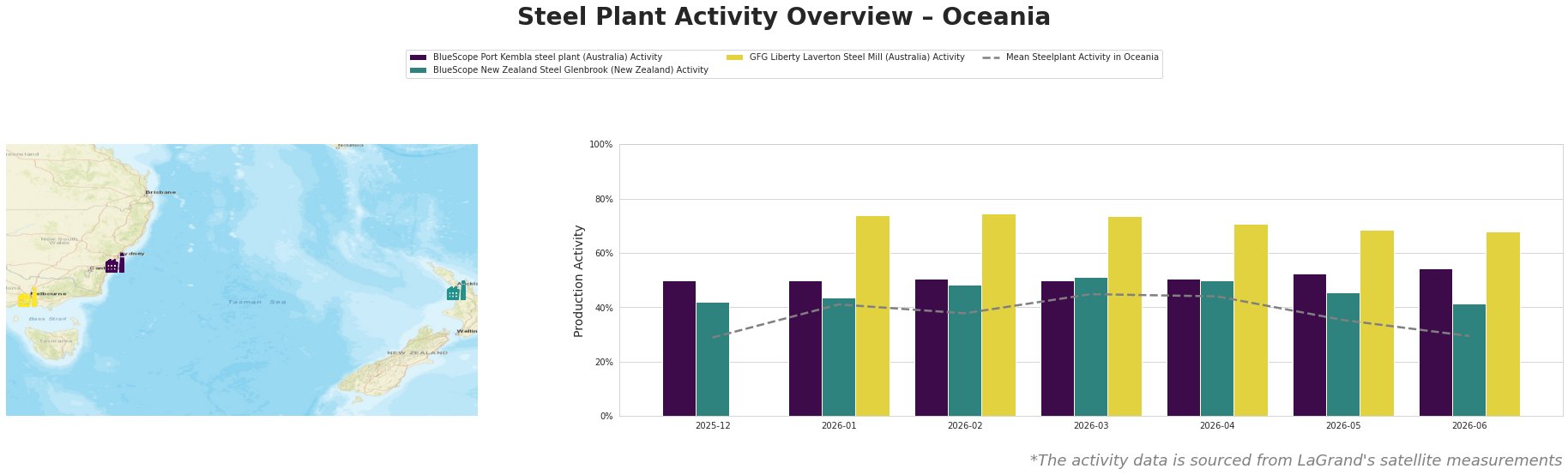
The observed activity at Oceania’s steel plants has shown significant fluctuations over the past few months. Notably, the BlueScope Port Kembla plant has maintained stable operations, with activity levels around 50%, peaking at 54% in June. In contrast, GFG Liberty Laverton experienced higher variability, peaking at 75% in February and declining to 68% by June—a 7% drop that remains detached from European market developments due to lack of explicit connection.
BlueScope New Zealand Steel Glenbrook demonstrated moderate activity stability, with an uptick to 51% in March before falling to 41% in June. This trend might reflect local independent market factors, rather than a direct link to the European market uncertainties highlighted in articles like “Trading activity in the European HRC market remains low due to high inventories and uncertainty”.
Given the current market conditions, steel procurement professionals should remain cautious. High inventory levels in Europe may impact pricing strategies globally; thus, buyers are advised to act preemptively in securing materials from suppliers like GFG Liberty, where capacity utilization is comparatively high relative to regional peers. Additionally, monitoring developments in European safeguards related to HRC will be essential to anticipate potential disruptions in supply chains affecting local operations. With recent activity at BlueScope’s plants indicating no urgent changes in demand, procurers should not anticipate immediate shortages but should consider securing orders sooner rather than later to mitigate any unforeseen price escalations linked to shifts in European market activity.