


From the Field to the Dashboard – Built by Experts, for Experts.
Discover What's Really Happening in the Steel Industry
Use the AI-powered search engine to analyze production activity, market trends, and news faster than ever before.
Try the Free AI Search EnginePositive Trends in Ukraine’s Steel Market: Insights from Recent Activity and Import Data
In Ukraine, recent steel market developments indicate a positive sentiment despite notable fluctuations in export figures. Directly influenced by shifts in market activity, news reports such as “Ukraine saw a 55% y/y decline in long-product exports in January–April” and “Ukraine increased imports of long steel products by 56.6% y/y in January–April” reveal a tightening domestic supply while maintaining rising demand through imports.
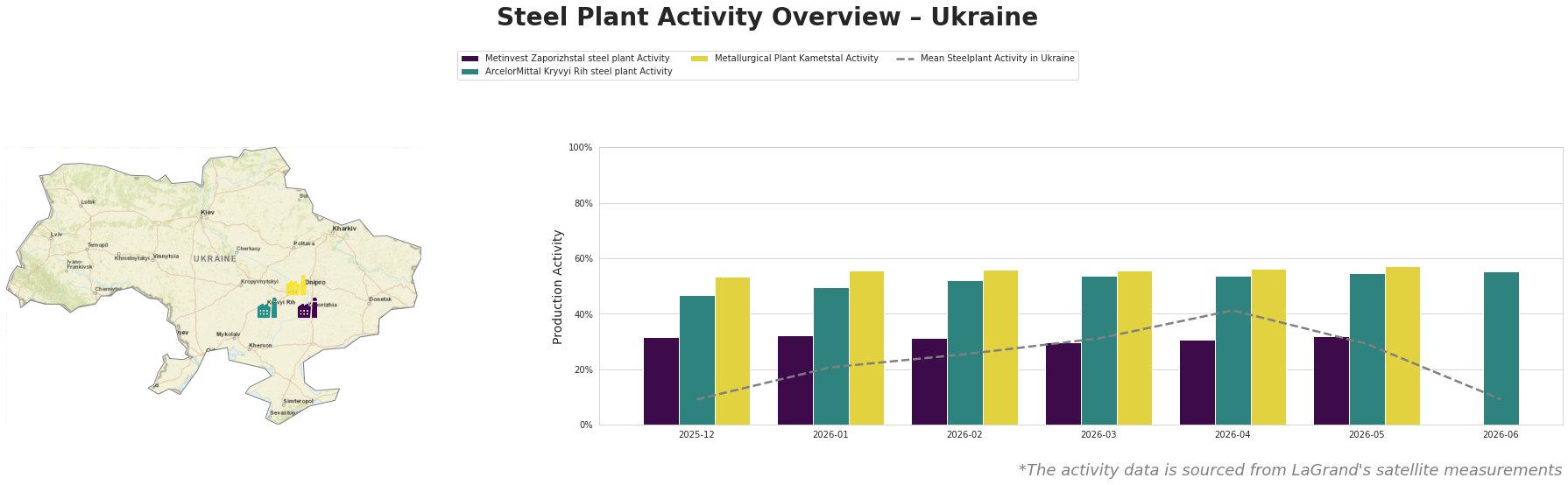
Steel production activity across measured plants shows variability, with average performance rising notably to 41% in April 2026. However, by June, average activity plummeted to 9%. Specifically, ArcelorMittal Kryvyi Rih maintained strong activity levels nearing 55%, while Metinvest Zaporizhstal has shown stable operations around 32%. This steady activity aligns with the rising import dynamics mentioned in “Ukraine increased imports of long steel products by 56.6% y/y in January–April” but diverges from the export declines emphasized in the first article.
The Metinvest Zaporizhstal plant, which operates with a crude steel capacity of 4,100 tons and primarily utilizes the integrated blast furnace method, has seen consistent activity around 30-32% during early 2026. This stability contrasts with the significant export drop observed in the long-product category. Meanwhile, ArcelorMittal Kryvyi Rih’s higher output, reaching 55% in May, reflects its greater reliance on domestic demand as reported in the rise of imports.
Kametstal, with a capacity of 4,200 tons, operates in a similar context, peaking at 57% in May. Given the reductions in coke imports reported in “Ukraine reduced imports of steel coke by 2.1% y/y in January–April,” there is a potential concern around ongoing operational capability if reliance on external sources remains vital.
Supply disruptions could be anticipated due to recent market conditions, especially concerning the potential volatility of exports as indicated by the 55% decline reported; therefore, buyers should prepare for tighter domestic supply. Immediate procurement actions should focus on securing long products from established suppliers like Turkey and Egypt, capitalizing on the favorable import trends highlighted in the second news article. Strengthening relationships with import partners is advisable to ensure resilience against potential supply chain shocks in the coming months.