


From the Field to the Dashboard – Built by Experts, for Experts.
Discover What's Really Happening in the Steel Industry
Use the AI-powered search engine to analyze production activity, market trends, and news faster than ever before.
Try the Free AI Search EngineIndia Steel Market Report: Dip in Activity Amidst Growing Trade Tensions
India’s steel market sentiment has turned very negative, primarily due to heightened trade tensions and global market shifts impacting local plant operations. Notably, the articles “Welthandel unter Trump: Ist die WTO reformierbar?“ and “WTO: Weg frei für digitalen Handel“ illustrate the ongoing friction within the WTO that discourages multilateral trade, creating uncertainty in supply chains. Although no direct correlation can be established, the noted general decline in activity levels across plants coincides with these trade dynamics.
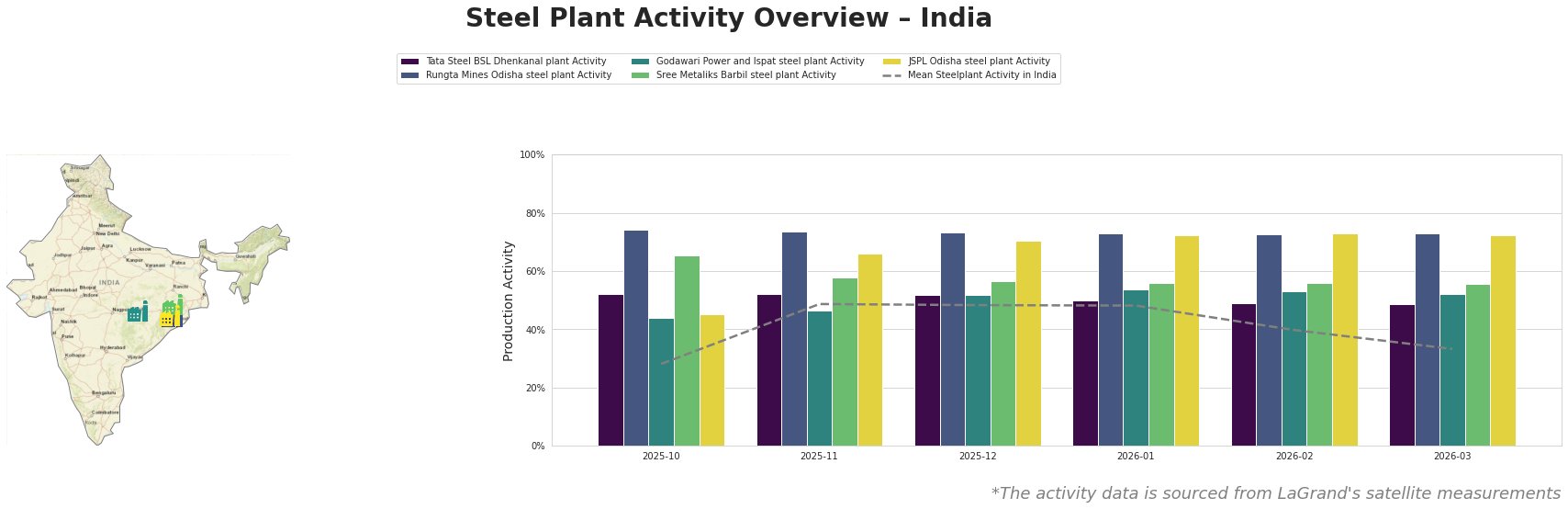
The steel plant activity shows a concerning decline across the board, with the mean activity level dropping from 49% in November to 33% in March 2026. Notably, Tata Steel BSL Dhenkanal showed stable activity, remaining around 49% during the most recent months, while Rungta Mines has maintained a high activity level at 73%, indicating potential resilience in output despite the overarching negative sentiment. Meanwhile, Godawari Power and Ispat and Sree Metaliks faced marginal declines in activity but remained within operational thresholds.
For Tata Steel BSL Dhenkanal, recent activity highlighted at 49% in March, in alignment with drops in other plants, raises concerns about its long-term viability given the pressures from the U.S. protectionist policies discussed in “Welthandel unter Trump: Ist die WTO reformierbar?”. Similarly, Rungta Mines at 73% signifies relatively stable operations, yet it may eventually reflect industry-wide impacts stemming from trade uncertainties, even as no direct correlations to the recent articles were obvious.
JSPL Odisha, showing steady activity levels of 72%, is positioned strongly but could face future challenges if trade terms further tighten, aligning with sentiments expressed in the WTO discussions about impending supply chain disruptions.
Given these insights, steel procurement professionals should consider the following actions:
- Prioritize Contracts with Rungta Mines: Given their stable activity levels, Rungta’s steel availability may mitigate supply disruptions prompted by wider market fluctuations.
- Observe Import Impacts: Evaluate potential supply bottlenecks contingent on WTO developments, particularly if reforms affecting tariff structures come into play.
- Prepare for Price Volatility: Anticipate upward pressures on pricing should activity levels decline further or trade barriers escalate, suggesting bulk purchasing may be advantageous.
In summary, as sector participants navigate an increasingly fraught market landscape, proactive engagement with resilient plants and close monitoring of global trade developments will be pivotal for maintaining supply integrity.