


From the Field to the Dashboard – Built by Experts, for Experts.
Discover What's Really Happening in the Steel Industry
Use the AI-powered search engine to analyze production activity, market trends, and news faster than ever before.
Try the Free AI Search EngineGermany’s Steel Industry Faces Challenges Amid Regulatory Changes and Reduced Activity Levels
Germany’s steel market sentiment turns negative as production activity diminishes. Notably, observed trends in plant activity reflect shifts associated with the news articles “BGH: Umwelthilfe scheitert mit Klimaklage gegen BMW und Mercedes“ and “EEG: Reiche will Einspeisevergütung für Solaranlagen auf Eigenheimen komplett streichen.” Recent satellite data shows a concerning drop in operational levels across key plants, highlighting mounting pressure on the sector.
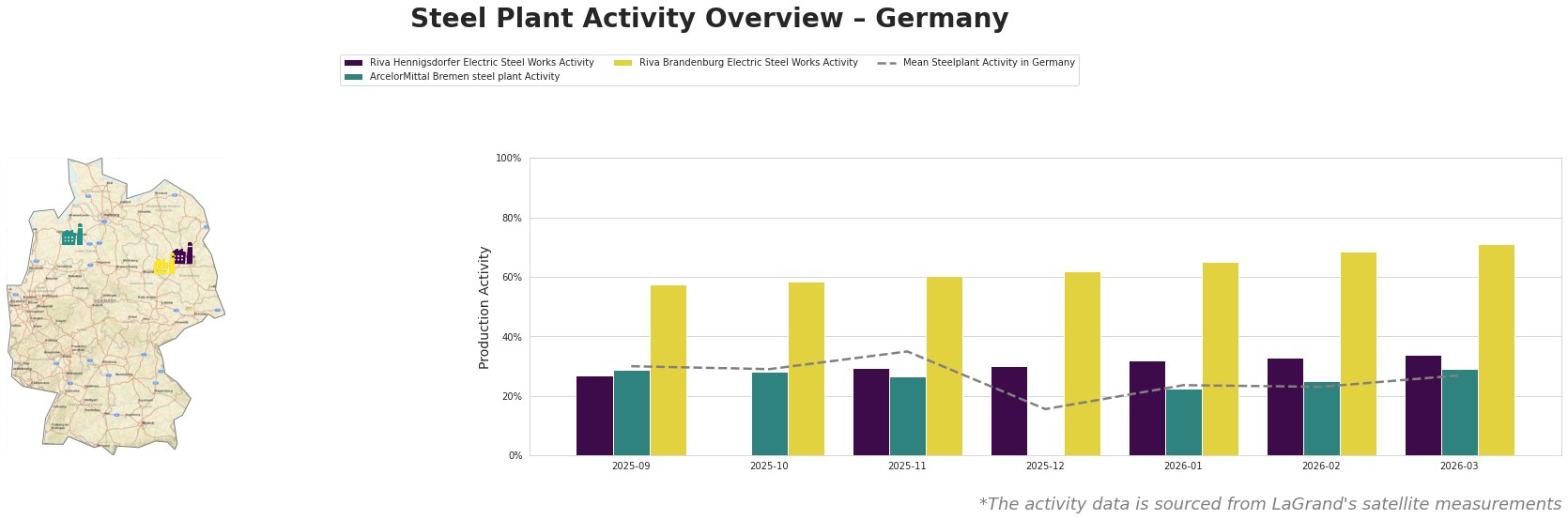
The Riva Hennigsdorfer Electric Steel Works, operating with a capacity of 1,000 tpa using Electric Arc Furnaces (EAF), experienced a significant decrease in activity, dropping from 32% in January to 34% in March 2026. This decline aligns with the general negative sentiment reinforced by ongoing regulatory debates regarding climate initiatives such as the proposed changes in the renewable energy sector highlighted in “EEG: Reiche will Einspeisevergütung für Solaranlagen auf Eigenheimen komplett streichen.” This news emphasizes challenges in sustaining the energy transition that may indirectly impact steel production costs and operations.
In contrast, the ArcelorMittal Bremen steel plant, with its integrated Blast Furnace (BF) technology, shows fluctuations but maintained relatively stable operations. Its activity fell to 23% in January from 25% in February, indicating vulnerability in adaptation amid the legal and environmental pressures revealed in the articles concerning the automotive industry’s climate obligations, notably described in “BGH: Umwelthilfe scheitert mit Klimaklage gegen BMW und Mercedes.”
Finally, Riva Brandenburg Electric Steel Works presented a stronger resilience in activity, increasing from 60% in November to 71% by March 2026. This growth could correlate with rising demand from sectors like automotive and energy, although direct connections to the news articles remain unclear.
Amid these developments, potential supply disruptions are likely, particularly for electric arc furnace operations, which are sensitive to fluctuations in energy prices and regulatory changes. In light of this, steel procurement professionals should strategize shorter-term contracts to mitigate exposure to price volatility and explore alternatives to diversify supply sources, particularly from the Riva Brandenburg plant, which exhibits promising growth metrics. Monitoring the legislative landscape and its implications on energy costs will be critical for making informed purchasing decisions.