


From the Field to the Dashboard – Built by Experts, for Experts.
Discover What's Really Happening in the Steel Industry
Use the AI-powered search engine to analyze production activity, market trends, and news faster than ever before.
Try the Free AI Search EngineVery Negative Steel Market Sentiment in Iran: Activity Declines Amid Geopolitical Tensions
Recent developments in Iran’s steel sector reflect a very negative market sentiment, primarily driven by geopolitical tensions related to the ongoing Iran War. Notably, “Looming Fed meeting shifts bets for 2026 interest-rate cuts“ and the subsequent “Fed holds target rate on Middle East oil surge: Update“ highlight concerns regarding economic stability and inflation, which negatively impacts regional steel production dynamics. Recent satellite activity data indicates significant drops in operational levels across multiple steel plants coinciding with these geopolitical events.
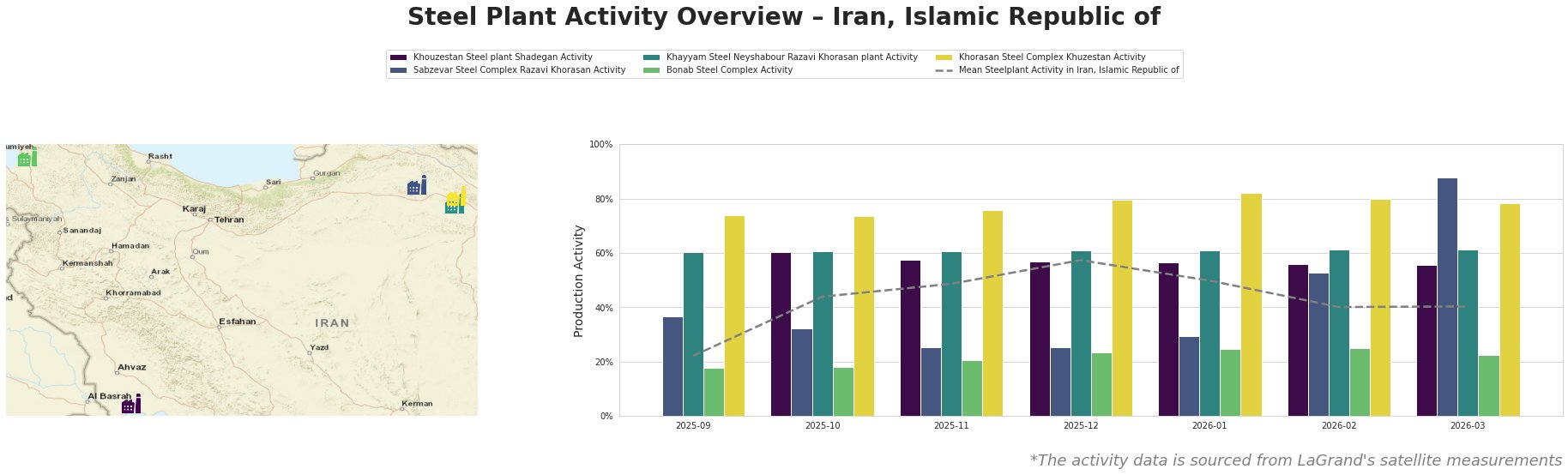
Activity levels reveal marked fluctuations; for instance, Khouzestan Steel maintained 60% in October but stalled at 56% as of March 2026, potentially reflecting operational challenges amid rising geopolitical tensions cited in the Fed’s recent assessments. Similarly, Sabzevar’s activity dropped dramatically to 25% in November, showing limited recovery with an increase to 88% by March 2026 but still well below capacity across multiple months. The “Looming Fed meeting shifts bets for 2026 interest-rate cuts” directly emphasizes that rising inflation and economic uncertainties are significantly affecting operational confidence among steel producers.
Khayyam Steel Neyshabour demonstrated some resilience with 88% activity in March but faced a dual challenge as broader economic pressures mount. The Fed’s acknowledgment of unclear economic consequences stemming from Middle Eastern developments suggests that sustained output may be compromised.
In light of these developments, procurement professionals should consider the following actions:
– Prioritize Contracting with Higher Activity Producers: Focus on securing materials from plants with higher output rates, such as Khorasan Steel Complex, which displayed relatively stable 78% production despite the overall decline across the sector.
– Monitor Geopolitical Developments: Keep close tabs on developments related to the Iran War, as ongoing conflicts could lead to abrupt supply chain disruptions.
– Assess Alternative Sourcing Options: Given the volatility, diversification of supply chains beyond Iran could mitigate risks associated with these geopolitical tensions.
The intersection of economic forecasts and declining steel output illustrates a precarious market landscape, demanding prompt and informed actions from buyers and analysts alike.