


From the Field to the Dashboard – Built by Experts, for Experts.
Discover What's Really Happening in the Steel Industry
Use the AI-powered search engine to analyze production activity, market trends, and news faster than ever before.
Try the Free AI Search EnginePositive Momentum in Asia’s Steel Market Signals Potential Opportunities for Buyers
In Asia, recent data highlights stable growth within the steel sector, as evidenced by the article “India’s crude throughput remains stable in January,” showcasing unchanged refinery activity—an indicator of robust industrial demand that could support steel consumption. Furthermore, satellite observations reveal a notable resurgence in plant activities, particularly at select facilities, aligning with these trends.
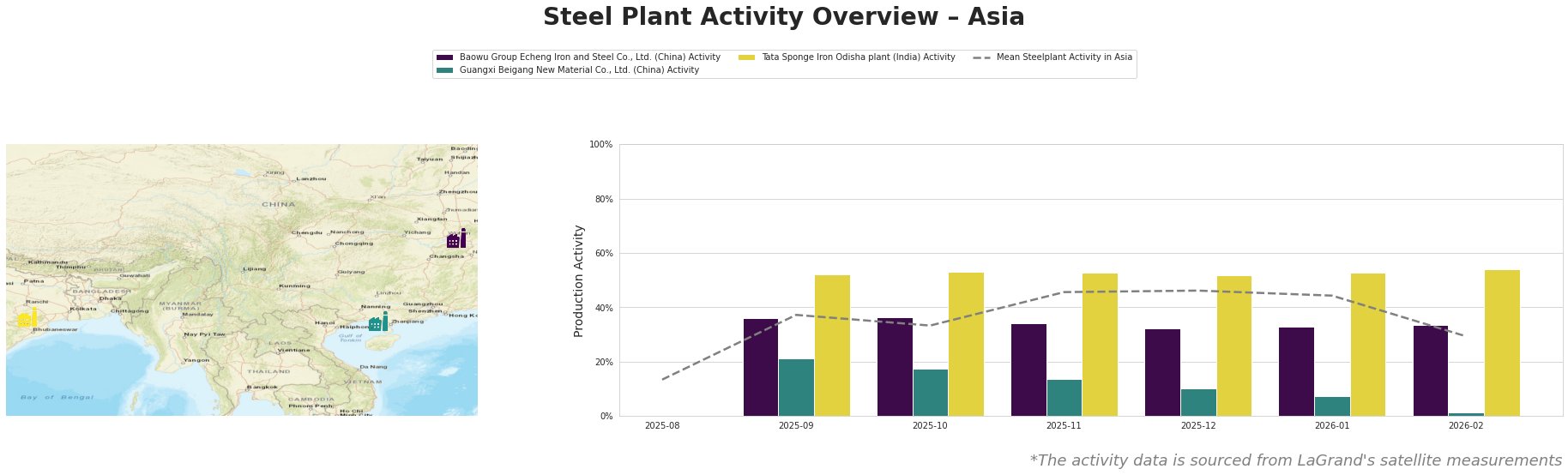
Baowu Group Echeng Iron and Steel Co., Ltd., located in Hubei, demonstrated stable activity of 34% in February following a peak of 36% in September 2025. While no direct connections to “India’s crude throughput remains stable in January” were established, the general stable demand in crude processing may indirectly reflect underlying industrial demands beneficial to steel production.
Guangxi Beigang New Material Co., Ltd.’s activity sharply declined to 1% in February, down significantly from 21% in September. This drop may indicate market volatility, reflecting a lack of direct catalysts from the aforementioned articles; thus, this requires close monitoring by procurement professionals.
The Tata Sponge Iron Odisha plant in India showed steady performance at 54% in February, consistent through the last few measured activities. The stability observed in crude throughput may signal reliable domestic steel demand, positioning this plant strategically for ramping up supply in the near term.
Evaluated market implications reveal potential supply disruptions amid the observed drop at Guangxi Beigang New Material Co., Ltd. For steel buyers, committing to procurement from consistently performing plants like Tata Sponge Iron Odisha may provide a buffer against regional instabilities, particularly as market demand signals appear on an upswing.
In summary, actionable recommendations for steel procurement in Asia would involve prioritizing sourcing from stable facilities, particularly Tata Sponge Iron Odisha, while remaining vigilant about the fluctuating performance metrics at other plants, especially Guangxi Beigang New Material Co., Ltd. This strategic approach is essential for navigating the upcoming quarter of expected demand growth within the region.