


From the Field to the Dashboard – Built by Experts, for Experts.
Discover What's Really Happening in the Steel Industry
Use the AI-powered search engine to analyze production activity, market trends, and news faster than ever before.
Try the Free AI Search EngineStrong Steel Market Sentiment in Germany: Political Moves and Increased Activity
Germany’s steel market is witnessing a very positive sentiment driven by recent political developments and observed activity changes in key steel plants. Notably, the article “European carbon prices slide as Germany’s Merz says EU ETS may need revamping“ links to a significant reduction in carbon prices that may foster a more competitive environment for steel manufacturers. The suggested revisions to the Emissions Trading System (EU ETS) by Chancellor Friedrich Merz align with satellite observations indicating a stabilization in plant operations, particularly at the ThyssenKrupp Steel Duisburg facility, which maintains a high activity level despite external pressures.
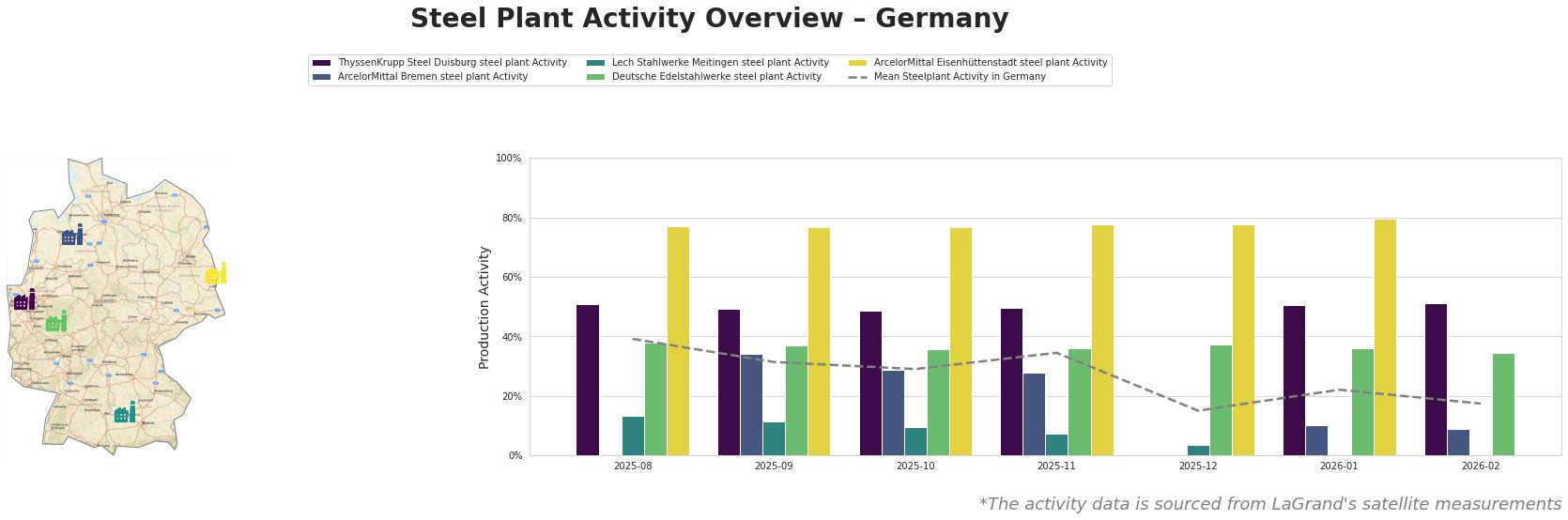
The ThyssenKrupp Steel Duisburg plant has shown resilience with a consistent activity level of 51% in recent months, even amidst the broader market’s fluctuations. This aligns with Merz’s comments about safeguarding industrial competitiveness, which potentially support continued operations. Meanwhile, ArcelorMittal Bremen, with an activity peak of 34% in September despite subsequent declines, indicates fluctuations but remains crucial to the local supply.
The Lech Stahlwerke Meitingen plant, however, exhibits substantial challenges, dropping to zero activity in recent months. This presents potential supply disruptions given its specialized products like pipes and tubes. No direct linkage to the cited articles affects this decline, suggesting an isolated operational hurdle.
Conversely, Deutsche Edelstahlwerke has maintained a stable output of 36% in January, emphasizing industry resilience against shifting carbon regulations. Notably, ArcelorMittal Eisenhüttenstadt has pronounced activity with a stable 78%, further indicative of operational strength bolstered by potential policy shifts.
In light of current market conditions, steel buyers should prioritize procurement from facilities like ThyssenKrupp Steel Duisburg and ArcelorMittal Eisenhüttenstadt, which exhibit operational stability and resilience. In contrast, maintaining a close watch on Lech Stahlwerke Meitingen may be prudent due to its recent activity setbacks, ensuring balanced supply chains. This approach recognizes not only the effects of evolving carbon regulations but also specific plant dynamics as inferred from the ongoing policy discussions highlighted in the articles.