


From the Field to the Dashboard – Built by Experts, for Experts.
Discover What's Really Happening in the Steel Industry
Use the AI-powered search engine to analyze production activity, market trends, and news faster than ever before.
Try the Free AI Search EngineSteel Market in Asia Faces Downward Pressure Amidst Surging Exports and Capacity Concerns
The Asian steel market is experiencing a negative sentiment driven by a significant increase in excess capacity and subdued demand. Recent reports, particularly from the OECD warns of a deepening crisis in the global steel industry, indicate that global steel demand has declined for four consecutive years, which is closely linked to observed declining activity levels across key steel plants in the region.
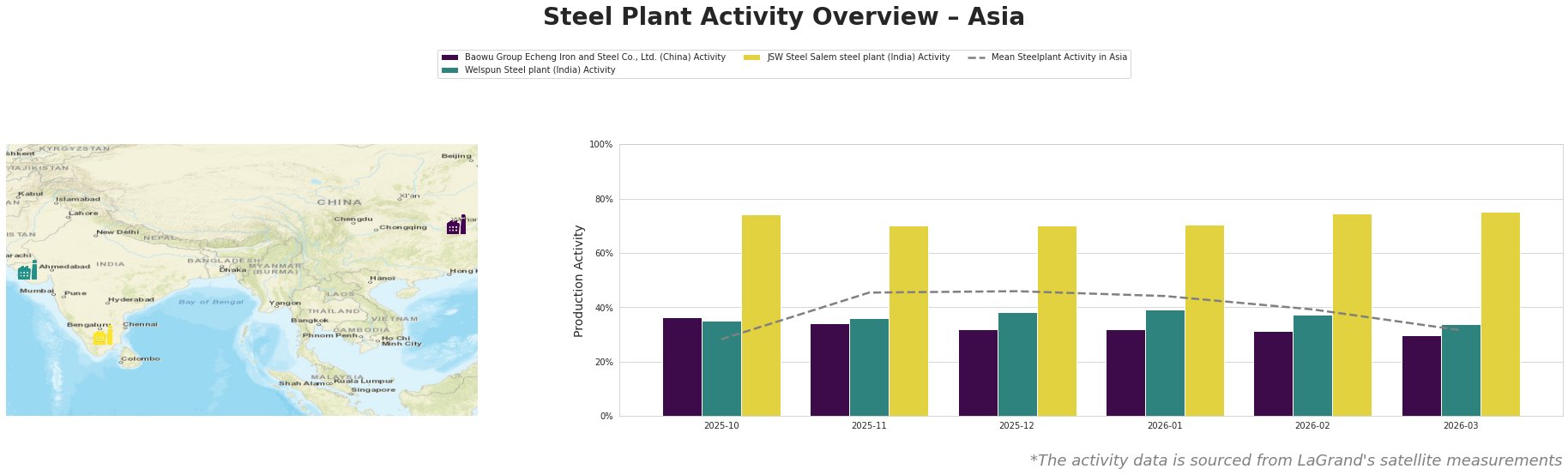
Recent activity data indicates that the mean steel plant activity has deteriorated significantly, with a drop from 46% in December 2025 to 32% by March 2026. The Baowu Group Echeng Iron and Steel Co. and Welspun Steel plants also experienced downturns—decreasing from 36% to 30% and 35% to 34%, respectively. In contrast, JSW Steel Salem maintained a relatively higher activity level, staying consistent at 75%, but could not escape the downward trend expected in the broader market.
Exploring the individual plant activities reveals intricate links to overarching market trends highlighted by the recent OECD reports. The Baowu Group, well-documented as part of the center of China’s increased production, has been adversely impacted by the OECD Steel Committee warns of a deepening global steel excess capacity crisis deepens as China exports surge. With China contributing to over 50% of global excess capacity, the marked drop in Baowu’s activity reflects the escalating competitive pressures associated with rising exports of 131 million metric tons, which puts further strain on domestic producers in Asia.
For Welspun, which focuses on construction-related products, the reduced activity levels could prevent it from effectively meeting the ongoing demand in the infrastructure sector, as remarked in various analyses. The significant drop from a high activity rate of 36% indicates possible supply disruptions that could affect construction timelines.
JSW Steel in Salem, on the other hand, despite maintaining activity at 75%, faces potential threats as the market outlook turns negative, prompting buyers to reconsider procurement strategies.
The recent findings from the OECD and resulting activity trends suggest that steel procurement should focus on securing reliable supply chains and anticipating potential price volatility. Buyers are advised to:
- Monitor developments closely, especially from Baowu Group due to its strategic position in China and report any significant fluctuations in export levels that may coincide with their procurement schedules.
- Engage in long-term contracts or negotiate with JSW Steel to stabilize supply in the face of general market unsteadiness.
Overall, the Asian steel market’s current trajectory indicates a pressing need for tactical decision-making among steel buyers and analysts.